You can donate at http://opencollective.com/tenzing . Posts mostly by Alex Holcombe, [email protected]
| All our projects | https://contributorshipcollaboration.github.io/ |
| tenzing | https://tenzing.club |
| All our projects | https://contributorshipcollaboration.github.io/ |
| tenzing | https://tenzing.club |
Researchers, have you ever struggled to remember who helped in your current project and thus are not sure who you should be thanking in the acknowledgments section of your manuscript? Or do you frequently help academic staff but see yourself forgotten by the time they write up the project?
Tenzing.club, our free open-source webapp that helps researchers manage co-author information, now also handles acknowledgments and acknowledgee information.
https://contributorshipcollaboration.github.io/blog/release-0.4-acknowledgments/
We suggest that what e.g. statistical consultants can do is, when they provide their advice, share a pre-filled tenzing Google sheet with their information, saying something like "You might find this useful to manage your co-author information. In case you think it appropriate to put me in the Acknowledgments, I've included my details in it."
What do you think? #scholarlyPublishing
📆 Upcoming free webinar - #OpenPublishing professional development opportunity October 30 9 AM PT
Open around the world!
For #JournalEditors, managers, #Educators, learners, and anyone interested in furthering their knowledge of community-led open publishing
If you don’t want to register via Eventbrite, email commpkp[at]sfu[dot]ca re subject line “Open Publishing Courses webinar link request” to get the joining link.
Register via Eventbrite:
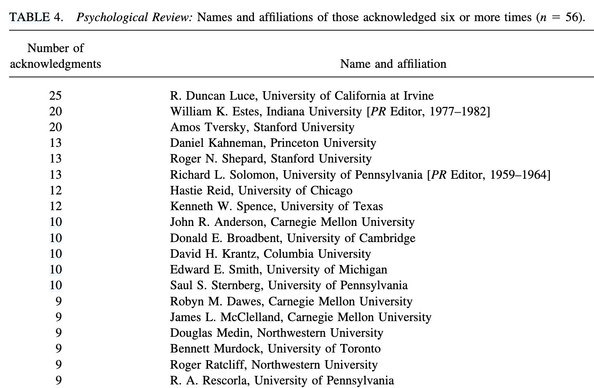
We are advocating for journals improving the recognition of people listed in Acknowledgments sections, for example by including ORCID numbers, which can eventually result in acknowledgees being indexed by scholarly databases. We are interested in your experiences with being listed in or using Acknowledgments sections, and your input on an eventual open letter to publishers, journals, and other institutions about reforming Acknowledgments sections.
Bonfire Open Science is now @ORCID_Org certified as a Manuscript Submission System provider 🎉
This opens new possibilities for turning conversations into citable, #FAIR and permanent research objects. But what should be archived? How does this affect scientific discourse?
More details: https://openscience.network/blog/science_networks/
We also updated the website to investigate such questions together: https://openscience.network
Interested in setting up an instance for your collective or at your institution? Get in touch
Today, Bonfire's Open Science app has been officially certified by ORCID as a Certified Service Provider for Manuscript Submission Systems. This milestone kicks off a new stage of experimentation, and we invite researchers and scientific organizations to help shape its future.
The world's most influential authorship guidelines are those of the International Committee of Medical Journal Editors (ICMJE), and they require all co-authors to contribute to the writing of a paper reporting a project. Just doing all the non-writing work for the project is not sufficient for co-authorship! 🤔
Many don't realize, however, that this requirement has progressively been softened.
In 2013, two sentences were added to the guidelines, stating that the writing requirement is “not intended for use as a means to disqualify colleagues from authorship who otherwise meet authorship criteria”. Last month Mohammad Hosseini alerted me to a further change that was made just this April. Whereas the prior version, released in December 2021, stated that qualifying for authorship required “drafting the work or revising it critically for important intellectual content”, in April 2025 “revising” was replaced by *reviewing*, such that the current phrase now is “drafting the work or reviewing it critically for important intellectual content”. Whereas “revising” seems to imply that a person has to contribute to a change in the writing, “reviewing” suggests that confirmation the writing is correct is enough. This is a positive step toward contributorship, the principle that all major contributors to a project should receive appropriate credit, and in today's academic system, authorship is essential for that.
#metascience #scholarlyPublishing