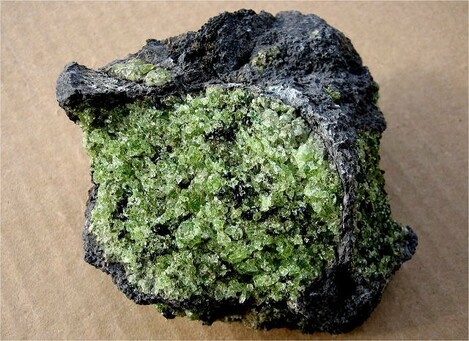
#NASA Goddard has a farmers market every Thursday and I made very good decisions.


| Pronouns | He / Him |
| Location | Washington, DC |
| Website | https://www.josephrenaud.com/ |
| https://www.twitter.com/SpaceTides |
At that rate, a billion years ago, the Moon would have been about 10% closer to #Earth appearing larger in the sky. In the future it will be further away and appear smaller.
We just so happen to live in the few 100-million-year period where the Moon is at a distance where it appears to have the same size in the sky as our Sun. The similar apparent size is what allows total solar #eclipses to be possible. In the far future and the distant past, a perfect solar #eclipse could not have occurred!!
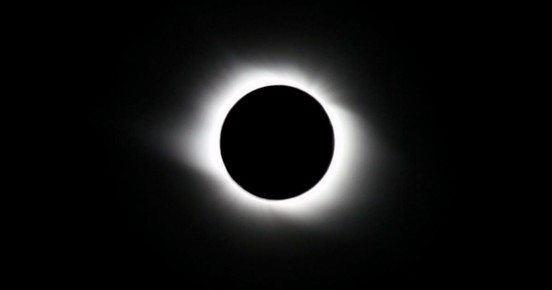
I briefly mentioned that tides can change the orbits and rotation rates of planets and moons, and that this has happened to Earth and our Moon.
Specifically, tides have caused Earth's rotation rate to slow down, meaning our day has gotten longer. We think, billions of years ago, that a "day" used to only be ~6--10 hours long!
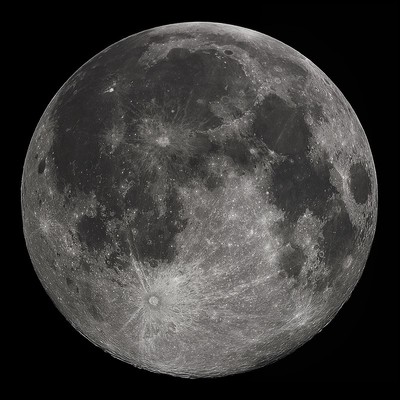
Those same forces have caused our Moon to recede away from us, which it is still doing today at a rate of around 1.5 inches per year.
(📷 : Our Moon by Gregory Revera)
So in order to fully understand #tides we actually need to understand #rocks, #ices, and #magma.
That is what I love about tidal dynamics: It is the study of how microscopic grains of rock can end up melting an entire planet, or making another one potentially #habitable by providing energy for #life!
This field is the melding of #geophysics, #geology, #orbital #mechanics, #planetary #science, and more.
💎 + 🪐 = 🌋 + 🐟
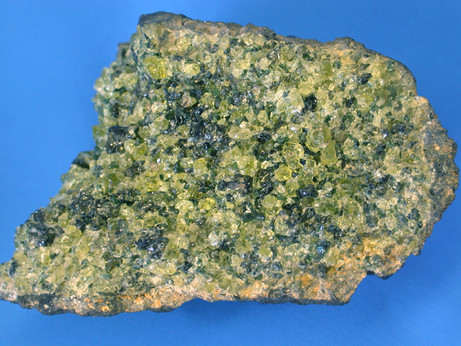
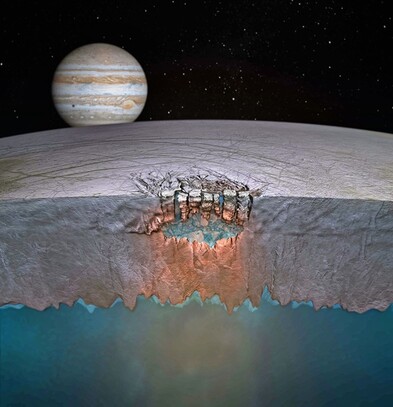
This & other types of #rocks are made up millions of #microscopic grains of various #minerals. When you apply a force to them, like a #tidal force, they will begin to deform and slide against one another. This is the mechanism that transforms #orbital motion into frictional #heat, these tiny little bits of rock & #ice!
Variations in composition, the temperature the rocks are held at, and how much moisture is present all can have a dramatic impact on how quickly this energy transfer occurs.
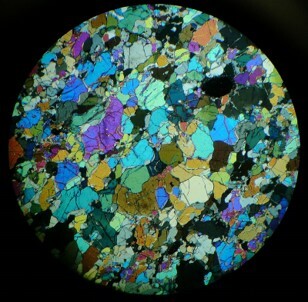
Specifically this type of rock called #olivine which makes up the majority of #Earth's upper #mantle. We suspect, based off density measurements, that it is also common in the mantles of other #planets and #moons.
Remember when we talked about how #tidal forces can cause the interior of a planet or moon to flex and churn? This is the stuff that is doing that flexing!