Sébastien de Graffenried

87 Followers
242 Following
438 Posts
Game dev, from Switzerland. Working on Terraformers. Game jams, homemade game engine dev

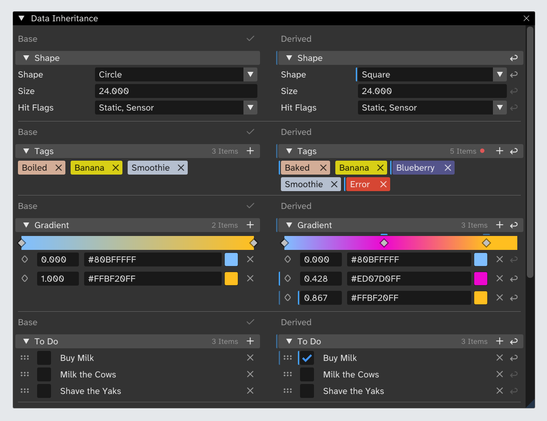
I have been working on data inheritance recently. The kind of stuff that you usually see with prefabs, but I believe that all the assets should support data inheritance.

I just released an article how to do that on property and container level. It tries to cover both the low level bits and the UI. It's one of those problems that have to be worked as a whole.

https://github.com/memononen/data_inheritance

My erosion filter is out! Video, blog post, and shader source.

It emulates erosion without simulation, so it's fast, GPU friendly, and trivial to generate in chunks.

Explainer video:
https://www.youtube.com/watch?v=r4V21_uUK8Y

Companion blog post:
https://blog.runevision.com/2026/03/fast-and-gorgeous-erosion-filter.html

#ProcGen #vfx #GameDev

hear me out: Oled Zeppelin

HarfBuzz 13 ships with the new `hb-raster` library. You might ask why yet another Open Source rasterizer when there are many high-quality ones available.

`hb-raster` fills two gaps in the Open Source font rasterization scene:

1. Many graphics-oriented frameworks & mobile apps don't want to include the entirety of FreeType to get gain text rendering. Many resort to `stb_truetype`, which doesn't support variable fonts, and crashes on bad font data. `hb-raster` addresses both of these issues.

2. Before `hb-raster`, rendering COLRv1 fonts was not possible without whipping up your own renderer, or pull in Cairo or Skia, both of which are otherwise unnecessary for many clients. `hb-raster` renders COLRv1 and SVG color fonts natively, & soon bitmap-based color-fonts too.


To hell with AI, more innovation like this please.
#solarpunk
#climate
#ecology
whenever someone says "im writing my own game engine" im like wow that sounds really cool, i wonder what new ideas they're going to implement in their game engine, new ways of making games, new ways of playing games. etc. and then i look at the screenshots and what they've made looks like this
#GGJ25 has started on Monday already, but I'll start working on it now... Not a very original idea I have, but I like the idea :)
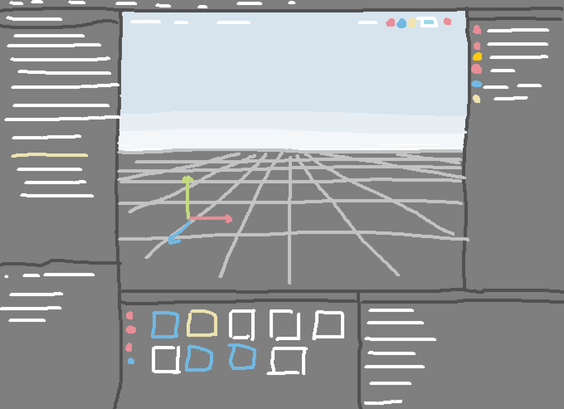
Testing out the engine of @seb_degraff
#gamedev
Quite a phenomenal campaign ad from the Greens down in England. Strong. I firmly believe that any political party not running this same message will fail.

My blog post about how software rendered depth based occlusion culling in Block Game functions is out now!

https://enikofox.com/posts/software-rendered-occlusion-culling-in-block-game/

Note! Any public or quiet public/unlisted replies to this toot will be shown as comments on the blog. If you don't want that please use followers only or private mention when replying

#GameDev #IndieDev #ProcGen

Software occlusion culling in Block Game

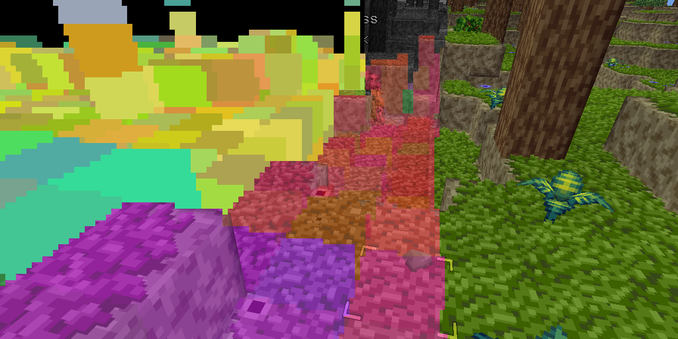
My GPU is the integrated Radeon Vega 8 that comes with my AMD Ryzen 7 5700G CPU. I tell you this so you know that my workstation is not a graphical computing powerhouse. It is, in fact, quite weak. To its credit my integrated GPU shows up as 48% faster on UserBenchmark than the GPU in my low end hardware target; a laptop I bought in 2012.That, and the fact I want my game to run well even on a potato, is why I recently decided to try my hand at writing a software rendered occlusion culling solution for the Block Game (working title) I’m developing as I’ve always been interested in the idea. Blocks and chunks are axis aligned cubes, which makes things easier, and block games tend to have a ton of hidden geometry in the form of underground caves. There are other ways to cull these, but the algorithms tend to be fairly complex and this seemed like a good way to avoid that complexity and stick with something very conceptually simple.In this post I’ll be explaining the development process and the solution that I eventually landed on. If you like you can also read the development thread I posted on Mastodon and Bluesky.Before I start though I’d like to say that this came out quite well, better than I expected. It runs in half a frame at 60 FPS or less (threaded, of course) and generally culls at least 50% of the chunks that survive frustum culling. Above ground, looking straight ahead at the horizon it’ll cull around between 50 and 60% of chunks, but indoors and below ground in caves it can cull upwards of 95% of chunks, resulting in framerates of 400+ even on my weak system. All around a resounding success, though it has some cases where it breaks down which I’ll touch on at the very end of this post.Comparison of depth occlusion culling on/off, off on left, on on right.

Eniko does bad things to code