 Jonathan Beri
👀 stmicroelectronics releases an official @code extension https://marketplace.visualstudio.com/items?itemName=stmicroelectronics.stm32-vscode-extension

👀 stmicroelectronics releases an official @code extension https://marketplace.visualstudio.com/items?itemName=stmicroelectronics.stm32-vscode-extension

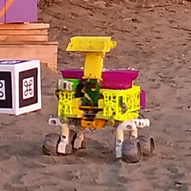
Maia SDR spotted in the wild.
---
RT @ea4eoz
This is what your microwave oven does to your WiFi signals in the 2.4 GHz band.
https://youtu.be/TpVN7rC1s6U
https://twitter.com/ea4eoz/status/1632445550825021441

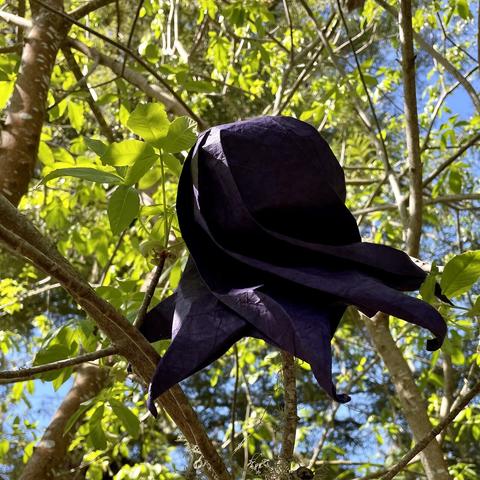
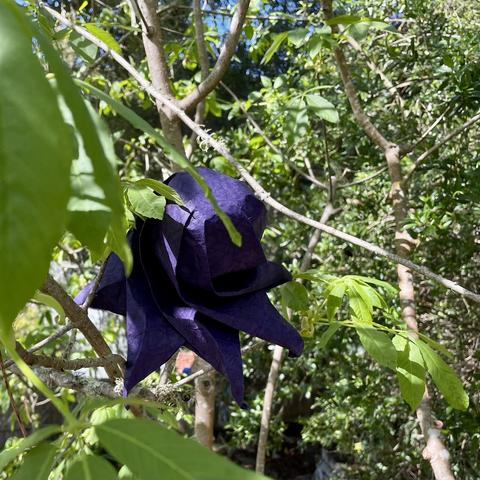
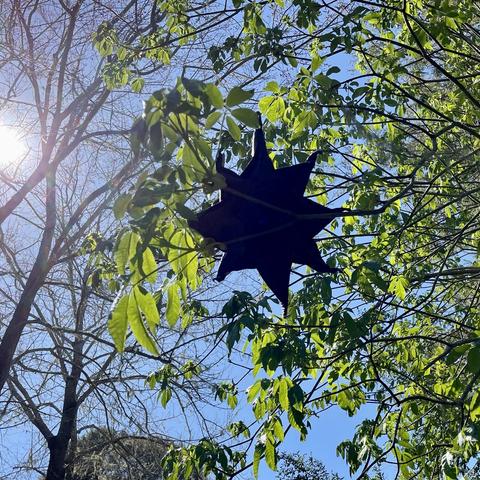
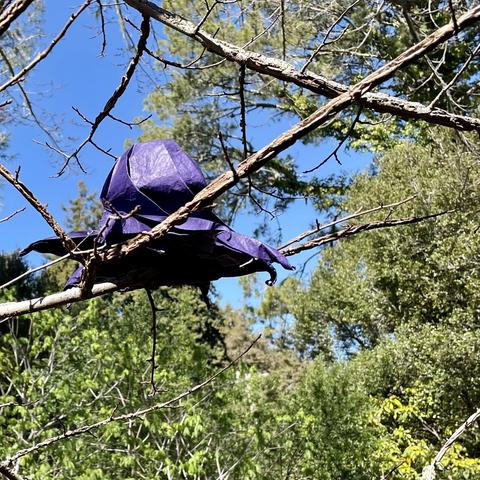
A Pacific Northwest Tree Octopus has been sighted in California, likely due to the extremely wet weather conditions this year.
For more information about this rare animal:
https://zapatopi.net/treeoctopus/

The coupling of microwave and optical systems presents an immense challenge due to the natural incompatibility of energies, but potential applications range from optical interconnects for quantum computers to next-generation quantum microwave sensors, detectors or coherent imagers. Several engineered platforms have emerged that are constrained by specific conditions, such as cryogenic environments, impulse protocols, or narrowband fields. Here we employ Rydberg atoms that allow for the natural wideband coupling of optical and microwave photons even at room temperature and with the use of a modest setup. We present continuous-wave conversion of a $13.9\ \mathrm{GHz}$ field to a near-infrared optical signal using an ensemble of Rydberg atoms via a free-space six-wave mixing process, designed to minimize noise interference from any nearby frequencies. The Rydberg photonic converter exhibits an unprecedented conversion dynamic range of $57\ \mathrm{dB}$ and a wide conversion bandwidth of $16\ \mathrm{MHz}$. Using photon counting, we demonstrate the readout of photons of free-space $300\ \mathrm{K}$ thermal background radiation at $1.59\ \mathrm{nV}\mathrm{cm}^{-1}(\mathrm{rad}/\mathrm{s})^{-1/2}$ ($3.98 \ \mathrm{nV}\mathrm{cm}^{-1}\mathrm{Hz}^{-1/2}$) with the sensitivity down to $3.8\ \mathrm{K}$ of noise-equivalent temperature, allowing us to observe Hanbury Brown and Twiss interference of microwave photons.

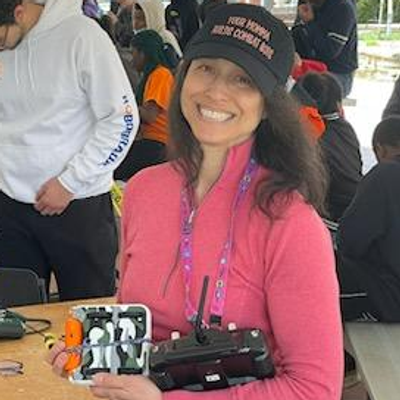 GeekMomProjects
 Daniel Estévez
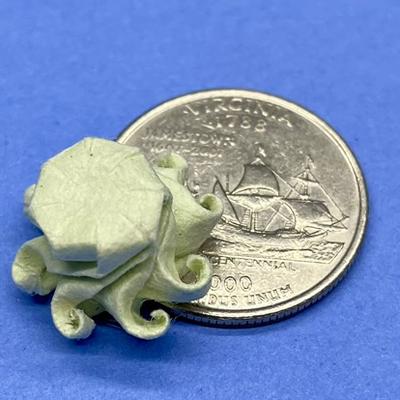 Elecia White
 Dgar
Dgar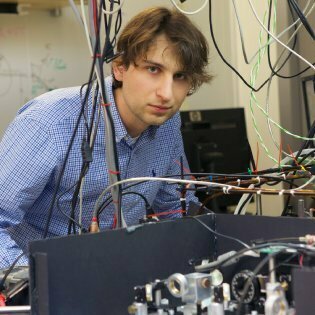 Michał Parniak
 Lenore