 openSUSE en Español
Salmorejo Geek presenta Akademy-es 2025 de Málaga OpenSouthCode Editon II #akademyes. Autor: Baltasar Ortega. https://www.kdeblog.com/salmorejo-geek-presenta-akademy-es-2025-de-malaga-opensouthcode-editon-ii-akademyes.html

Richard Laya
@richardlaya
- 57 Followers
- 16 Following
- 723 Posts
Software Eng.

 9to5Linux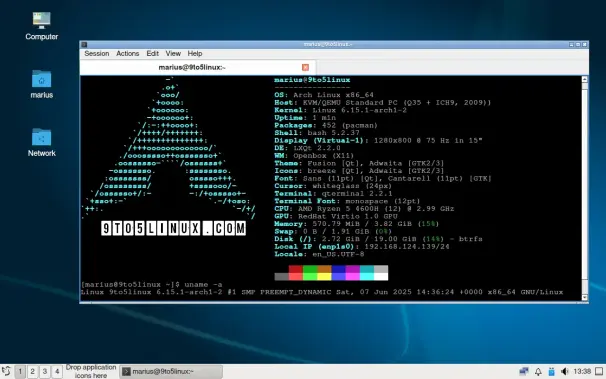
 Gerry McGovern
AI is massively accelerating environmental crisis
AI Boom Drives 150% Surge in Indirect Emissions at Major Tech Firms, UN Warns
Amazon’s emissions spiked the most—up 182%—with Microsoft, Meta, and Alphabet also posting triple-digit growth.
Without aggressive intervention, AI-linked emissions could reach 102.6M metric tons of CO₂e annually, straining energy grids globally.
https://esgnews.com/ai-boom-drives-150-surge-in-indirect-emissions-at-major-tech-firms-un-warns/

 nixCraft 🐧
> PM: Why aren't you working?
Dev: openai's down. can't vibe code without it
> PM: Use combination of Google and SO forum
Dev: *confused with puppy eyes* ... the old way...?
> PM: good god
Dev: ¯\_(ツ)_/¯
 JA Westenberg
I deleted everything.
Every note in Obsidian. Every carefully crafted "second brain."
Every Apple Note.
Every to do list.
Every article on my "read later" list.
Every productivity system I'd built over years. Gone in seconds.
And I felt zero panic. Just an overwhelming sense of relief.

I deleted everything. Every note in Obsidian. Every carefully crafted… | Joan Westenberg
I deleted everything. Every note in Obsidian. Every carefully crafted "second brain." Every Apple Note. Every to do list. Every article on my "read later" list. Every productivity system I'd built over years. Gone in seconds. And I felt zero panic. Just an overwhelming sense of relief. Here's what I've learned about our obsession with "capturing everything": The Promise: Build a networked archive so vast it can answer questions before you ask them. Never forget. Never lose an insight. The Reality: My "second brain" became a mausoleum. A dusty collection of old selves, frozen curiosities, and deferred thinking. I was reading to extract, not to understand. Listening to summarize, not to absorb. Thinking in formats I could file, not insights I could live. This is what I know about productivity systems: → Storing an idea isn't the same as understanding it → A perfectly organized system can become a prison → Sometimes the map swallows the territory My reading database had 7,000 items. It was a shrine to the person I imagined I'd become "if only I read everything." But I already know what I want to read. I know the shape of my attention. I don't need a database to prove I have taste. What deletion taught me: Human memory isn't an archive - it's associative, emotional, alive. We don't think in folders. We think in stories, connections, experiences. The ideas that matter will return. Not because you indexed them, because they mattered. If they don't, they didn't. My new system is no system: - Write what I think (knowing it may disappear) - Trust that important things resurface naturally - One simple note called "WHAT" for truly essential items (a tip I picked up from David Heinemeier Hansson) - Read what calls to me, not what I've obligated myself to consume I don't want to manage knowledge. I want to live it. Six years sober taught me: what got me here won't get me where I need to be next. Sometimes the most productive thing you can do is delete everything and start fresh.
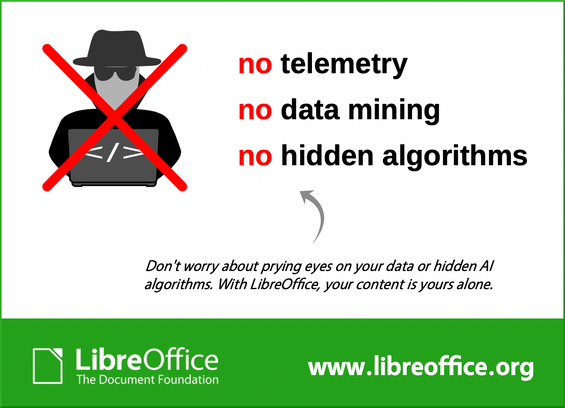
 LibreOffice
Tired of software tracking you, and using your content to feed AI services? Switch to free and open source software – like #LibreOffice, which is backed by a non-profit (@tdforg) and has zero interest in your data: https://blog.documentfoundation.org/blog/2025/06/10/libreoffice-for-end-user-privacy-tdfs-annual-report-2024/ #foss #OpenSource #privacy