Johan Renaudie

105 Followers
181 Following
23 Posts
fyi there's a European citizens initiative to ban conversion therapy, which is an abusive, ineffective and traumatizing practice against children to try to make them not queer. if you live in the EU you should consider signing it! https://eci.ec.europa.eu/043/public/#/screen/home
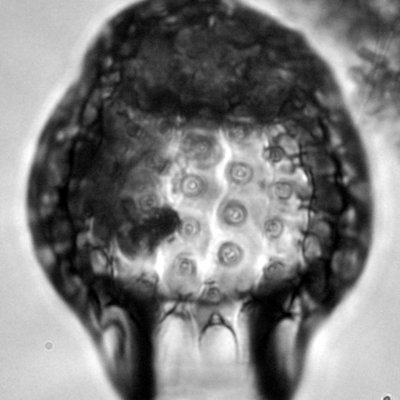
Radiolaria are known for their elaborate and gorgeous skeletons, found all over our oceans. But what if I tell you that half of their diversity might be naked!?
https://www.biorxiv.org/content/10.1101/2024.10.02.614131v1
Check out our latest study exploring the diversity and evolution of this planktonic group, from their appearance ~760 million years ago to their current biogeographic patterns

It is our pleasure to announce The life of Retaria Seminar Series! A monthly meeting to foster exchange among the Retaria community in an informal and friendly environment. The first sessions are already scheduled, starting on June 10. Check it out: http://thelifeofretaria.github.io

If you want to be informed about our upcoming seminar please register to the form: https://shorturl.at/J7GLT
Early Career Researchers are encouraged to present their work!Please, don't hesitate to contact us :)

The Life of Retaria

Why do some planktonic protists develop a gelatinous matrix? Here we show that this original adaptation is a strategy to cope with oligotrophy in the oceans: https://doi.org/10.1101/2024.01.22.576765
With Natalia Llopis Monferrer, Sarah Romac, Manon Laget and Tristan Biard
#Psychology and #neuroscience journals are in the avantgarde of accepting a #RegisteredReport -based article. Good luck finding such a journal in #EarthScience! We like to tell people how important our work is for understanding paleoclimate and biodiversity, but apparently not enough to strive for better #replicability, huh? If you're an editor in a #EarthScience journal, please consider adopting #RegisteredReports: https://rr.peercommunityin.org/about/become_journal_adopter #OpenScience
PCI Registered Reports

Peer Community in Registered Reports

Our latest work using the Neptune database is just out as preprint: https://egusphere.copernicus.org/preprints/2024/egusphere-2023-3087/
Cenozoic pelagic accumulation rates and biased sampling of the deep sea record

Abstract. Global weathering is a primary control of the earth's climate over geologic time scales: converting atmospheric pCO2 into dissolved bicarbonate; with carbon sequestration by marine plankton as carbonate and organic carbon on the ocean floor. The accumulation rate of pelagic marine biogenic sediments are thus a measure of weathering history. Previous studies of Cenozoic pelagic sedimentation have yielded contrasting results, though most show a dramatic rise (up to 6 times) in rates over the Cenozoic. This contrasts with model expectations for approximate steady state in weathering, pCO2, and sequestration over time. Here we show that the Cenozoic record of sedimentation recovered by deep sea drilling has a strong, systematic bias towards lower rates of sedimentation with increasing age. When this bias is removed accumulation rates are shown to actually decline by ca 2 times over the Cenozoic. When accumulation area however is adjusted for changes in available deposition area, global weathering is shown to have nearly doubled at the Eocene-Oligocene boundary, but was otherwise essentially constant. Compilations of other metrics correlated to sedimentation rate (e.g. productivity, biotic composition) also must have a strong age bias, which will need to be considered in future paleoceanographic studies.

What #AdventOfCode feels like for me, living on GMT:
It's dark. It's cold. It's warm under my duvet. My alarm goes off. On the one hand, I could carry on sleeping. It's only a game.
On the other hand, I could get up, put the kettle on, and visit a world of islands in the sky and incompetent but hospitable elves, superimposed on a screen of code. Focusing my eyes and my brain on the day's instructions and wondering what twist Part 2 will deliver.
I can return to sit half-under my duvet, sip my tea in the semi-dark, before the rest of the world gets moving, and turn the elf-world stories into functions that give me a sense of warm satisfaction (ok, or blinding frustration) for the rest of the day.
That's how it feels for me.
then `getNeptuneData(nsb, fossil_group="R", age_range=c(0,1), ocean="ANT",resolve_syn=TRUE)` to download all antarctic radiolarians from the last Myr for instance or `findAge(nsb, "113_689B", depth_mbsf=c(0,10,100))` to get sample ages (4/4)
chronosphere works well with our package NSBcompanion too. Once both packages are installed and loaded, just: `nsb <- chronosphere::fetch("neptune")` to open a connection that can be used by NSBcompanion (3/4)
The raw backup, a sqlite version (easier to work with without a server), and occurrences and age models tables are available for each version. Additionally, thanks to Adam Kocsis and Nussaibah Raja chronosphere package, one can access those backups directly from R! (2/4)