PGYBMS

@pgybms
0 Followers
2 Following
10 Posts
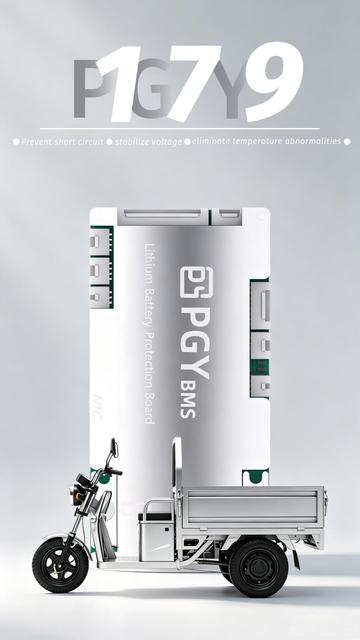
Researche of battery protection board for Lithium battery packs

Short-circuit protection is where most BMS designs fail

Why?
Because real-world short circuits are:

Extremely fast (Β΅s scale)
High peak current (10×–100Γ— nominal)
Hard to simulate accurately

πŸ“Š Insight:
Detection delay often matters more than threshold accuracy.

πŸ‘‰ Design priorities:

Fast detection path
Reliable MOSFET turn-off
Survivability under stress

www.pgybms.com +85264793197 +85265053443

#PowerElectronics #BMS #EE

Thermal issues in BMS are usually underestimated

Heat sources:

MOSFET conduction loss
Balancing resistors
Linear regulators

πŸ“Œ Hidden problem:
Poor thermal spreading β†’ localized hotspots

πŸ‘‰ Solutions:

Use copper pours strategically
Distribute heat sources
Simulate worst-case current paths

⚠️ A β€œcool-looking” PCB can still fail thermally.

www.pgybms.com +85264793197 +85265053443

#ThermalDesign #BMS #Hardware

Fast protection isn’t always better

Engineers often try to make overvoltage protection as fast as possible.

But:

Lithium cells tolerate brief transients
Overly fast cutoff β†’ nuisance trips
System-level stability suffers

πŸ“Š Better approach:
Use time-based filtering + voltage thresholds

πŸ‘‰ Think in terms of:
β€œIs this dangerous?” vs β€œIs this momentary?”

www.pgybms.com +85264793197 +85265053443

#BatteryManagement #BMS #PGYBMS #Engineering

www.pgybms.com +85264793197 +85265053443

Your BMS measurement error is probably a layout problem

Even with a good IC, poor PCB design ruins everything.

Top mistakes:

Shared ground paths for power and sensing
No Kelvin connection for shunt resistor
High-current traces too close to signal lines

πŸ“‰ Result:
Offset errors, noise injection, unstable protection behavior.

πŸ‘‰ Fix:
Treat current sensing like analog precision design, not power routing.

#PCBDesign #Electronics #BMS #PGYBMS

Passive balancing isn’t as β€œsimple” as it looks

Many assume passive balancing = safe + reliable.

But in practice:

Heat dissipation becomes a bottleneck
Balance current is often too low for large packs
Timing strategy matters more than hardware

πŸ“Œ Observation:
In multi-cell packs, imbalance is often driven by temperature gradients, not capacity differences.

πŸ‘‰ Design tip:
Balance control logic > resistor selection.

#PGYBMS #BMS #Battery #energystorage

Choosing MOSFETs for BMS? Rds(on) is NOT enough.

Many designs fail because engineers optimize only for conduction loss.

In reality

Rds(on) vs thermal rise
Gate charge (Qg) β†’ switching speed & driver stress
SOA (Safe Operating Area) under fault conditions

⚠️ Key insight:
Short-circuit events stress MOSFETs far beyond steady-state specs.

πŸ‘‰ Rule of thumb:
Always validate MOSFET behavior under pulse conditions, not just DC.

#PowerElectronics #BMS #EE #PGYBMS @pgybms

Why your BMS keeps tripping overcurrent

Low-voltage battery packs Issue: false overcurrent protection triggers.

From teardown analysis, the top causes are:
Sense resistor value too low β†’ poor signal-to-noise ratio
Insufficient RC filtering β†’ switching noise passes through
Comparator threshold too aggressive

πŸ“Š Real case:
A 1 mΞ© shunt + high dI/dt load caused ~30% measurement noise.

πŸ‘‰ Fixes:
Increase effective filtering
Optimize layout
Re-evaluate trip thresholds vs transient behavior

We're PGYbms specializing in battery tech for 10 years

Our BMS is built for LiFePO4 BMS
SAFE
STABLE
RELIABLE

Protection features cover : overcharge, over-discharge, short circuit
With Bluetooth, you can monitor it all from your phone

Message or call us today:
+852 65053443
+852 64793197

We are a professional Battery Management System manufacturer, dedicated to providing high-quality, customized battery protection solutions for global customers. Follow us to stay updated on cutting-edge battery protection technologies and industry trends!