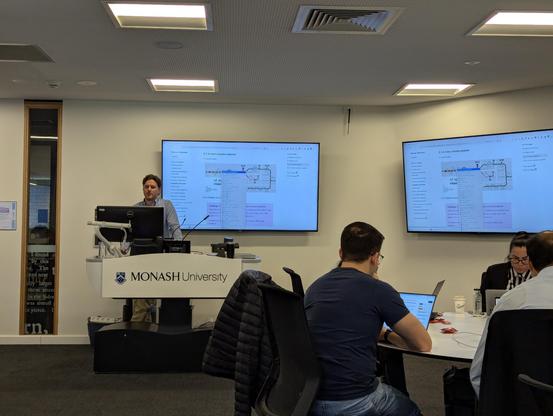
Visitor by the balcony.


| Website | https://logarithmic.net/pfh |
| X (deprecated) | https://twitter.com/paulfharrison |
| Bluesky (maybe?) | https://bsky.app/profile/paulfharrison.bsky.social |
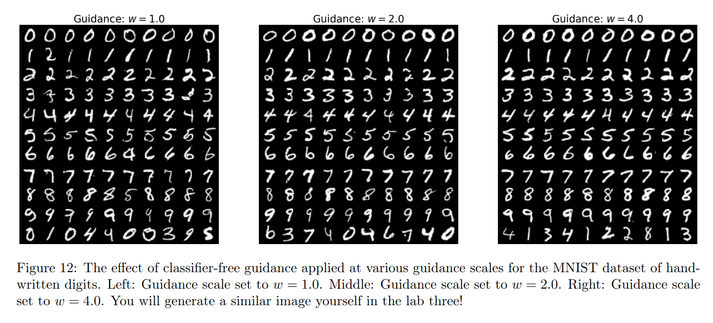
I'm really liking this course on generative diffusion models. They seem to have boiled many years of confusing development of ideas down to a simple approach.
Comparison of optimization and sampling from a distribution defined by an energy function. I use a continuous version of the Ising model spin lattice energy.
First, optimization from a random initial state using gradient descent with momentum, using the SGD optimizer in PyTorch.
I made a short video of the strange things UMAP and t-SNE can do to your data. The algorithms are shown mostly working as intended, yet with some surprising consequences.


pip install langevitour
Interactively tour your high-dimensional data directly from your Jupyter notebooks. Huge thanks to Wytamma Wirth @[email protected] for contributing the Python wrapper for langevitour.
https://colab.research.google.com/github/pfh/langevitour/blob/main/py/examples/langevitour.ipynb
