 Joe's Computer Museum
RE: https://piaille.fr/@colin_mcmillen/116308211181559490
COMING SOON!
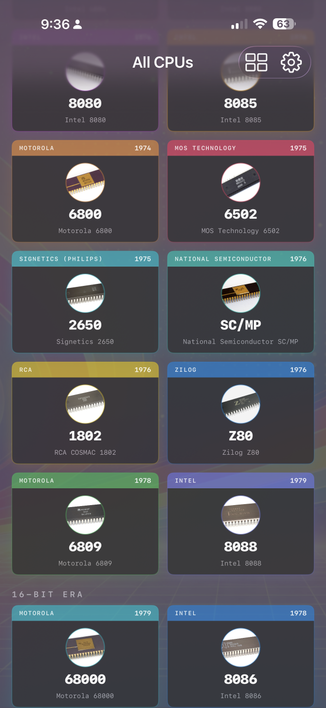
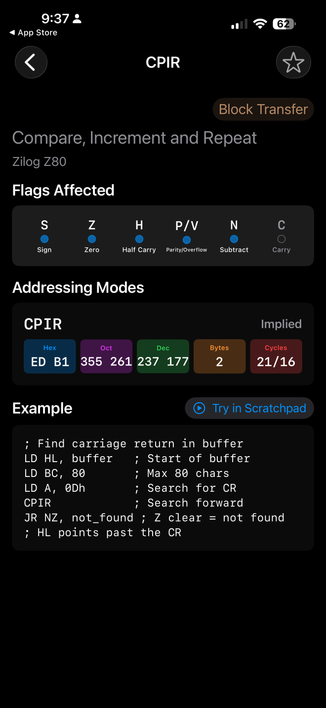
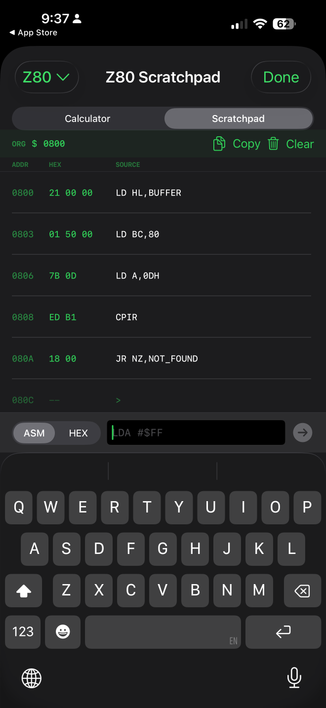
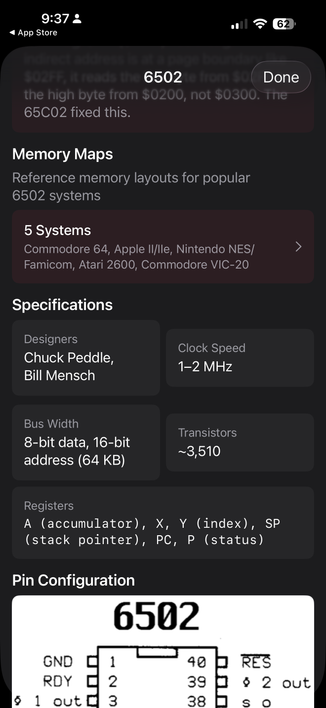
My retro CPU app is now out. Lots of information on your favourite 8-bit and 16-bit processors. It’s all free too - so give it a look! Instruction sets, pin-outs, sample code and more!
If you're looking for a full version history of all WordPerfect releases between 1979 and 1997, here it is.
I'm personally using WordPerfect 6.2 for DOS and WordPerfect 3.5e for Macintosh as my main word processors.
Remember how funding used to work before vulture capitalists cornered the market of funding start-ups?
Sirius Systems Technology was a personal computer manufacturer in Scotts Valley, California. It was founded in 1980 by Chuck Peddle and Chris Fish, formerly of MOS Technology and capitalized by Walter Kidde Inc.
@mos_8502 our ability to identify bugs in code during review is strongly reliant on our intuition for where bugs might exist, which in turn is based on observing human cognition and behaviour in the context of software development.
LLM-generated code sits in a kind of uncanny valley. it's a close enough approximation of human-written code that we will naturally anthropomorphise it and attempt to apply our standard intuition, but the bugs are fundamentally uncorrelated with our intuition.
A good critique of MacOS new menu icons https://tonsky.me/blog/tahoe-icons/
It highlights @scottjenson 's point from https://youtu.be/1fZTOjd_bOQ?si=eBP04-Yp3Z1Qf_Wm on how desktop UX keeps getting worse, not better.
 ShadowNetworks
 Ian Scott
 Grant Me Strength
 Antti Peltola ⁂
 Lectronz
 Riley S. Faelan
 Graham Sutherland / Polynomial
 Aurimas Liutikas