Skylar Hopkins

176 Followers
171 Following
44 Posts
Assistant Professor at NC State | Caver | Herp Enthusiast | Dog mom | Parasite Ecology Blogger. I research infectious diseases and conservation. She/her
The world is full of emerging infectious diseases, including pathogens so new to science that they don’t have names yet. Our new book, Emerging Zoonotic and Wildlife Pathogens, has dozens of case studies about them: ticks in ape noses; tapeworms in sushi; anthrax in hippos; white nose syndrome in bats; Sin Nombre virus in rodents/people; mange in wombats; Toxoplasma in otters; winter ticks exsanguinating moose; COVID-19; and so much more! It also has pretty pictures.
https://tinyurl.com/EZWPHard

Interesting variability between Vector Borne Diseases for this. Mostly increased risk but more mixed for diseases like Malaria, wonder if that is also a bit geographically varying.

#Zoonoses #OneHealth #VBD
---
RT @medrxivpreprint
Effects of cattle on vector-borne disease risk to humans: A systematic review https://medrxiv.org/cgi/content/short/2023.02.08.23285683v1 #medRxiv
https://twitter.com/medrxivpreprint/status/1623773084078448640

RT @parasiteecology
Hey Tweeps! Anyone got a great photo of how difficult ecological field work can be and want to be featured in a textbook? Photo of you carrying heavy traps through the desert? Photo of it absolutely pouring on you while you're trying to take data? Etc. Please RT!

Is there an #ML metric that describes something like confidence, based on how much training data was similar to the case being predicted? e.g.,

"12/1000 records in the training set are similar"

One might do this by binning all the variables and counting "similar" records that are all the same bins, or calculating some normalized distance metric between the new predictors and those in the training set, and a threshold distance. Maybe weight with variable/interaction importances. @juliasilge

I used @parasiteecology blog post on frequency v. density dependent transmission of diseases as assigned reading for my graduate class in modelling and got overwhelmingly positive feedback on it!

https://parasiteecology.wordpress.com/2013/10/17/density-dependent-vs-frequency-dependent-disease-transmission/

Density-dependent vs. Frequency-dependent Disease Transmission

Parasite Ecology
I heard my first upland chorus frogs of 2023 singing today! And saw this friend near a dirt road puddle.

This coming week is Field Inclusive week, dedicated to increasing inclusivity in field work! There are are virtual events each day, including talks, panel discussions, giveaways, photo contests, and more:
https://www.fieldinclusive.org/fieldinclusiveweek-2023/

And you can check out the discussion by following #FieldInclusiveWeek

#Ecology #FieldWork #FieldBiology #FieldEpi

#FieldInclusiveWeek 2023 - Field Inclusive, Inc.

Join us for a week of virtual celebration of all Field Biologists. Featuring Panel Discussions with experts, talks, giveaways, photo contests, and more! Register for Virtual Events Below: Date and Time Event Name and Speaker(s) Free Registration January 174:00pm ET Field SafetyPanelists:Abbi Turner, Jin Bai, and Murry Burgess Register January 184:00pm ET Challenging Stereotypes:What should a Field Biologist Look Like?Speaker: Soo Uhm […]

Field Inclusive, Inc.

Finalizing the wombat mange section of our textbook reminded me that this delightful comic from @oatmeal exists. It's always worth another read.

https://theoatmeal.com/comics/wombats

We need to have a conversation about wombats - The Oatmeal

This comic is about a lot of things, but mostly it is about butts.

The Oatmeal

This lighthouse is SO UNIQUE! It's called Þrídrangar, which means "three rock pillars". It is located 4.5 miles (7.2 kilometres) off the southwest coast of Iceland, in the archipelago of Vestmannaeyjar, often described as the most isolated lighthouse in the world. The lighthouse was built there in 1939.

It's such a INCREDIBLE location for a lighthouse, perched on a rock in Iceland's wild surf. Originally constructed and accessible only by scaling the rock on which it is situated, it is now accessible by helicopter since the construction of a helipad.

#photography #photo #photos #landscape #lighthouse #engineering #amazing #travel #world #wonders

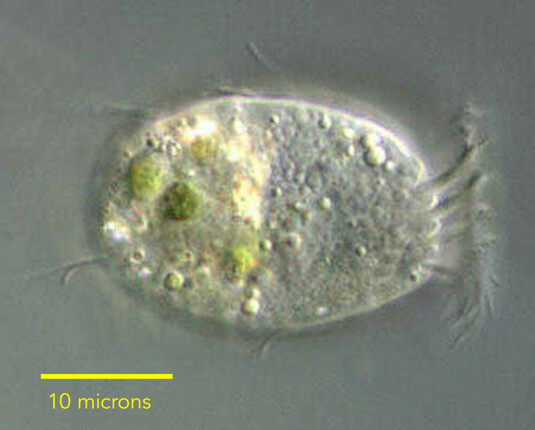
Researchers have discovered the first known "virovore," an organism that feeds on viruses. Probably there are many others like it -- an entire, previously unknown food chain.
One day into 2023, and already things are going topsy turvy.
https://www.eurekalert.org/news-releases/975344 #ecology #life
Eating viruses can power growth, reproduction of microorganism

In a turnabout worthy of Pac-Man, University of Nebraska–Lincoln researchers have found that microscopic ciliates can eat huge numbers of infectious chloroviruses that share their aquatic habitat. For the first time, the team’s lab experiments have also shown that a virus-only diet, which the team calls “virovory,” is enough to fuel the physiological growth and even population growth of an organism.

EurekAlert!