John Jackson

60 Followers
23 Following
18 Posts
Science at the Natural History Museum, London - John Jackson posting - (on twitter @NHM_Science)
Chalcidoid wasps are fundamental to ecosystem dynamics and agriculture, and include many parasitoids of plant-feeding bugs. John Noyes' latest tremendous volume on Costa Rican species now freely available with 254 new species in 21 new genera www.nhm.ac.uk/our-science/our-work/biodiversity/taxonomic-monographs-on-neotropical-hymenoptera.html
We're looking for a new head of our molecular labs at the NHM in London! https://careers.nhm.ac.uk/templates/CIPHR/jobdetail_2870.aspx #Museums #Genomics #Jobs
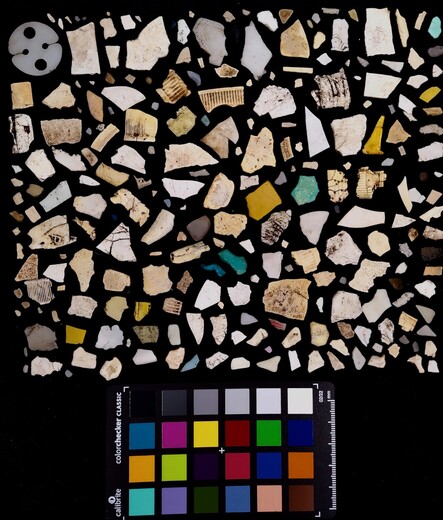
236 pieces of plastic from one Flesh-footed Shearwater chick found dead in the colony on Lord Howe Island. Sadly, not the record. #LHIadventure
Reptile style - evolution and diversity of swimming in marine ichthyosaurs, plesiosaurs and others from Susana Gutarra @nhmscience & al https://onlinelibrary.wiley.com/doi/full/10.1111/pala.12645

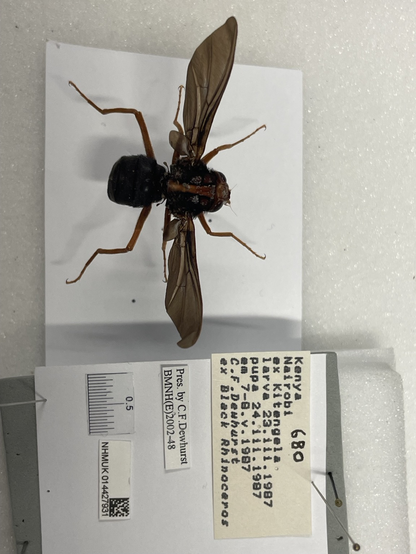
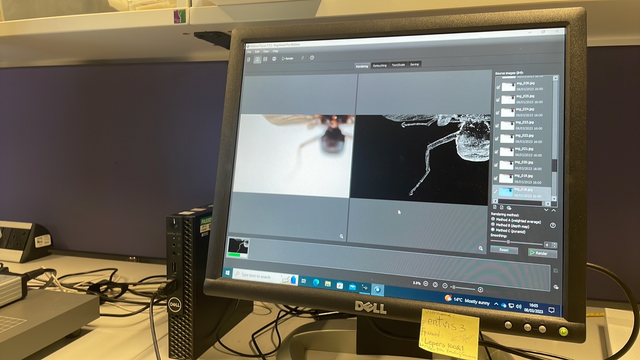
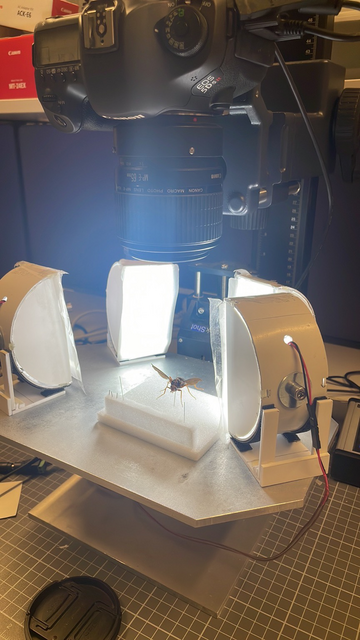
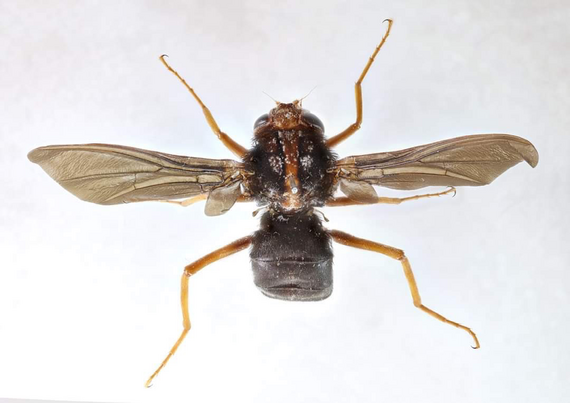
Imaging the Rhino bot fly (amongst others today). Arguably one of the most endangered species on the planet but ignored by most! A striking fly that’s really quite large! What a fabulous creature

@nhmscience #collections #flies #diptera #botflies #digitisation #imaging

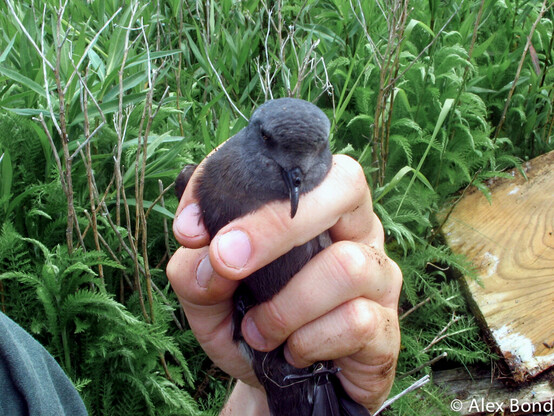
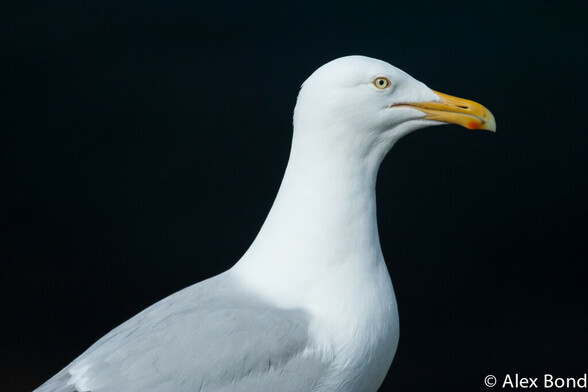
NEW PAPER! In @AvianAce shows Leach's Storm-petrels on Gull Island, Newfoundland declined by 6% per yr and gulls ate 118,000–143,000 Leach’s Storm-petrels in 2012 alone! Highlights the complexity of managing declining predator AND prey species https://ace-eco.org/vol18/iss1/art5/ #ornithology
Avian Conservation and Ecology: Quantifying gull predation in a declining Leach’s Storm-petrel (Hydrobates leucorhous) colony

The effect of gull predation on sympatric seabirds has garnered much attention and management action in recent decades. In Witless Bay, Newfoundland, Canada, gulls depredate significant numbers of Leach’s Storm-petrels (<em>Hydrobates leucorhous</em>) annually. We quantified this predation on Gull Island in Witless Bay, and its effects on the storm-petrel population, by estimating the annual gull predation rate using strip transects to count storm-petrel carcasses and predicting storm-petrels’ population growth rate by repeating an island-wide breeding census. Using methods that account for island topography, we found that the Leach’s Storm-petrel breeding population on Gull Island declined to roughly 180,000 pairs in 2012 (95% CI: 130,000–230,000), a decrease of 6% per year since the last census in 2001 (352,000 pairs). Based on carcass counts, gulls, mostly American Herring Gulls (<em>Larus argentatus smithsonianus</em>), depredated 118,000–143,000 Leach’s Storm-petrels in 2012. Studies of storm-petrel recruitment, the contribution of the large non-breeding component of the population to gulls’ diets, and the consequences of gulls’ storm-petrel diet on the gulls themselves are needed to better predict the trajectory of both species into the future.

BBSRC Fellowship Scheme is open! If anyone wants to turn their skills towards plastics & wildlife (methods, pathology, disease) get in touch! Maybe building off our recent paper on #plasticosis (https://www.sciencedirect.com/science/article/pii/S0304389423003722) #PlasticPollution #postdocjobs

https://www.ukri.org/opportunity/bbsrc-discovery-fellowships-2023/

New disease caused by plastics discovered in seabirds

Natural History Museum scientists say plasticosis, which scars digestive tract, likely to affect other types of bird too

The Guardian

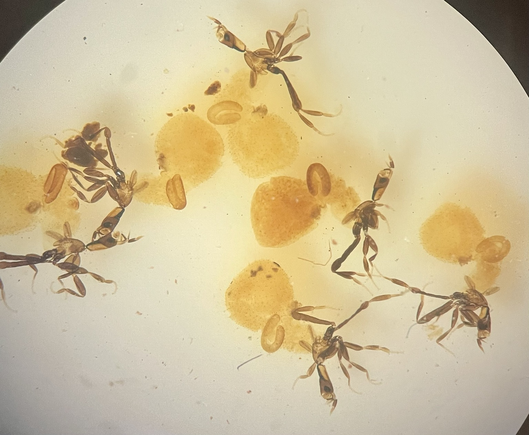
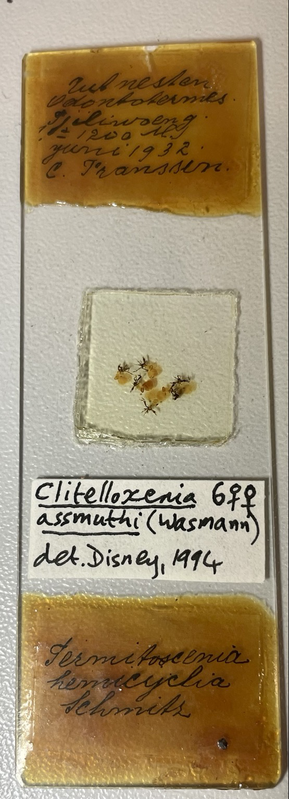
Oh for the love of #flies it’s #TaxonomyTuesday

These amazing females are Clitelloxenia assmuthi & these #Phorids are termitophilous - they live with, & some feed on, termites

This is one of the 190 recorded termitophilous & other termite-associated Phorids - one of the most ecologically diverse family of animals on the planet!

@nhmscience #collection