I have applied for mathstodon membership
| Google Scholar | https://scholar.google.com/citations?user=OGhN4WkAAAAJ&hl=en |
| Website | https://www.schultzlab.org |
| Google Scholar | https://scholar.google.com/citations?user=OGhN4WkAAAAJ&hl=en |
| Website | https://www.schultzlab.org |
#behavioural time-scale #synaptic #plasticity was discovered by Bittner and Magee a few years ago: https://www.science.org/doi/full/10.1126/science.aan3846
It was mysterious - how could the time-window for plasticity be so large?
This new paper from the Losonczy lab suggests that it's due to intracellular calcium release from the ER:
Thrilled to announce that I have been awarded an ERC Starting Grant! This will enable us to develop AI-driven models of learning in cortex-wide networks! 🇪🇺 #ERCStG
---
RT @ERC_Research
📢 The ERC's 2022 Starting Grant competition results are now revealed. Over €636 million to fund the best ideas of younger scientists.
Find out who, where and why 👉 http://bit.ly/3JRyDDg
🇪🇺#EUfunded @HorizonEU #FrontierResearch #ERCStG
https://twitter.com/ERC_Research/status/1595009233493577728
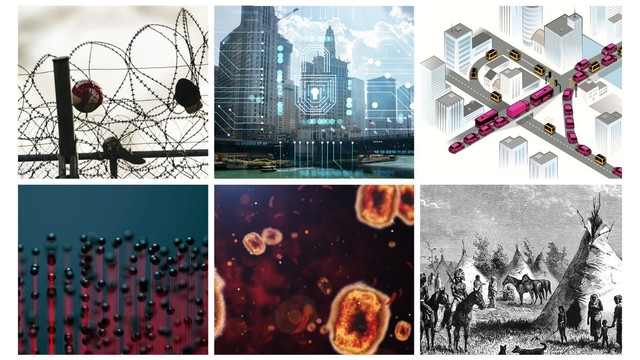

Scientists! Many of my fellow reporters at @sciencemagazine are here now:
Ace pandemic reporters @kakape and @joncohen;
@rpocisv, covering diversity in science;
@boron110, our delightful podcast host;
@martinenserink, international editor and public health guru;
@klangin, covering the scientific workforce;
@DanClery, covering astronomy;
@lguterman, editing chem and bio;
@cathleenogrady, writing about science and society;
@meredithwadman, covering medicine and bad behavior.
Slowly figuring out how predictive coding happens in the brain ...
A beautiful piece by @ViolaPriesemann and her team.
Out now in TINS
https://www.cell.com/trends/neurosciences/fulltext/S0166-2236(22)00186-2
 Blake Richards
 Rui Ponte Costa
 Michael P.H. Stumpf
 Marcel Fröhlich
 Terence Tao
 Paul Voosen
 Jaan Aru