@n_______d

8 Followers
8 Following
32 Posts
sound artist + phototaker · environmental complainer
listening as method
performance · psychogeography · alternative mappings
sound cartography · cultural studies · arts research · non-anthropocentric perspectives
b. 1980

(7) we don’t only consume objects: we consume visual signals that orient us among thousands of competing stimuli. and whatever stands out ends up existing more intensely than what remains beside it, quieter, less visible.

if berger explains how images organize desire, barthes focuses on how objects become carriers of cultural meaning.

what we desire is not the thing itself, but the way it has already been made legible to us before we even reach for it.

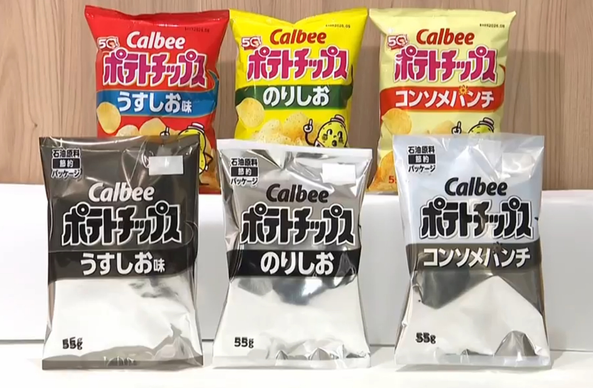
(6) what i found most interesting is what happens when color disappears. someone is asked, in the article, a specialist or a scholar on the matter.

other senses begin to appear in the buyer's mind: the texture of the plastic, the sound of the bag, the dry movement of the chips inside, the sharp crunch when touched.

as if the brain somehow sensory rebuilds certainty through other channels once visual certainty is gone.

this works?

(5) I remember a text, can't remember now which, out of the thousands of photocopies we read from back in the university, barthes helps push this further.

i think it was in mythologies that he writes about how everyday objects carry cultural meanings that feel natural even though they are constructed.

well, packaging works like that too: it doesn’t simply contain the product, it tells us how to interpret it before we even touch it.

this is me again thinking about the senses.

(4) the article mentioned something fascinating: large corporations could probably survive monochrome packaging because they already possess symbolic recognition. smaller companies, however, depend much more heavily on color in order to exist on the shelf.

and that made me think that color functions almost like a language before the product itself.

black often signals sophistication.

green suggests something natural.

yellow suggests crunch, salt, intensity.

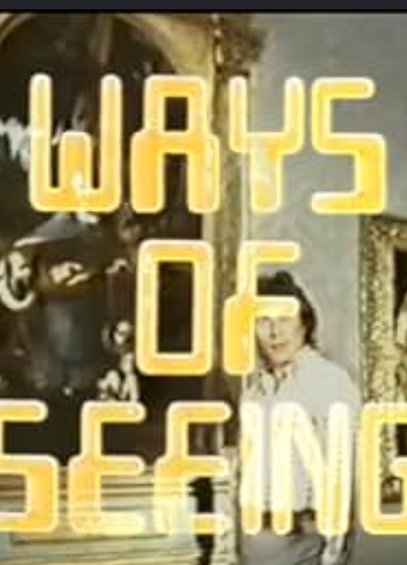
(3) in wos, berger explains that we never just look at one thing: we always look at the relation between things and ourselves (also taoism talks about this). seeing is never neutral or innocent.

i think packaging makes this extremely visible.
a bright red bag surrounded by muted surfaces doesn’t just stand out: it organizes attention, creates visual hierarchy, and directs desire. it makes one object exist more intensely than the others around it.

if it stands out it's more trustworthy .

(2) what interested me wasn’t only the economic reason behind it, but what it reveals: how much of consumption happens before we actually consume anything.

i think we often believe we choose through taste, when in reality we choose first through perception. flavor comes later.

and immediately i thought of berger.

(1) i saw this picture today, while reading the newspapers online, still in bed at santiago de compostela. produced like a proper digital nomad after working all afternoon and most of last night. now I’m waiting for the drizzle to stop so i can finally go running. it's 830 am. this one i read it on @TheGuardian . because of rising costs linked to the wars in course, a japanese snack company had to temporarily (?) switch its potato chip packaging to monochrome designs. so i thought:

rituals in high mountains are not only visual or symbolic — they are sonic. chants, wind over ice, footsteps on snow, cracking glaciers.

i remember mircea eliade wrote about the sacred as a rupture in space — hierophany, axis mundi. but what if the axis melts? a critical cartography would map not only territory, but affect, loss, resonance. but how do we draw maps of disappearing sacredness, i wonder.

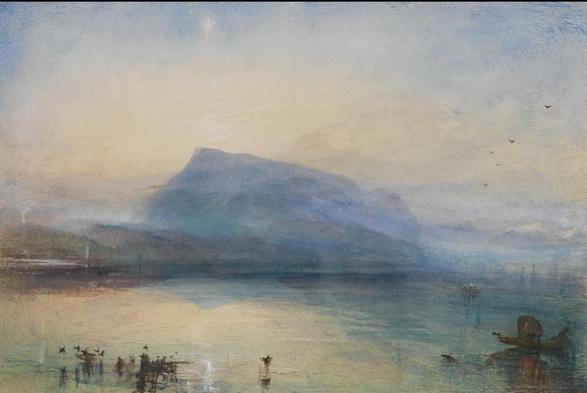
below, turner, the blue rigi (1842).

#criticalcartography #landscape #territory

as sacred glaciers melt due to global warming , communities from the andes to the himalayas are forced to reinterpret rituals, deities, and their bond with the land. climate change isn’t only ecological—it’s cosmological.

how do we map loss beyond geography? can we trace emotional cartographies, shifting soundscapes, altered psychogeographies of melting mountains?

#landscape #territory #psychogeography #soundstudies #anthropologyofsound #emotionalcartography