I like the Slate Truck!!
| ⏳ Age | younger millennial |
| 📍 Location | 78°22'S 165°01'E |
| 🌐 Website | currently 404 |
| :verified: Verification | https://spacey.space/@mountdiscovery |

 🛰️
🛰️| ⏳ Age | younger millennial |
| 📍 Location | 78°22'S 165°01'E |
| 🌐 Website | currently 404 |
| :verified: Verification | https://spacey.space/@mountdiscovery |
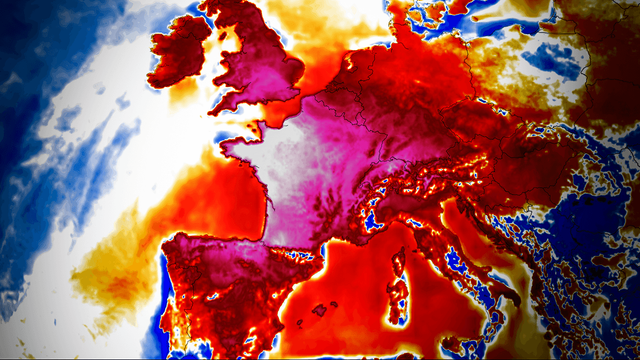
Not the End of the World and Clearing the Air by Hannah Ritchie is very apropos considering the weather
Inspired Enterprise by Gwen Swanson is my new fav
Range and Inside the Box by David Epstein
The voyages of Ancient Pacific mariners echo in modern space exploration
There are many ways to traverse vast cosmic distances—including exploiting natural forces like slopes, winds, currents, or gravity as fuel-efficient means of acceleration.
by Geoff Manaugh
Books about Outer space -- Exploration at PG:
https://www.gutenberg.org/ebooks/subject/5990
RE: https://mstdn.social/@lowqualityfacts/116805002312172195
so, not in the land of the 🥝 kiwi but the 🍎 big apple
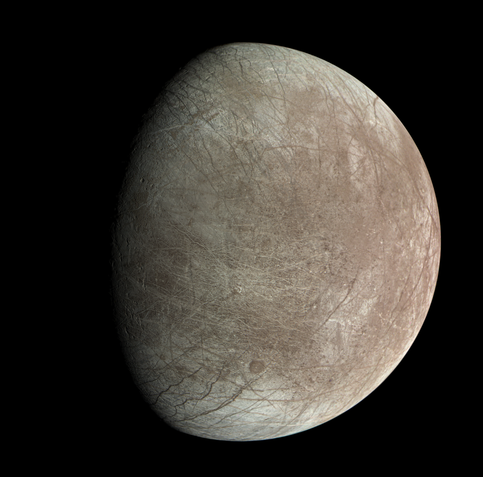
#PPOD: Jupiter's moon Europa was captured by the JunoCam instrument aboard NASA's Juno spacecraft during the mission's close flyby on Sept. 29, 2022. As with our Moon and Earth, one side of Europa always faces Jupiter, and that is the side of Europa visible here. Europa's surface is crisscrossed by fractures, ridges, and bands, which have erased terrain older than about 90 million years. Credit: NASA/JPL-Caltech/SwRI/MSSS; Processing: Björn Jónsson (CC BY 3.0)
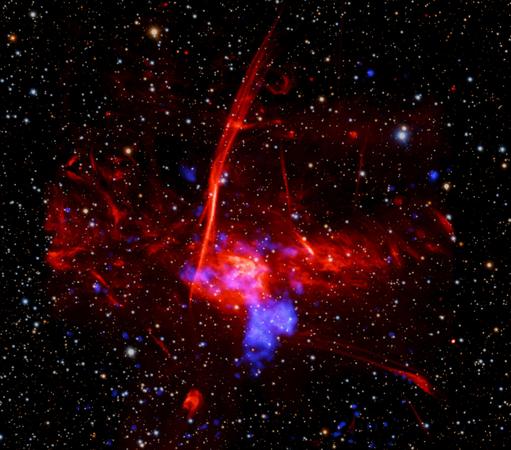
Possible Supernova Remnant in Galactic Center
Image Credit & Copyright: X-ray: NASA/CXC/UCLA/Z. Zhu et al.; ESA/XMM-Newton; Optical: PanSTARRS; Radio: MeerKAT; Image Processing: NASA/CXC/SAO/L. Frattare and P. Edmonds
Text: Cecilia Chirenti (NASA GSFC, UMCP, CRESST II)
Explanation: Do you see that blue blob to the lower right of the image center? Astronomers think that it shows where a massive star exploded as a supernova whose light reached Earth 1,700 years ago. The image combines optical data from the PanSTARRS telescopes in Hawaii (background stars in red, green, and blue), radio from the MeerKAT telescope in South Africa (large red cloud) and X-rays from NASA's Chandra X-ray Observatory and ESA’s XMM-Newton (shown in blue). The large cloud is a star forming region called Sagittarius C, which is approximately 50 light-years in extent and about 26,000 light-years from Earth. It is located only about 260 light-years from the supermassive black hole in the center of the Galaxy (off to the left of the image). If the blue blob is confirmed to be a supernova remnant, it would be one of the closest ever discovered to the Galactic Center. In this dense region, the deaths of massive stars are connected to the birth of new stars through gas and magnetic fields in a complex way.
 Peter Gleick
 kaia
kaia

 Project Gutenberg
 SETI Institute
 lenazun
 Astronomy Picture of the Day