 Astronomy Picture of the Day (unofficial bot)
#apod 2026-05-22
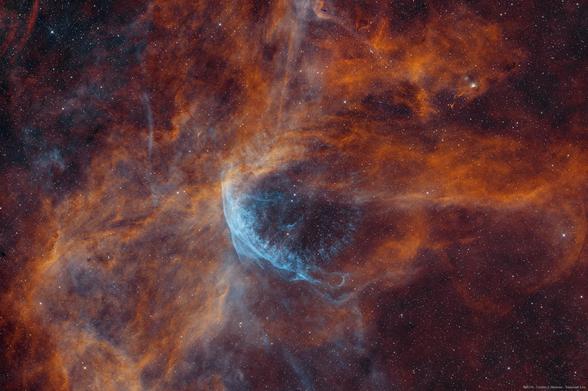
The Nebulous Realm of WR 134
Image Credit: Luigi Morrone
Web page: https://apod.nasa.gov/apod/ap260522.html
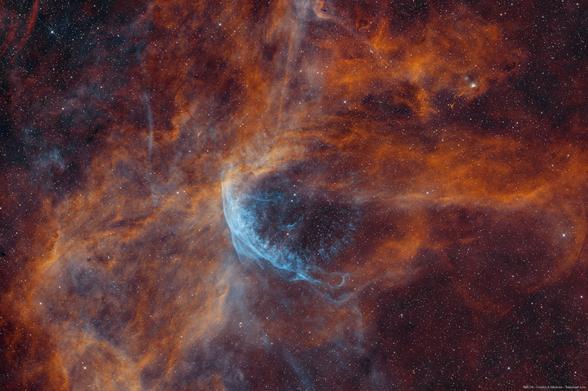
Astronomy photo of the day: The Nebulous Realm of WR 134.
Copyright: Luigi Morrone
Explanation: This cosmic snapshot covers a field of view over twice as wide as the full Moon within the boundaries of the high-flying constellation Cygnus. Made using astronomical narrowband filters, the image highlights the bright edge of a ring-like nebula traced by the glow of ionized hydrogen and oxygen gas
2026 May 22
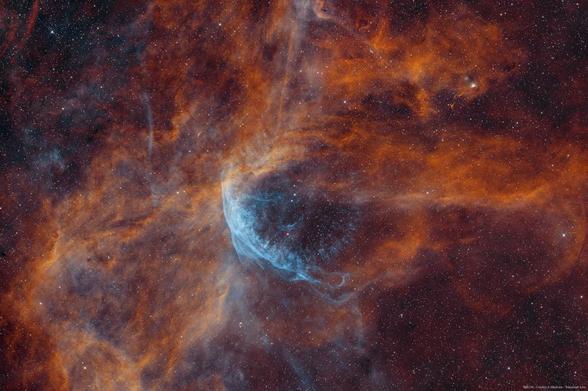
The Nebulous Realm of WR 134
* Image Credit & Copyright: Luigi Morrone and Telescope Live
https://app.astrobin.com/u/Luigi_morrone_1979#gallery
Explanation:
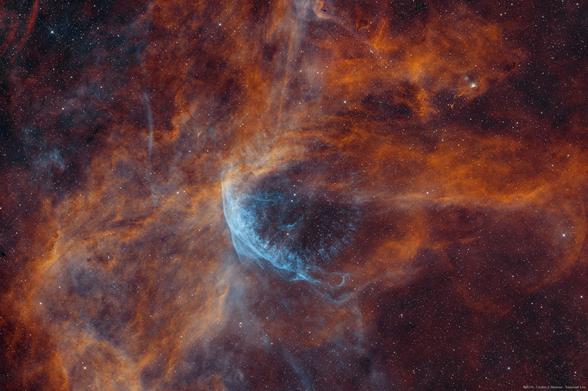
This cosmic snapshot covers a field of view over twice as wide as the full Moon within the boundaries of the high-flying constellation Cygnus. Made using astronomical narrowband filters, the image highlights the bright edge of a ring-like nebula traced by the glow of ionized hydrogen and oxygen gas. Embedded in the region's expanse of interstellar clouds, the complex, glowing arcs are sections of shells of material swept up by the wind from Wolf-Rayet star WR 134, the brightest star near image center. Distance estimates put WR 134 about 6,000 light-years away, making this telescopic frame over 100 light-years across. Shedding their outer envelopes in powerful stellar winds, massive Wolf-Rayet stars have burned through their nuclear fuel at a prodigious rate and end their final phase of massive star evolution in a spectacular supernova. Their stellar winds and final supernova explosion enrich the interstellar material with heavy elements to be incorporated in future generations of stars.
https://app.astrobin.com/i/czqayf
https://apod.nasa.gov/apod/ap220609.html
https://apod.nasa.gov/apod/ap090915.html
https://apod.nasa.gov/apod/ap230318.html
https://adsabs.harvard.edu/abs/1995A&A...304..491E
https://chandra.harvard.edu/photo/2003/ngc6888/
https://apod.nasa.gov/apod/ap011026.html
https://science.nasa.gov/universe/stars/
https://apod.nasa.gov/apod/ap011026.html
#space #nebula #astrophotography #photography #science #astronomy #physics #nature #NASA #apod
APOD: 2026 May 21 – A Collision of Galaxy Clusters
https://apod.nasa.gov/apod/ap260521.html
A #Collision of #GalaxyClusters
#Astronomy #Picture of the Day
Astronomy photo of the day: A Collision of Galaxy Clusters.
Copyright: Unknown
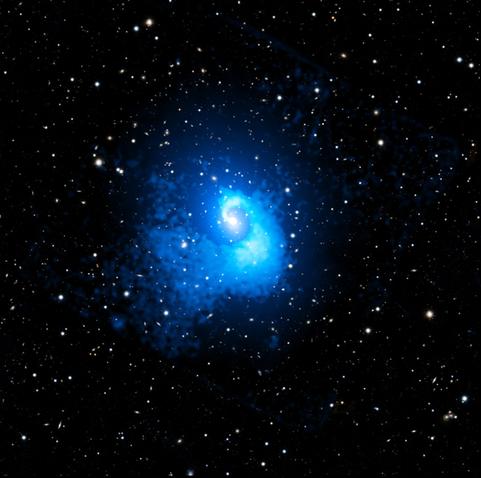
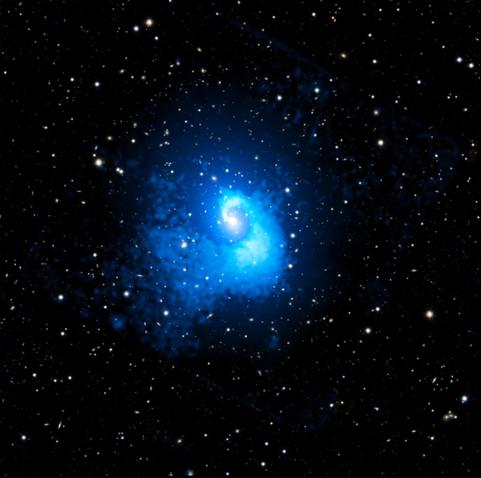
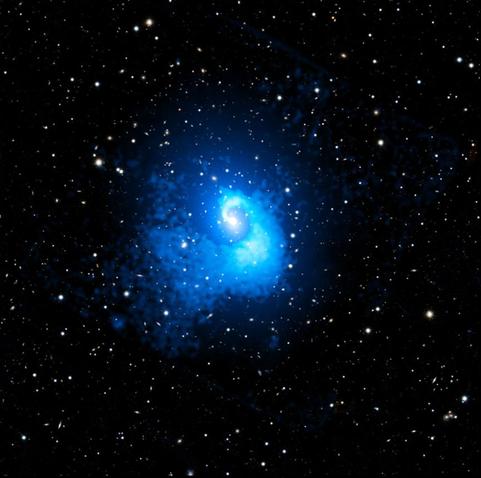
Explanation: This big beautiful spiral shines in X-ray light. It is about 20 times larger than our Galaxy. It belongs to Abell 2029, a galaxy cluster one billion light-years away. (To see only the galaxies, hover your cursor over the image, or follow this link
2026 May 21
A Collision of Galaxy Clusters
* Image Credit: X-ray: NASA/CXC/CfA/C. Watson et al.
https://www.nasa.gov/
https://science.nasa.gov/mission/chandra/
https://www.cfa.harvard.edu/
https://iopscience.iop.org/article/10.3847/1538-4357/ae2026
* Optical: PanSTARRS
https://panstarrs.ifa.hawaii.edu/
* Image Processing: NASA/CXC/SAO/N. Wolk and P. Edmonds
https://www.cfa.harvard.edu/people/nancy-ra-wolk
https://www.cfa.harvard.edu/people/peter-edmonds
* Text: Cecilia Chirenti (NASA GSFC, UMCP, CRESST II)
https://science.gsfc.nasa.gov/sci/bio/cecilia.chirenti
Explanation:
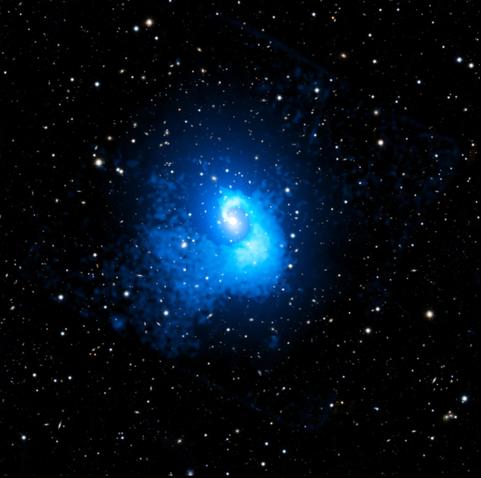
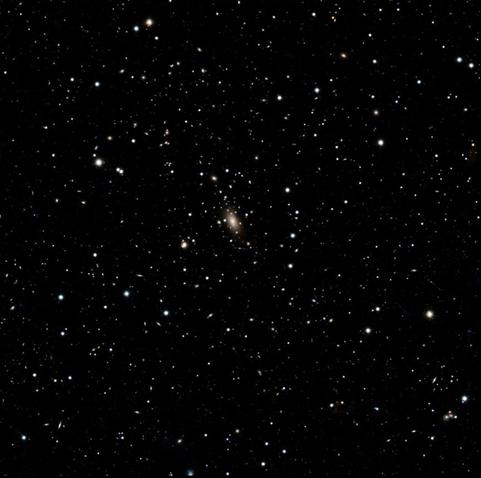
This big beautiful spiral shines in X-ray light. It is about 20 times larger than our Galaxy. It belongs to Abell 2029, a galaxy cluster one billion light-years away. To see only the galaxies, look at the image to the right.
Galaxy clusters are the largest structures in the universe that are supported by gravity. Abell 2029 is formed by thousands of galaxies, surrounded by a huge cloud of hot gas and the equivalent of more than a trillion times the mass of the Sun in dark matter. The spiral is made of gas, mostly hydrogen and helium, heated to millions of degrees. It was found in a recent study that used data from NASA's Chandra X-ray Observatory to show that Abell 2029 had a collision with a smaller cluster four billion years ago. The collision affected the gravitational field and caused the intracluster gas to slosh, like wine moving in a wine glass, shaping the spiral.
https://chandra.si.edu/photo/2026/a2029/
https://science.nasa.gov/ems/11_xrays/
https://www.youtube.com/watch?v=MX3PIkbTQwQ&t=44s
https://en.wikipedia.org/wiki/Abell_2029
https://chandra.harvard.edu/xray_sources/galaxy_clusters.html
https://en.wikipedia.org/wiki/Light-year
https://science.nasa.gov/universe/galaxies/large-scale-structures/
https://apod.nasa.gov/apod/ap190226.html
https://apod.nasa.gov/apod/ap240327.html
https://science.nasa.gov/dark-matter/
https://iopscience.iop.org/article/10.3847/1538-4357/ae2026
https://science.nasa.gov/mission/chandra/
https://apod.nasa.gov/apod/ap000306.html
https://images.unsplash.com/photo-1700455350393-34e80e3e0997
https://apod.nasa.gov/apod/ap260521.html
#space #cluster #astrophotography #photography #science #nature #NASA #esa #apod
 Astronomy Bot
 Sayed.app
 grobi
grobi Miro Collas
 Khurram Wadee ✅