mobarak hossain

292 Followers
150 Following
9 Posts
Assistant Professor at LSE. Formerly at Nuffield College and Oxford Social Policy and Intervention. Sociologist. http://mobarakhossain.net
🌐https://mobarakhossain.net
:twitter:https://twitter.com/mobarakhossa

I am also the EiC of European Sociological Review @ESR_news, struggling to come up with the final equation that explains what a good paper is.

Here is where I am now:

good research question+ proper research design + adequate data + solid (statistical) analysis + correct interpretation of the findings

This one is the result of years of work by various people; a paper that reads like a Russian novel: https://doi.org/10.31235/osf.io/j7r86
#Sociology @sociology
Analysis of #AmericanSociologicalReview acceptances & rejections 1990-2010. Main finding is those in elite depts more likely to be accepted & less likely to be rejected. Higher rejections for not-White not-male or for gender/race topics are "explained" by elite dept. variable.
https://www.rsfjournal.org/content/8/7/192
Who Gets Accepted and Who Gets Rejected? Status in the Production of Social Science

This article considers science as a stratified social system that may reflect and reproduce broader social patterns of stratification. Analyses are based on a unique data archive with more than ten thousand published and unpublished manuscripts and the associated peer reviews, all submitted between 1990 and 2010 to the American Sociological Review , a leading journal in the discipline. The analysis considers how race, gender, manuscript topic, and institutional affiliation are associated over time with publication decisions. These decisions shape the future of the discipline and have broader social implications. The findings show patterns that may limit emerging perspectives in the discipline and provides recommendations as to how the discipline can not only make the stratification system more permeable, but also emphasizes the significance of flattening the hierarchy altogether.
RSF: The Russell Sage Foundation Journal of the Social Sciences

#introduction I'm a sociologist in the Department of Social Policy and Intervention at the University of Oxford.

I study the political economy of health (including the health effects of welfare reform) and I'm very interested in social class and #elites. My papers can found here: https://scholar.google.co.uk/citations?user=GlRRMAwAAAAJ&hl=en

Right now I am working on a book with Sam Friedman on the British elite (under contract with Harvard University Press).

My webpage is here: http://aaronreeves.org/

Aaron Reeves

Professor, Oxford University - Cited by 6.591 - political economy of health - sociology of culture - elites - welfare reform

Hello concerned, how did the authors arrive at this conclusion? Have you read it? It's really not satire!

"Resource-scarce individuals should be encouraged to improve themselves and bridge the poverty gap through their own efforts, instead of destroying others’ advantages."
https://link.springer.com/article/10.1007/s12144-022-03873-7

Do the poor envy others more? The effects of scarcity mindset on envy - Current Psychology

This study explored the relationship between scarcity mindset and envy and the possible mediating mechanisms. We induced participants’ scarcity mindset. Resource-scarce individuals experienced more envy and generated more malicious motivation and less benign motivation to improve themselves after upward social comparison as compared to their counterparts. The relationship between scarcity mindset and envy was mediated by sense of control. Improving resource-scarce participants’ sense of control significantly reduced their envy and malicious motivation and significantly enhanced their benign motivation. Resource-scarce individuals should be encouraged to improve themselves and bridge the poverty gap through their own efforts, instead of destroying others’ advantages. Overall, this study found that individuals with a scarcity mindset were more envious of others after upward social comparison, and this phenomenon was significantly improved by manipulating their sense of control.

SpringerLink

… and some more #sociologists

@kerstinsailer (Kerstin Sailer)
@pdbrooker (Phillip Brooker)
@antoinegaboriau (Antoine Gaboriau)
@haphazardsoc (Neal Caren)
@sara_geven (Sara Geven)
@mobarak (mobarak hossain)
@markgatto (–)
@eyalbhaim (Eyal Bar-Haim)

For the complete list: https://trutzig89182.github.io/Mastodon-Sociologists/

New accounts are only added to the list on explicit demand. If you want to be removed, just let me know.

@sociology #sociodon #sociology

Sociologists on Mastodon

A list of sociologists in the Fediverse

Ok two threads on migrating to #mastadon

1) How and why its important to #verify and you can do that yourself
https://econtwitter.net/@fetzert/109296526744390720

2) How to add people you follow from Twitter on Mastadon at scale?
https://econtwitter.net/@fetzert/109297167010664834

I am on the #econtwitter #mastadon instance. To ensure this remains a good place, for any #introduction you see here of an account not verified. Remind them to verify.

Also make use of hashtags. You can reach out your bubble through them quite nicely.

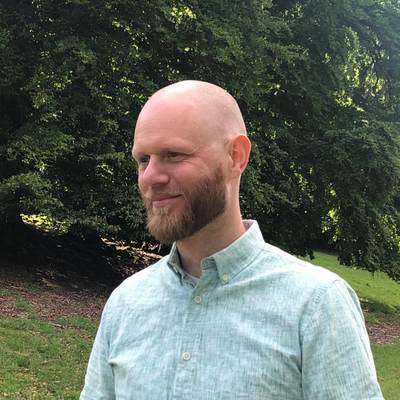
Intergenerational occupational mobility in the General Social Survey, 2016-2021 (for fathers and sons). How to read it, e.g.: 37.3% of sons with professional fathers are in professional occupations, compared with 22.5% of all sons, so the ratio is 1.7 (the highest value on the table). #sociology #inequality #gss