 Alex Kretzschmar
This is so true. #allthingsopen


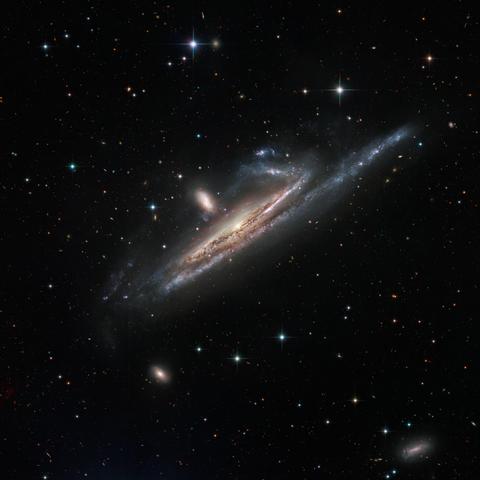
Galaxies in the River
Image Credit & Copyright: Vikas Chander
Explanation: Large galaxies grow by eating small ones. Even our own galaxy engages in a sort of galactic cannibalism, absorbing small galaxies that are too close and are captured by the Milky Way's gravity. In fact, the practice is common in the universe and illustrated by this striking pair of interacting galaxies from the banks of the southern constellation Eridanus, The River. Located over 50 million light years away, the large, distorted spiral NGC 1532 is seen locked in a gravitational struggle with dwarf galaxy NGC 1531, a struggle the smaller galaxy will eventually lose. Seen nearly edge-on, in this sharp image spiral NGC 1532 spans about 100,000 light-years. The NGC 1532/1531 pair is thought to be similar to the well-studied system of face-on spiral and small companion known as M51.
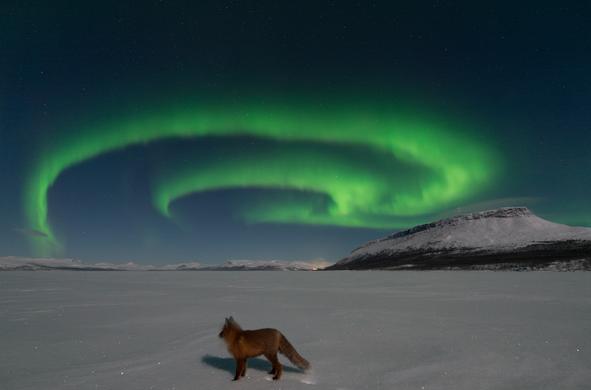
Northern Fox Fires
Image Credit & Copyright: Dennis Lehtonen
Explanation: In a Finnish myth, when an arctic fox runs so fast that its bushy tail brushes the mountains, flaming sparks are cast into the heavens creating the northern lights. In fact the Finnish word "revontulet", a name for the aurora borealis or northern lights, can be translated as fire fox. So that evocative myth took on a special significance for the photographer of this northern night skyscape from Finnish Lapland near Kilpisjarvi Lake. The snowy scene is illuminated by moonlight. Saana, an iconic fell or mountain of Lapland, rises at the right in the background. But as the beautiful nothern lights danced overhead, the wild fire fox in the foreground enthusiastically ran around the photographer and his equipment, making it difficult to capture in this lucky single shot.
Pleiades from Planet Earth
Image Credit & Copyright: Max Inwood
Explanation: The lovely Pleiades star cluster shines in Earth's night sky, a compact group of stars some 400 light-years distant toward the constellation Taurus and the Orion Arm of our Milky Way galaxy. Recognized since ancient times, the remarkable celestial gathering is visible to the unaided eye. The Pleiades cluster is also well-placed for viewing from both northern and southern hemispheres, and over the centuries has become connected to many cultural traditions and celebrations, including the cross-quarter day celebration Halloween. In Greek myth, the Pleiades were seven daughters of the astronomical titan Atlas and sea-nymph Pleione. Galileo first sketched the star cluster viewed through his telescope with stars too faint to be seen by eye and Charles Messier recorded the position of the cluster as the 45th entry in his well-known catalog of things which are not comets. In this dramatic night skyscape from planet Earth, the stars of the Pleiades appear embedded in dusty blue reflection nebulae, poised above Mt Sefton, one of the tallest peaks in New Zealand. There known as Matariki, the star cluster is associated with the celebration of the Maori new year.

Another upstream kernel release, another progress report!
https://asahilinux.org/2025/10/progress-report-6-17/
Thank you once again to everyone supporting us on OpenCollective and GitHub sponsors!
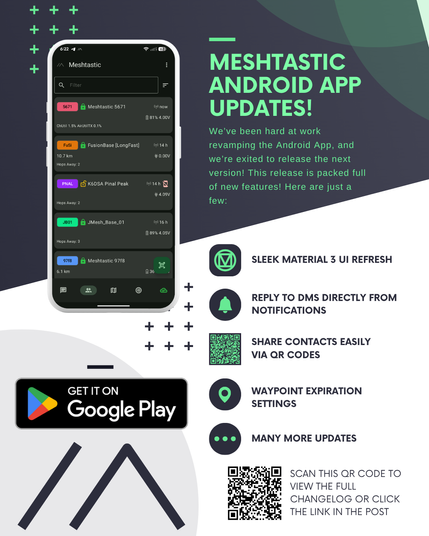
🎉 The first full (non-beta) release of the #Meshtastic Android app (in too long 😅) is live on the Play Store! Packed with upgrades, polish, and new features. Update now via Google Play!
🔗 Full changelog: https://github.com/meshtastic/Meshtastic-Android/releases/tag/2.6.15
 Astronomy Picture of the Day
 Jeff Geerling
 Asahi Linux
 nixCraft 🐧
 Meshtastic