583 Followers
494 Following
107 Posts
I am a systems neurobiologist working to understand the mechanisms of cognition and attention using functional brain imaging, both in health and disease. I have a particular interest in understanding how the different arms of the ascending arousal system flexibly modulate the cross-scale organisation of the brain to facilitate adaptive behaviour. I am currently working as a Robinson fellow at The University of Sydney.

RT @AvonNeedsTrees
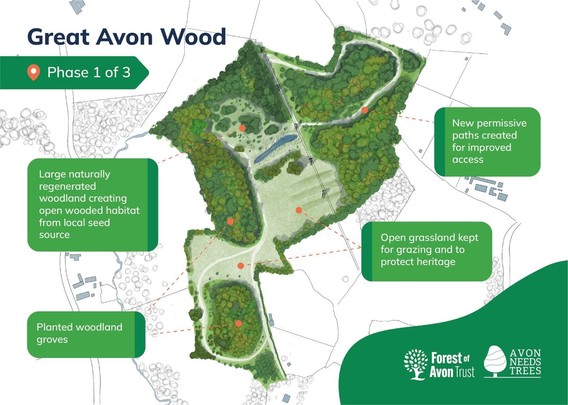
✨We are delighted to reveal our brand new woodland project, Great Avon Wood!✨

Comprising over 100 acres on Bristol and Bath's doorstep, Great Avon Wood is our most ambitious project to date. With your help, we will plant and care for 40,000 trees over the next few years. 🌳

RT @TomNakai
Jaffe et al., Nat Hum Behav (2023)

Modelling human behaviour in cognitive tasks with latent dynamical systems

https://www.nature.com/articles/s41562-022-01510-8

Modelling human behaviour in cognitive tasks with latent dynamical systems - Nature Human Behaviour

The authors introduce a deep learning framework to reproduce sequences of response times and use it to provide evidence for a stability–flexibility trade-off underlying task-switching costs.

Nature

@NicoleCRust @bwyble @DrYohanJohn

shameless plug, read my CONB on this topic with Adam K, for my more edited, fleshed out opinion!
https://www.sciencedirect.com/science/article/pii/S0959438822001246

(just insert "microcircuit motif" whereever you read cell-type, Adam K. and I disagree about which phrase is the better one :p)

I get the argument about confusing implementation and computation, but I agree with with @NicoleCRust that the idea of canonical cortical computations has been super influential, especially / at least in vision (which is all of computational neuro anyway, amiright?)

I think the idea of simple, repeated computation is kind of necessary / permissive for a certain types of "grand unified theory" that are very intuitively appealing exactly because they squash together computation and implementation into one little thing that is intuitively understandable in words. The fact that these "theories" are conceptually "small" down to implementation mean that people understand them, they catch on, they drive research.

Now whether this is positive or not, is an open debate. But I think there's no way we can say that ideas like predictive processing, backprop, divisive normalization, and maybe even convolution havent been wildly influential in the field.

To state this in a slightly more aggressive way than I feel: I do think the idea of a canonical microcircuit is very useful, because it's studiable! If we just start off by assuming everything is brain soup it's very easy to just give up and assume we'll never understand implementation. I rather start off with the assumption that there exist architectural motifs that matter, and try to take that as a hypothesis from which to start, than just admit defeat.

So maybe the answer is, it depends on the level of explanation you are lookign for. If you dont care baout multilevel understanding then "how brain regions connect in networks" black box type of understanding is enough. I personally think it's only step 1, and then understanding more details of implementation is step 2. Furthermore, I've come to think that the implementation detaiuls will probably constrain and help us understand the higher level.

Tying into Luiz's point, the cortex and the basal ganglia expanded in tandem.

"With the appearance of neocortex in mammals, however, basal ganglia outputs to motor cortex via thalamus became of greater significance, especially in primates, in which a parallel expansion of cerebral cortex and basal ganglia occurred."

https://link.springer.com/chapter/10.1007/978-1-4419-0340-2_1

@ekmiller @PessoaBrain @NicoleCRust @kendmiller @bwyble @strangetruther @achristensen56

You Cannot Have a Vertebrate Brain Without a Basal Ganglia

Early twentieth century theories of telencephalic evolution maintained that the parts of the telencephalon appeared in serial order in vertebrate phylogeny – the globus pallidus in fish, the striatum in amphibians, and the cerebral cortex in reptiles. The...

SpringerLink

@strangetruther @achristensen56 @NicoleCRust @bwyble @DrYohanJohn

A simple argument for some sort of canonical cortical computation is: "cerebral cortex ... processes ... diverse tasks with what appears to be a remarkably uniform, primarily six-layer architecture, albeit with significant differences in details across species and cortical areas [1,2,3􏰩,4–10,11􏰩,12–14]. ... This has long suggested the idea that a piece of six-layer cortex with a surface area on the order of a square millimeter constitutes a fundamental cortical ‘processing unit’ [e.g. 16,17].The cortex varies in surface area by a factor of 10000 across a set of 37 mammalian species, while thickness (the distance across the layers) varies only by a factor of 10 over the same species [18], suggesting that the most salient evolutionary change in cortex has been enormous multiplication of the number of ‘units’ [e.g. 14]."
The last two references are:
14. Rakic P: Confusing cortical columns. Proc Natl Acad Sci U S A 2008, 105:12099-12100.
18. Hofman MA: On the evolution and geometry of the brain in mammals. Prog Neurobiol 1989, 32:137-158.

This is from the 1st paragraph of a Current Opinion review paper that I wrote that Nicole cited further up in the thread (https://pubmed.ncbi.nlm.nih.gov/26868041/)

More generally I think there are (at least) 4 mammalian (and, except for cortex, vertebrate) brain structures that each clearly have repeating architecture, and that -- at least as studied in primates -- communicate pretty intimately with one another: cortex, thalamus, basal ganglia, and cerebellum. They communicate with specificity, eg a given piece of cortex communicates with given thalamic nuclei and given regions of basal ganglia and cerebellum, which communicate with one another, e.g. Boston & Strick https://www.nature.com/articles/s41583-018-0002-7. These specific ctx/BG/cerebellum interactions cover at least posterior parietal through frontal cortex, and perhaps higher sensory cortices as well, i.e. they cover all sorts of cognitive processing, not just motor processing which is the traditional function assigned to BG and cerebellum. So it's not just the enormous multiplication of cortical "units" (with diversification, i.e. the spectrum Y.J. referred to) , but also the corresponding multiplication of their partner thalamic, basal ganglia, and cerebellar "units" that suggest some fundamental computional operation, albeit again with diversification.

You don't see this sort of thing in the brainstem. Different bespoke nuclei or other sorts of neural units each do different pieces of different computations. In contrast, the existence of these structures with repeated modular subunits with roughly repeating architectures (despite much variability and diversification), and with specific patterns of interconnections between their modules, as well as their enormous growth in numbers of modules at least in mammalian evolution, all just scream out that some sort of computational motif is being repeated (with variations on the repeated units, much as multiple copies of a gene provide a substrate for evolution into multiple variants -- and occasionally quite new structures). That wouldn't happen by accident.

Kenji Doya long ago postulated that cortex is for associative learning, BG for reinforcement learning, and cerebellum for error-correcting learning. That still sounds like a decent 0th-order take. And, I'll add my speculation, one function of thalamus -- not all that it is doing -- is to take any modality of information whatsoever and convert it into a language that cortex understands, using a roughly uniform architecture with roughly uniform biophysics across all these different modalities of information.

#neuroscience

Canonical computations of cerebral cortex - PubMed

The idea that there is a fundamental cortical circuit that performs canonical computations remains compelling though far from proven. Here we review evidence for two canonical operations within sensory cortical areas: a feedforward computation of selectivity; and a recurrent computation of gain in w …

PubMed

How does the brain organize spontaneous behavior? Our latest (from the amazing Jeff Markowitz, Win Gillis and Maya Jay), reveals a surprising role for dopamine as a teaching signal during free exploration, even without an explicit task or exogenous reward.

https://go.nature.com/3we6BMS

Spontaneous behaviour is structured by reinforcement without explicit reward - Nature

Photometric recordings and optogenetic manipulation show that dopamine fluctuations in the dorsolateral striatum in mice modulate the use, sequencing and vigour of behavioural modules during spontaneous behaviour.

Nature

Reviewer: “1. what you say is wrong; 2. but if it is true, everyone already knows it; and 3. in any case, you did not prove it sufficiently well as you only showed it with one (large) experiment”

Kids, don't be this Reviewer.

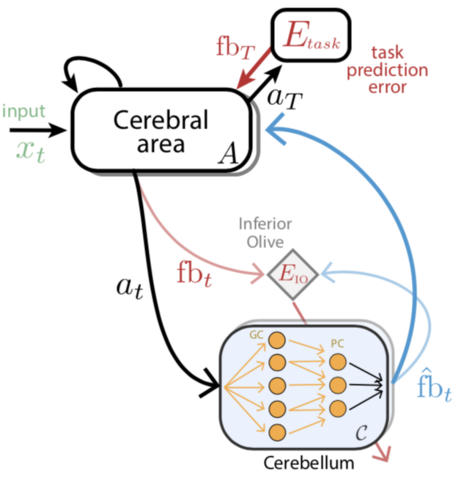
🚨 Our story on a AI-inspired model of cerebro-cerebellar networks is now out in @NatureComms with a few (useful) updates after peer review:
https://doi.org/10.1038/s41467-022-35658-8
---
RT @somnirons
New preprint by @boven_ellen @JoePemberton9 with Paul Chadderton and Richard Apps @BristolNeuroscience! Inspired by DL algorithms @maxjaderberg @DeepMind we propose that the cerebellum provides the cerebrum with task-specific feedback pred…
https://twitter.com/somnirons/status/1493881849055227906

Vanity journal: I'm sorry, this manuscript with imaging results from 240+ participants, using nested cross-validation, internal replication procedures, and high statistical power for the analytics being used is "too preliminary" to be reviewed by our journal.

Also vanity journal: This imaging study "predicting" this psychiatric condition with a sample size of 34, clear flaws in the cross-validation procedures that could nullify the reported effects, and no clear replication attempt is amazing enough to review, publish, and highlight for press release (as well as continue defending despite 3+ years of continued criticism from the imaging community).

We all acknowledge the problems with peer review, but editorial bias is perhaps a more pernicious contributor to our current problems with the scientific publishing process.