745 Followers
744 Following
19 Posts
Neuroscientist @Harvard asking how the brain intertwines sensation and action to facilitate cognition. Scents, circuits, behavior, machine learning.
lab websitewww.dattalab.org
twitter@Datta_Lab
another rejected cover -
'Spontaneous behaviour is structured by reinforcement without explicit reward'
https://www.nature.com/articles/s41586-022-05611-2
#dopamine #sciart #scicomm
Spontaneous behaviour is structured by reinforcement without explicit reward - Nature

Photometric recordings and optogenetic manipulation show that dopamine fluctuations in the dorsolateral striatum in mice modulate the use, sequencing and vigour of behavioural modules during spontaneous behaviour.

Nature

Our latest! A 🧵 . Led by Nathan Harris & Sam Bates we ask: How does #experience modify neuronal #gene expression to drive #plasticity?

We find that multiple #stimulus features can be encoded in the gene expression program of a single #sensory neuron and we show how this underlies specific neuronal & behavioral plasticity.

Of course, this Q has been addressed by many others in landmark papers by the Greenberg lab, @Datta_Lab, Jesse Gray & many others. 1/n

https://www.biorxiv.org/content/10.1101/2023.01.22.525070v1

To ask how dopamine might impart structure onto spontaneous behavior, we performed dLight photometry in the dorsolateral striatum in mice running around an open field, while we simultaneously identified ongoing behavioral syllables (i.e., brief 3D motifs of behavior like turning or rearing) and sequences using MoSeq.

A lot packed in the paper, but take home is that in the DLS DA fluctuates a ton during spontaneous behavior, and that these fluctuations causally structure ongoing action, even without task structure or rewards.

Importantly, DLS DA during free behavior doesn’t seem to casually determine movement kinematics or initiation, but instead appears to specify both digital aspects of behavior — which behavioral syllable to use and how much — and analog aspects of behavior — like the vigor of each syllable.

DA does this not by directly specifying which syllable to use at a given moment, but rather through reinforcement, suggesting that the same circuits/mechs that govern low-D choices in structured tasks are relevant during high-D spontaneous behavior without structure/rewards.

It is unclear what is driving the fluctuations in DLS DA during spontaneous behavior – DA could be implementing an action plan, or may be signaling some sort of action prediction error (as has been beautifully argued by Ashok Litwin-Kumar and Marcus Stephenson Jones recently).

Paper is an amazing collab with many labs (Bernardo Sabatini, Nao Uchida, Scott Linderman) and would have been impossible if not for the help of many others.

How does the brain organize spontaneous behavior? Our latest (from the amazing Jeff Markowitz, Win Gillis and Maya Jay), reveals a surprising role for dopamine as a teaching signal during free exploration, even without an explicit task or exogenous reward.

https://go.nature.com/3we6BMS

Spontaneous behaviour is structured by reinforcement without explicit reward - Nature

Photometric recordings and optogenetic manipulation show that dopamine fluctuations in the dorsolateral striatum in mice modulate the use, sequencing and vigour of behavioural modules during spontaneous behaviour.

Nature

New paper by Yunyao Xie from my lab. A dopaminergic reward prediction error signal shapes maternal behavior in mice https://www.cell.com/neuron/fulltext/S0896-6273(22)01073-X

This may be my favorite paper that I have ever published.

First, a recap. After COVID infection (especially with the early variants) many/most folks lost their sense of smell - for most it was transient (days-weeks) but for some others much longer (months-years). So how does SARS-CoV-2 actually attack your sense of smell?

Odors are detected by olfactory sensory neurons (OSNs) in your nose, which send information about odors to the brain. These sensory neurons are surrounded by support and stem cells, which enable OSN function and renewal of the olfactory epithelium (which gets banged up every time you breath through your nose).

At the beginning of the pandemic we (including Brad Goldstein, Darren Logan, Hiro Matsumani, John Ngai, Matt Grubb and others) hypothesized that SARS-CoV-2 infects support/stem cells but not OSNs themselves. Since then many studies have explored this issue - most are consistent with the hypothesis that support cell infection and possibly the loss of support cell function indirectly causes sensory neuron dysfunction = transient and/or long term loss of smell

Two key studies from human autopsies (from Stavros Lomvardas and Peter Mombaerts) revealed that in people the virus likely infects support cells and not OSNs, and further that after COVID there are hallmarks of inflammation that could affect OSNs. Animal models also suggested that the nose might be subject to all sorts of immune-mediated madness (see work from Ben tenOever).

But what is going on in living patients suffering from long-term smell loss?

To explore this idea, Brad's lab performed biopsies of the olfactory epithelium from patients with post-COVID smell loss (objectively documented via testing), followed by single cell sequencing to enable definitive cell type identification (side note - in the field there is a lot of confusion about how to identify cell types).

There is a lot of data in the paper, but the most important observation is the presence of an immune infiltrate comprised of T cells and myeloid cells, just camping out in the epithelium of patients with long term smell loss; there is no evidence of viral RNA, but support cells are clearly responding to immune signals. There are also fewer OSNs, there are changes in OSN gene expression, and there is evidence that stem cells may not be renewing the epithelium effectively.

These findings lead to a model in which support cell infection triggers a cascade that culminates in immune infiltration, OSN dysfunction and long-term smell loss. The data argue that persistent smell loss is immune mediated, suggesting possible new strategies for patient treatment; these results are also broadly consistent with the idea that neuroinflammation is the main way SARS-CoV-2 impacts the nervous system.

Our findings are also relevant to long COVID, which affects many other organ systems, and is also thought to be at least in part immune mediated. Many questions remain (why do some patients get their smell back quickly while others have this immune infiltrate and long term loss?). Looking forward to continuing to work on this important problem - congrats to all the authors (and thanks to the patients!)
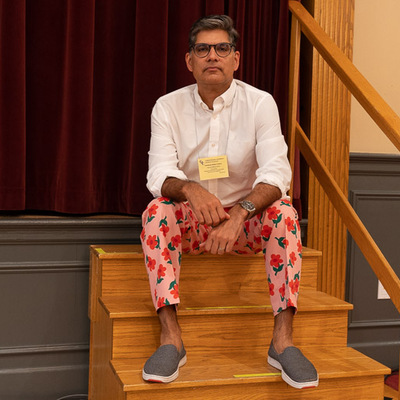

COVID causes long-term smell loss in some patients and we don't know why. We've got some initial answers in this great collaboration between Brad Goldstein's lab (where the work was led by John Findlay) and our lab (with the amazing David Brann and Tatsuya Tsukahara)

https://www.science.org/doi/10.1126/scitranslmed.add0484

This is an important moment for folks interested in the chemical senses - the first structure of a human odor receptor!

https://www.biorxiv.org/content/10.1101/2022.12.20.520951v1

Exciting (independent) Postdoctoral Fellow opportunities at the intersection of #Neuroscience and #AI (#NeuroAI) at the Kempner Institute at Harvard. Please boost to increase our reach and diversity.

https://www.harvard.edu/kempner-institute/the-kempner-institute-for-the-study-of-artificial-and-natural-intelligence/opportunities/the-kempner-institute-postdoctoral-fellowship/

The Kempner Institute Postdoctoral Fellowship

Kempner Institute

Excited to share this new work from my postdoc with @lindymcbr, just out in The American Naturalist.

We found a BIG shift in the behavior of Aedes aegypti mosquito larvae that may help them use novel breeding sites in human settlements, i.e., anthropogenic evolution. 1/20

https://doi.org/10.1086/722481

Evolution of a Mosquito’s Hatching Behavior to Match Its Human-Provided Habitat | The American Naturalist

Abstract A subspecies of the yellow fever mosquito, Aedes aegypti, has recently evolved to specialize in biting and living alongside humans. It prefers human odor over the odor of nonhuman animals and breeds in human-provided artificial containers rather than the forest tree holes of its ancestors. Here, we report one way this human specialist has adapted to the distinct ecology of human environments. While eggs of the ancestral subspecies rarely hatch in pure water, those of the derived human specialist do so readily. We trace this novel behavior to a shift in how eggs respond to dissolved oxygen, low levels of which may signal food abundance. Moreover, we show that while tree holes are consistently low in dissolved oxygen, artificial containers often have much higher levels. There is thus a concordance between the hatching behavior of each subspecies and the aquatic habitat it uses in the wild. We find this behavioral variation is heritable, with both maternal and zygotic effects. The zygotic effect depends on dissolved oxygen concentration (i.e., a genotype-environment interaction, or G×E), pointing to potential changes in oxygen-sensitive circuits. Together, our results suggest that a shift in hatching response contributed to the pernicious success of this human-specialist mosquito and illustrate how animals may rapidly adapt to human-driven changes in the environment.

The American Naturalist