
| Work: | http://letterror.com |
| Teaching: | https://typemedia.org |
| Fonts for print and web: | https://letterror.com/principia |
| Zines: | https://letterror.com/books.html |
| Work: | http://letterror.com |
| Teaching: | https://typemedia.org |
| Fonts for print and web: | https://letterror.com/principia |
| Zines: | https://letterror.com/books.html |
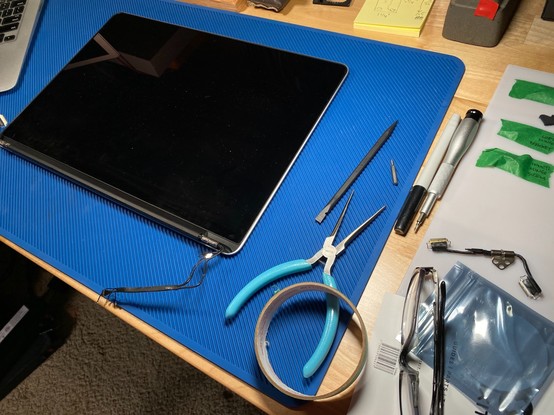
Replaced the display cable on my 2015 MacBook Pro today … the display cable I managed to kill when I replaced the swollen battery in this thing a couple of months ago.
And no leftover parts.
Win. Win.
RSS is alive and well and fast! Add it to your sites, blogs, newsletters (works wirth most services) and social media feeds (Masto, Flickr).
I use NetNewsWire on my phone, prefer mobile reading/checking there over computer. Super light weight, excerpt overview perfect for checking posts (pictured the example of Tagesschau news). Give it a try!
And stop complaining about the death of Google Reader which was never really (as) good
Heyyyy— join our #Ezhishin conference this week!
tdc.org/ezhishin
To add to the above:
Since there is no #algorithm it is really important that you #boost interesting posts by others.
A star (liking) does nothing to help increase a post's visibility beyond the original author's followers.
I know it is strange coming from 🐦, but it really is the only way to increase a post's audience.
So #BoostAllTheThings (if you like them) and you will notice others will do the same to your content. Here we're all in it together!
Oh hey, if you have a spot free on your calendar for some (midday…evening…or even mid-morning) type nerdery stop by a screen near you on Nov 7! Though it may seem tangential there might even be a story about angry students and a dean that gets a chocolate crème pie in the face!
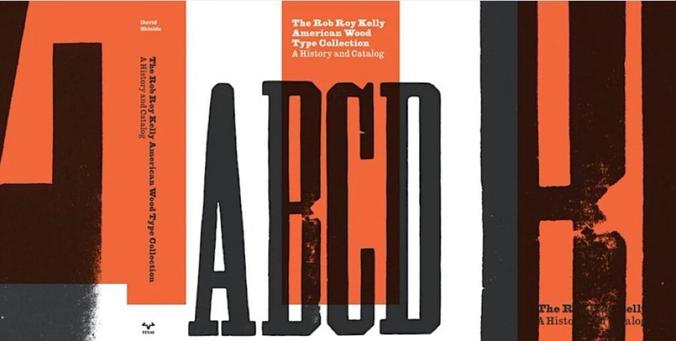
Rob Roy Kelly’s published research — including <em>American Wood Type 1828–1900</em> (1969) — helped fuel a revival of interest in nineteenth-century American printing types. His work continues to be an important starting point for current scholarly inquiry. The University of Texas Press published a monograph I researched, wrote, and designed The <em>Rob Roy Kelly American Wood Type Collection: A History and Catalog</em> which functions as a ‘close’ reading of the collection. I’ve approached the collection as more than simply the 18,000+ pieces of wood type acquired by Kelly and dynamically defined it in broader terms as a range of objects, publications, research papers, and attendant activities in a number of archives around the United States. Viewing the collection broadly has provided the opportunity to look past Kelly as the sole instigator and investigator and perceive him as a link in the broader network of relationships that led to the success of his research project. The physical presence of the published book has helped me reconsider my own research work for the manuscript, not simply as a mode of historicization, but as developing a set of tools that could be useful to other (typographic) research projects.
"We might also want to think about the fact that while the specialists/professors – those who know about art – are predominantly employed on fixed-term contracts, everyone in the administration is tenured. Thus, the administration becomes the permanent staff who come to represent stability in the schools and, eventually, embody institutional memory too. "
Pretty cutting long read about how art schools in the Nordic countries were rationalized into a hot mess with fancy buildings and endless bureaucracy:
https://kunstkritikk.com/the-end-of-art-education-as-we-know-it/