Killackey Illustration

441 Followers
303 Following
182 Posts

Natural science and archaeological illustration by Kathryn Killackey.


Interests include: #SciArt #SciComm #Illustration, #Art #Archaeology #Textiles, #FashionHistory #Visualization #NaturalHistory #DigitalHumanities and #books

Websitehttp://www.killackeyillustration.com
mailing list and newsletterhttps://www.killackeyillustration.com/contact

A nice write-up of a very smart idea from my Southampton colleague James Macdonell: a 3D Cabinet of Curiosities made up of 'objets trouvés' turned up during a recent project to review the whole book stock of the library. This pleased me a great deal this year.

https://library.soton.ac.uk/digital-scholarship/inside-digital-scholarship/the-cabinet-of-curiosities

Inside Digital Scholarship - Digital Scholarship - LibGuides@Southampton at University of Southampton Library

la grâce conférée par le port du tutu rose

Roseate Spoonbill bird in flight / la spatule rosée est une espèce d’oiseaux échassiers aquatiques de la famille des Threskiornithidae
tags : tu devrais t’inscrire à la danse, #dance #birds #photography

An online exhibition of historically significant Internet artifacts such as the 1977 ARPANET map, the first smiley, the first MP3, the first Amazon order, and more. A nicely curated and designed collection.

https://neal.fun/internet-artifacts

#retrocomputing #internet #web

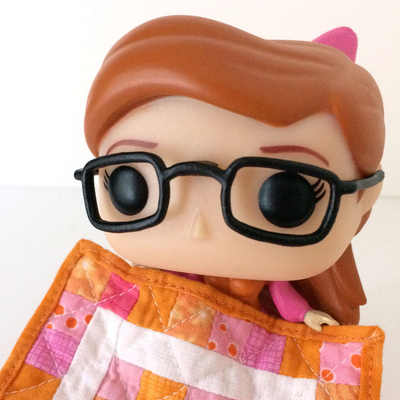
I prefer a dry iron with a solid soleplate when #quilting and over the years they’ve become harder to find (3 companies now 1)

I don’t recommend them because they have _issues_. Normally my SO can replace a frayed cord but once the resister is gone, the iron is toast. I’ve been thru SO many in the last 20 years

He just found a source for new resistors tho! Looks like I’ll be able to keep the two newest for far longer — very lucky to have someone who knows how to #repair like this

#RepairCafe

I’m giving a public talk, “From Something Left Behind: The Process of Archaeological Illustration”, at the Bard Graduate Center on Nov. 20th. Come listen if you’re in NYC! Details in link.
#SciArt #archaeology #illustration

https://www.bgc.bard.edu/events/1555/20-nov-2024-from-something

From Something Left Behind

Archaeologists rely on visualization to record excavation data, interpret their findings, build narratives, and provide specialist and public audiences with richer visions of the past. Archaeological illustrators, in turn, must draw on often fragmented and incomplete material culture to visualize this archaeological research. In this talk, illustrator Kathryn Killackey discusses the process of creating an archaeological reconstruction. This iterative process provides researchers and illustrators a space in which to explore and test hypotheses, helping to flesh out ideas, uncover contradictions, and identify gaps in knowledge. At the same time, the illustration process is one of elimination, the whittling down of alternative hypotheses, and making concrete one of many options. With examples from her fifteen years of experience, Killackey shows how drawing can lead to greater understanding of particular objects and places and how fragmentary objects can illuminate past lives.Kathryn Killackey is a freelance science illustrator and artist. She has a BA in anthropology from University of California, Berkeley; an MA in field and analytical techniques in archaeology from University College London; and a certificate in science illustration from California State University, Monterey Bay. She specializes in archaeological illustration and creating engaging scenes of past peoples. She was illustration team leader from 2007 to 2020 for the Çatalhöyük Research Project and was recently awarded an NEH-Mellon Foundation Fellowship in Digital Publishing for a visualization project on the Late Formative occupations at Tiwanaku, Bolivia.

This year's #SciArtSeptember unofficial prompt list is now available. Have fun!

https://www.patreon.com/posts/110774653

#SciArt #art

If there's always an element of uncertainty in science, how do we know anything? Here are some fascinating conversations about why uncertainty is exciting, in the final episode of @cragcrest.bsky.social podcast series UNCERTAIN https://www.scientificamerican.com/podcast/episode/how-do-we-know-anything-for-certain/
How Do We Know Anything For Certain?

Some practical advice for how to sit, happily, joyfully, with uncertainty—and in doing so, grow and learn from it.

Scientific American
We've just launched a new site focusing on material features in our early manuscripts, with tutorials on bindings, pages, content, and decoration, and links to digitized manuscripts with those features. Thanks to my colleague Bailey Ludwig for her fabulous work! https://curiosity.lib.harvard.edu/medieval-renaissance-manuscripts/feature/material-features

#Dataviz books everyone should read 📚 - a community sourced listicle. Created in association with @datavizsociety #iibwab

https://informationisbeautiful.net/visualizations/dataviz-books/

The wooden artifacts from Schöningen’s Spear Horizon and their place in human evolution

https://phys.org/news/2024-04-early-humans-wood-years-animals.html

https://www.pnas.org/doi/10.1073/pnas.2320484121

Early humans used wood splitting 300,000 years ago to hunt animals, study shows

Early humans used sophisticated crafting techniques such as "wood splitting" to hunt and to clean animal hides, a new study has revealed.