12 Followers
589 Following
334 Posts
Associate Professor of Journalism at UMass Amherst. I study media distribution, digital and otherwise. Opinions my own. Photos: Beth Wallace, Timothy Neesam
Websitehttps://joshbraun.umasscreate.net
University Profilehttps://www.umass.edu/journalism/facultyStaff/bio/braun
Distribution Mattershttps://mitpress.mit.edu/search-result-list/?series=distribution-matters
Pronounshe/him
It seems like https://zirk.us/about is where the humanities types hang out.
zirkus

Literature, philosophy, film, music, culture, politics, history, architecture: join the circus of the arts and humanities! For readers, writers, academics or anyone wanting to follow the conversation.

Mastodon hosted on zirk.us
We're looking for academics/PhD students who've recently migrated from Twitter to Mastodon, are currently doing so, considering it, or who don't intend to. We're interested in finding out about people’s opinions on migration & the differences between Twitter & Mastodon. If you wish to take part in our online focus group, please complete our initial survey https://lancasteruni.eu.qualtrics.com/jfe/form/SV_enXPA3rLdSdJsCG, which also includes further information about the research. Please boost! 🔁
Migrating to Mastodon: power and social media dynamics in the great #TwitterMigration

Initial survey for the project Migrating to Mastodon: power and social media dynamics in the great #TwitterMigration

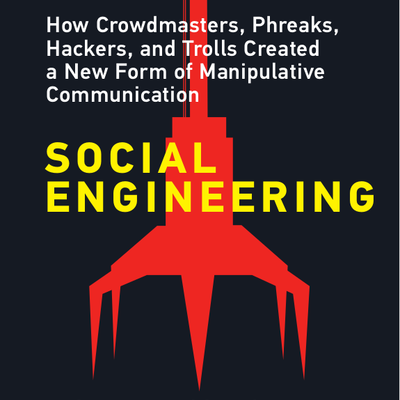
@cwebber @mmeier @sandro @jalefkowit I'm trying to write a book about the fediverse. I've been a bit slowed due to moving to another country.
The public list of communication and media studies researchers — #commodon — is now up to 200 scholars and counting. I’m really excited to see the community finding its way over here. If you’re a #commodon scholar, feel free to add yourself or ask to be added to the list. I’m maintaining it with @bethanyklein. https://docs.google.com/document/d/1vFWP_eBXrjeDqDkmT6PEbxnsZ_QFC4OgEgUHTrJWhhQ/edit
#commodon

#commodon A Partial List of Researchers on Mastodon in Communication, Media Studies, and Adjacent Fields Maintainer’s Note: This list is opt-in. To request that your account be added, contact one of the maintainers (Josh Braun or Bethany Klein) or suggest a change directly to the Google Doc from...

Google Docs

Interesting thought by @riskybusiness on his latest podcast: what would happen if someone like Google set up their own Mastodon instance, and it became like the Gmail of Mastodon.

I recognize that a lot of people who have been around would have concerns, but... it's the kind of thing that could happen.

Thank you! After 50 days, @TheConversationUS has 11x more followers on #mastodon than we accumulated on TikTok in 18 months.

Could you help us match our Twitter numbers by telling your friends about us?

(We're a nonprofit #news source sharing the knowledge of academic experts with the public on a wide range of topics. We’re part of a global network that includes @TheConversationUK @theconversationau @TheConversationAfrica @theconversationes & @TheConversationClimate)

https://theconversation.com/us/10-ways-we-are-different

How we're different | The Conversation

The Conversation is the world's leading publisher of research-based news and analysis. It is a unique collaboration between academics and journalists, provided to everyone for free.

The Conversation

I'm an associate professor at UMass Amherst, where I teach about #journalism and #mediaindustries. My research focuses on media distribution and, occasionally, dysfunction in the adtech industry.

I also co-edit a book series on the civic impacts of media distribution for The MIT Press, so feel free to hit me up if you're working on a relevant project.

#introduction #commodon #mediastudies #sciencejournalism #linux #emacs #zettlekasten

As new members arrive -- particularly my colleagues in the academic community -- may I remind you that the fediverse does not look kindly upon data scraping without getting the consent of instance admins and members.

I wrote a critique of a recent (very, very sloppy) study that not only scraped without consent -- it also ran people's posts through Google:

https://fossacademic.tech/2022/10/18/notesOnNobreEtAl.html

As the AOIR ethics guides note: expectations of privacy are heavily contextual.

#aoir #researchEthics

More Mastodon Scraping Without Consent (Notes on Nobre et al 2022)

There’s a new paper out about Mastodon! But unfortunately, it’s a deeply problematic one. Nobre et al’s “More of the Same? A Study of Images Shared on Mastodon’s Federated Timeline” is a paper that is now published in proceedings from International Conference on Social Informatics. (Unfortunately, it’s not open access.) Because I’m currently researching the fediverse and blogging about that process, I thought I’d write up notes on this paper. Why this paper? Frankly, because I’m pretty certain it violates the community norms, as well as terms of service, of many Mastodon instances. It instantly reminded me of the controversial paper from Zignani et al, “Mastodon Content Warnings: Inappropriate Contents on a Microblogging Platform”, which resulted in a scathing open letter and the retraction of a dataset from the Harvard Dataverse. Nobre et al’s “More of the Same” is a study of image-sharing. The authors claim that it is about image-sharing on Mastodon, but really their focus is on images they culled from Mastodon.social’s federated timeline. They pulled 4M posts from 103K active users, of which 1M had images. Since they pulled posts from Mastodon.social’s federated timeline, they saw posts from 4K separate instances. The authors state that a “relevant number” of the images they found are “explicit.” They categorize the images as such after running them through Google’s Vision AI Safe Search system. They also run the images they find through Google’s image search to trace where the images came from and how they are shared on Mastodon. Ultimately, the authors don’t really make an argument, other than stating in passing that Mastodon needs better moderation, since people share explicit images. In some ways, “More of the Same” lives up to its title: it’s more of the same poor scholarship that can be seen in Zignani et al (in fact, Nobre et al cite that controversial paper). Here are my critiques:

FOSS Academic

It occurs to me that I haven't done a proper #introduction on this new instance! My formal job title is Director of Digital Humanities and Professor of English at Michigan State University, but alongside that I also direct #MeshResearch, a lab focused on building open-source interoperable tools for new forms of scholarly communication. I'm also director of #HumanitiesCommons, a scholarly network serving something like 50,000 users across the humanities and around the world.* And of course I'm one of your friendly neighborhood hcommons.social admins.

My #research interests circulate around the future of #scholarlyCommunication, as one component of thinking about how #universities might become more #open, more #generous spaces for cultural and intellectual work. Of late, that interest has led me to thinking a lot about #leadership and #governance, and particularly ways that they can be more #collective and #collaborative.


Me: Alexa, what's the price of a Costco membership?

Alexa: [quotes the current price of a share of Costco stock]

Me: Not what I asked for. But an apt commentary on which questions matter in a financialized economy.