Jeff Corbin

177 Followers
229 Following
171 Posts

I am a plant ecologist at Union College. I study #InvasiveSpecies and #Restoration.

I love to bicycle, eat good food, and travel - although I don't do the three at the same time often enough.

Websitehttps://jeffcorbin.org/
Works atUnion College

When a car is repaired after a crash, the GDP goes up.

When a fruit or vegetable is grown only to be thrown out by a supermarket as food waste, the GDP goes up.

When you replace a phone that still works because of planned obsolescence, the GDP goes up.

When you throw out a perfectly good coat because it's no longer fashionable, and buy a new one in this season's style, the GDP goes up.

When a bridge has to be replaced because it wasn't built right, the GDP goes up.

When a piece of packaging is manufactured only to be thrown away straight away, the GDP goes up.

When a site needs to be decontaminated because chemicals weren't stored correctly, the GDP goes up.

In each case, society has no more usable wealth than it would have had if the car didn't crash, the vegetable wasn't grown, the phone wasn't replaced, the old coat was still being worn, there was less packaging, or the chemicals were stored correctly. Yet the GDP goes up.

Meanwhile, most of the wealth that is generated ends up in the top one percent's pockets.

The truth is that GDP isn't a useful measurement. It's just a convenient one.
#economics #politics #gdp #auspol #ukpol

Holy crap, did I ever enjoy this theme. Why can't all Thursdays be this awesome? The final meta was an absolute AHA moment. Elise Corbin, you clearly EXCEL IN construction.

WTF moment: SARD?

Fave clue: 31D: ___ collar (iconic Ruth Bader Ginsburg neckwear at the Smithsonian): DISSENT

Fave entry: 38A: HYSTERICS

9:08 #nytxw #crossword

What did you think of the Thu Feb 2 #nytxw #crossword by Elise Corbin?
Smash
0%
Smash++
50%
Super Smash
0%
Smash that WENT ALL IN
50%
Poll ended at .
That super-awesome #NYTCrossword this morning? Yeah, that's my daughter's!!
https://www.nytimes.com/crosswords/game/daily/2023/02/02
Play The Crossword

Keep your mind sharp by making The Crossword part of your daily routine.

Come work with me! Bio Dept @UnionCollege is hiring a full-time, non-tt lecturer in Human Anatomy and Physiology. Deadline is 2/28/23

It is a great place to work.

https://jobs.union.edu/en-us/job/493240/lecturer-human-anatomy-and-physiology

LECTURER HUMAN ANATOMY AND PHYSIOLOGY | Union College

Union College

A student Q about whether EVs (and their resource-heavy batteries) are really better for the environment led me to this paper by Xia and Li: https://www.sciencedirect.com/science/article/pii/S0048969721079493#:~:text=In%20the%20entire%20life%20cycle,et%20al.%2C%202021).

Short answer: Not unless we change our battery technology away from Co and other heavy metals AND we reuse/recycle batteries.

Vermont's winters are warming, and that affects how much #snow we get and how long it lasts. But we don't have good data on the amount of #water stored by snow in #Vermont. A new #UVM project is starting to change that. https://www.uvm.edu/news/ovpr/uvm-researchers-unpack-complexity-snow-vermont?utm_source=Slate&utm_medium=newsletter&utm_campaign=Research_01302023 #ClimateChange
UVM Researchers Unpack the Complexity of Snow in Vermont

Last year, in the middle of a warm, humid summer, in the Jericho Research Forest, associate professor in UVM’s College of Engineering and Mathematical and Sciences (CEMS) Arne Bomblies and his team of researchers were waiting for...

The University of Vermont

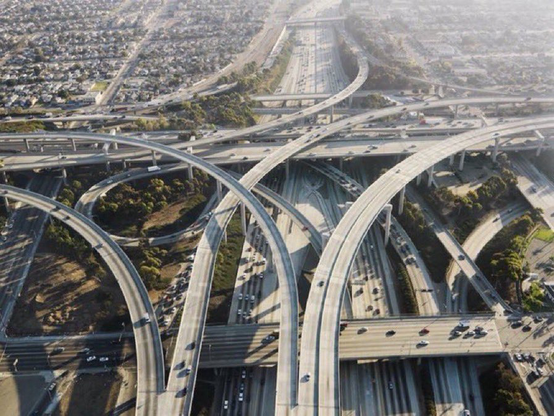
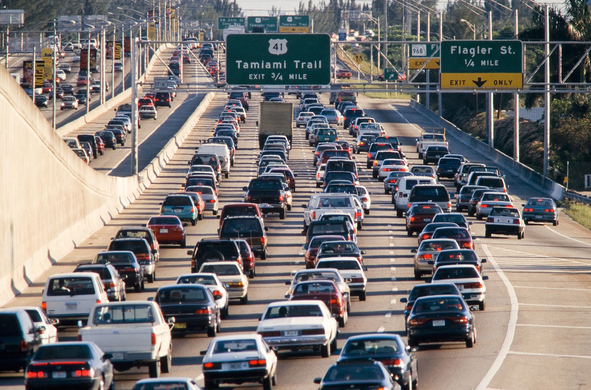
Car dependency is the opposite of freedom. It takes away our choices & leaves us trapped — & I don’t just mean trapped in traffic. Plus it’s massively expensive, time & space consuming, mentally & physically unhealthy, anti-social, & future-ruining.

Put THAT in a car commercial.

#CarDependency #cars #freedom #traffic

New #Crossword puzzle at my daughter's #Cruciverbology site ("Crosswords with a nerdy twist!").

This one: An itsy-bitsy meta - https://www.cruciverbology.com/

Cruciverbology

Cruciverbology: puzzles with a nerdy twist

Cruciverbology
Brilliant new paper by Naomi #Oreskes, concluding that "our overall situation suggests that it does not suffice for scientists simply to supply #factual #information, and leave it at that. Scientists need as well to engage actively with the recipients of that information." https://link.springer.com/article/10.1007/s43538-022-00121-1
The trouble with the supply-side model of science - Proceedings of the Indian National Science Academy

Many scientists operate under a mental model that I label the “supply side model of science.” It assumes that the job of scientists is to supply information that governments and citizens can use to make good decisions, and that governments and citizens will use that information once they have it in hand. Therefore, scientists need only do their job—which is to supply accurate, high quality, well vetted information—and all will be well. Events of the past few decades have challenged this model severely. Across the globe, governments and citizens have rejected established scientific findings on climate change, on evolutionary biology, on the safety and efficacy of vaccines, and other issues. Typically, this rejection is ‘implicatory rejection.’ That is to say, people reject or deny science not because the science is weak, unsettled or too uncertain to inform decision-making, but because they and don’t like the actual or perceived implications of that science. In some cases, for example evolutionary biology, the perceived implications are erroneous; in these cases, scientists can help to clear up misunderstandings by engaging seriously (and not dismissively) with people’s concerns. In other cases, for example climate change, the perceived implications may be partly true. In these cases, scientists may help by suggesting ways in which the negative implications might be mitigated or redressed. Often, this will require collaborating with other experts, such as experts in communication, religion, or public health. But whatever the details of the particular case, our overall situation suggests that it does not suffice for scientists simply to supply factual information, and leave it at that. Scientists need as well to engage actively with the recipients of that information.

SpringerLink