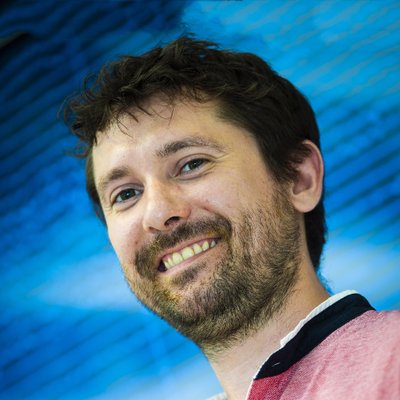
 Eilif B. Muller
Interested in joining Mila's research community? Our annual supervision request process for new Mila students is starting this Sunday October 15, 2023.
For more information ➡️ https://pulse.ly/62ldgu92bt
Dad · Husband · Associate Professor of Computational Psychiatry at the University of Montreal · PI of the Precision Psychiatry and Social Physiology team at CHU Ste Justine · Researcher in Social Neuro AI at https://Mila.Quebec AI Institute · Co-founder of 2 nonprofit organization: ALIUS (https://aliusresearch.org) & HackYourResearch (https://hyr.science) · He/Him
Topics: #CogSci, #Consciousness, Social #Neuroscience, #Psychiatry, #SysBio, #NeuroAI, #SciML, #OpenScience, #Commons
| 🌎 Website | https://www.extrospection.eu |
| 👥 Lab | https://www.ppsp.team |
| 🎓 Publications | https://scholar.google.com/citations?user=TakXk9MAAAAJ |
| 🐦 Birdsite | https://twitter.com/introspection |
Interested in joining Mila's research community? Our annual supervision request process for new Mila students is starting this Sunday October 15, 2023.
For more information ➡️ https://pulse.ly/62ldgu92bt
Freshly out: "A Novel Model for Novelty: Modeling the Emergence of Innovation from Cumulative #Culture" https://link.springer.com/chapter/10.1007/978-3-031-28719-0_16
— Kudos to Natalie Kastel for her first work with our Precision Psychiatry and Social Physiology team! — She will soon start a PhD with us, exploring Social #NeuroAI in #Multiagent Systems... 🚀
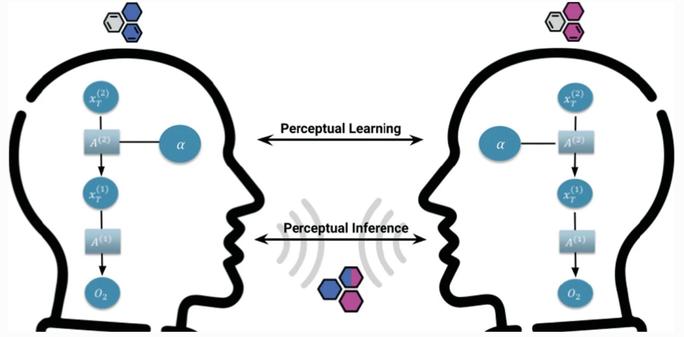

While the underlying dynamics of active inference communication and cumulative culture have already been formalized, the emergence of novel cultural information from these dynamics has not yet been understood. In this paper, we apply an active Inference framework,...
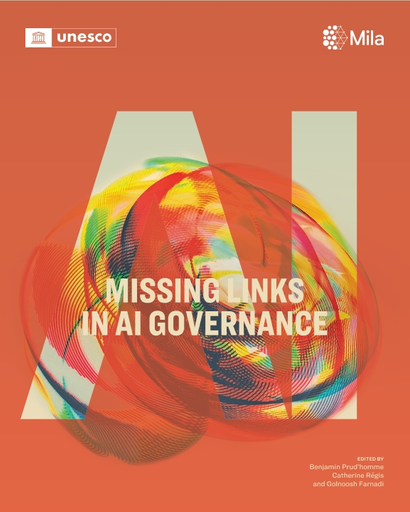
👉 "Missing links in #AI governance"
📘 New book by Mila & UNESCO, #OpenAccess in both English & French: https://unesdoc.unesco.org/ark:/48223/pf0000384787
🌐 Live discussion with Yoshua Bengio & Kate Crawford: https://www.youtube.com/watch?v=9Q2MXh1LY3o
New paper: Restoring the missing person to personalized medicine and precision psychiatry
https://www.frontiersin.org/articles/10.3389/fnins.2023.1041433/full
> We review the limitations of precision #psychiatry arguing that it cannot reach its goal if it does not include core elements of the processes that give rise to psychopathological states, which include the agency and experience of the person.

Precision psychiatry has emerged as part of the shift to personalized medicine and builds on frameworks such as the U.S. National Institute of Mental Health Research Domain Criteria (RDoC), multilevel biological “omics” data and, most recently, computational psychiatry. The shift is prompted by the realization that a one-size-fits all approach is inadequate to guide clinical care because people differ in ways that are not captured by broad diagnostic categories. One of the first steps in developing this personalized approach to treatment was the use of genetic markers to guide pharmacotherapeutics based on predictions of pharmacological response or non-response, and the potential risk of adverse drug reactions. Advances in technology have made a greater degree of specificity or precision potentially more attainable. To date, however, the search for precision has largely focused on biological parameters. Psychiatric disorders involve multi-level dynamics that require measures of phenomenological, psychological, behavioral, social structural, and cultural dimensions. This points to the need to develop more fine-grained analyses of experience, self-construal, illness narratives, interpersonal interactional dynamics, and social contexts and determinants of health. In this paper, we review the limitations of precision psychiatry arguing that it cannot reach its goal if it does not include core elements of the processes that give rise to psychopathological states, which include ...
Bernard Baars has a nice #podcast about #consciousness research and this episode on #AI is particularly interesting: https://www.youtube.com/watch?v=AUHj84ZZDlM
It connects well with our recent paper « Multilevel development of cognitive abilities in an artificial neural network »: https://pnas.org/doi/10.1073/pnas.2201304119
Excited to present with JP Changeux this work during the IBM Research’s symposium « Systems Neuroscience Approach to General Intelligence (SynAGI) » next month at AAAI: https://researcher.watson.ibm.com/researcher/view_group_subpage.php?id=11048

2023 offers us a new blank page, and I hope we will all find the inspiration to write beautifully on it. My new year resolution will be to act more locally, while thinking globally. Being less attracted by social media, I may disconnect and focus on writing. Just got invited to become writer for PsychologyToday.com, and I will take this occasion to actually start my first book! Let’s see how it goes… 🙂
Again, all my warmest wishes for the new year! (3/3)
Thanks for all your birthday messages. Wishing to all of you a wonderful new year, full of wonder and serenity to live every moment, plenty of strength and lucidity to achieve your dreams, and, of course, good health!
2022 has been full of challenges, with many losses, struggles, again a huge load of uncertainty… it reminds us how we cannot escape reality, and thus must enjoy all the bright aspects of Life and cease the good moments. (1/3)