
Eine Übersicht: alle Demos gegen Rechts am kommenden Wochenende.
Zu welcher Demo gehst du?
Weitersagen! https://zusammen-gegen-rechts.org/
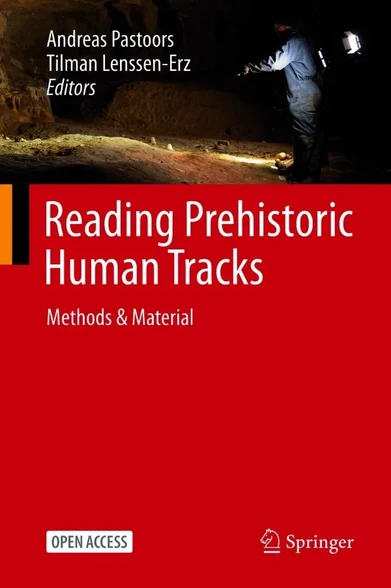
Curious to learn more about "Reading Prehistoric Human Tracks" and novel methodological approaches?
Well, here's your weekend reading then, edited by A. Pastoors & T. Lenssen-Erz (2021). 😉
This Open Access book explains that after long periods of prehistoric research it has now begun to take this context into focus for documentation, analysis, interpretation and understanding. The book will compose first the methodological diversity in the analysis of human tracks.
#StoneAge inhabitants of #Namibia were so adept at depicting human and animal footprints that modern-day #Indigenous #trackers can exactly identify species, age and sex of the animals depicted in these #carvings:
https://iflscience.com/stone-age-carvings-in-namibia-depict-incredibly-detailed-human-and-animal-tracks-70666 via @iflscience_bot
Original study:
T. Lenssen-Erz, Animal tracks and human #footprints in prehistoric #HunterGatherer rock art of the Doro! nawas mountains (#Namibia), analysed by present-day #indigenous #tracking experts,
#PLoSONE 18(9), 2023. 🔓
https://journals.plos.org/plosone/article?id=10.1371/journal.pone.0289560
Namibia is rich in hunter-gatherer rock art from the Later Stone Age (LSA); this is a tradition of which well-executed engravings of animal tracks in large numbers are characteristic. Research into rock art usually groups these motifs together with geometric signs; at best, therefore, it may provide summary lists of them. To date, the field has completely disregarded the fact that tracks and trackways are a rich medium of information for hunter-gatherers, alongside their deeper, culture-specific connotations. A recent research project, from which this article has emerged, has attempted to fill this research gap; it entailed indigenous tracking experts from the Kalahari analysing engraved animal tracks and human footprints in a rock art region in central Western Namibia, the Doro! nawas Mountains, which is the site of recently discovered rock art. The experts were able to define the species, sex, age group and exact leg of the specific animal or human depicted in more than 90% of the engravings they analysed (N = 513). Their work further demonstrates that the variety of fauna is much richer in engraved tracks than in depictions of animals in the same engraving tradition. The analyses reveal patterns that evidently arise from culturally determined preferences. The study represents further confirmation that indigenous knowledge, with its profound insights into a range of particular fields, has the capacity to considerably advance archaeological research.
The aboriginal people of #Australia would masterfully prune marri trees and train them to become water collection vessels.
University of Western Australia biodiversity expert Stephen Hopper said he had never seen anything quite like it.
"If you did what the Noongars did, you snip out the lead shoot and wait a hundred and fifty years," Professor Hopper said.
"This is really long-term horticultural management for cultural purposes, its extraordinary."
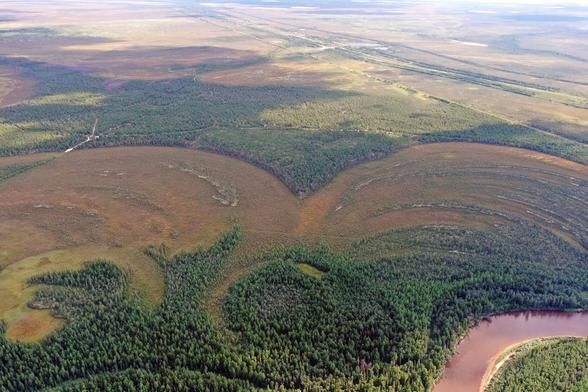
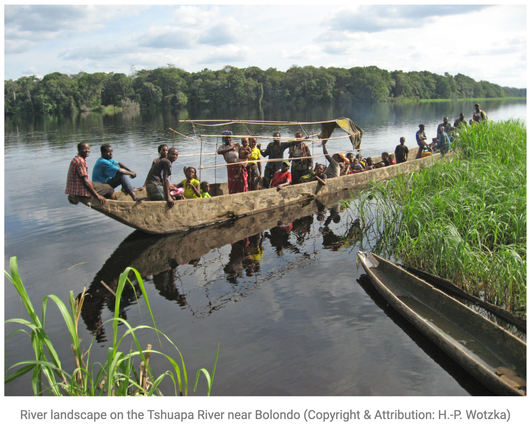
In a new blogpost, our #EntangledAfrica colleagues offer insight into their latest field research into the "#Archaeology and #Palaeoecology of the Inner #Congo Basin", analysing #PeatBog samples to reconstruct past #environment and #ClimateChange: