9 Followers
232 Following
49 Posts
Security, privacy and decentralization enthusiast from a certain country. FOSSHW proponent.
Githubhttps://github.com/forestfoxx

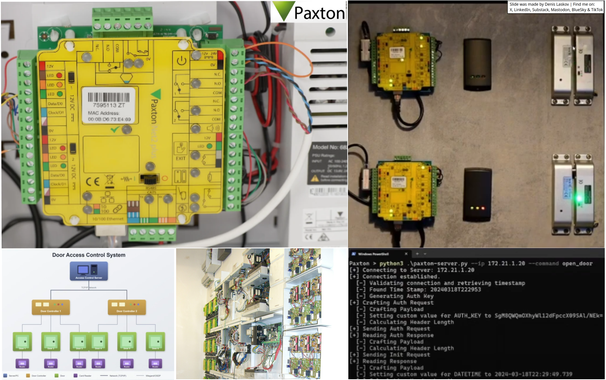
Hacking prison doors remotely, like in movies: vulnerabilities in Net2 ACUs from Paxton. ๐Ÿšช๐Ÿ’ณ๐Ÿ”—๐Ÿ‘ฉ๐Ÿปโ€๐Ÿ’ป๐Ÿ”“

More details on:
LinkedIn: https://www.linkedin.com/posts/dlaskov_cybersecurity-paxton-net2-activity-7440473149944799232-GoJE
Substack: https://it4sec.substack.com/p/hacking-prison-doors-remotely-like

A few of the things I've learned in the run up to taping out our first chip that working with FPGAs had not prepared me for (fortunately, the folks driving the tape out had done this before and were not surprised):

  • There's a lot of analogue stuff on a chip. Voltage regulators, PLLs, and so on all need to be custom designed for each process. They are expensive to license because they're difficult to design and there are only a handful of companies buying them. The really big companies will design their own in house, but everyone else needs to buy them. The problem is that 'everyone else' is not actually many people.
  • Design verification (DV) is a massive part of the total cost. This needs people who think about the corner cases in designs. The industry rule of thumb is that you need 2-3 DV engineers per RTL engineer to make sure that the thing that you tape out is probably correct. In an FPGA, you can just fix a bug and roll a new bitfile, but with custom chip you have a long turnaround to fix a bug and a lot of costs. This applies at the block level and at the system level. Things like ISA test suites are a tiny part of this because they're not adversarial. To verify a core, you need to understand the microarchitecture-specific corner cases where things might go wrong and then make sure testing covers them. We aren't using CVA6, but I was talking to someone working on it recently and they had a fun case that DV had missed: If a jump target spanned a page boundary, and one of those pages was not mapped, rather than raising a page fault the core would just fill in 16 random bits and execute a random instruction. ISA tests typically won't cover this, a good DV team would know that anything spanning pages in all possible configurations of permission and presence (and at all points in speculative execution) is essential for functional coverage.
  • Most of the tools for the backend are proprietary (and expensive, and with per-seat, per-year licenses). This includes tools for formal verification. There are open-source tools for the formal verification, the proprietary ones are mostly better in their error reporting (if the checks pass, they're fine. If they don't, debugging them is much harder).
  • A lot of the vendors with bits of IP that you need are really paranoid about it leaking. If you're lucky, you'll end up with things that you can access only from a tightly locked-down chamber system. If not, you'll get a simulator and a basic floorplan and the integration happens later.
  • The back-end layout takes a long time. For FPGAs, you write RTL and you're done. The thing you send to the fab is basically a 3D drawing of what to etch on the chip. The flow from the RTL to the 3D picture is complex and time consuming.
  • On newer processes, you end up with a load of places where you need to make tradeoffs. SRAM isn't just SRAM, there are a bunch of different options with different performance, different leakage current, and so on. These aren't small differences. On 22fdx, the ultra-low-leakage SRAM has 10% of the idle power of the normal one, but is bigger and slower. And this is entirely process dependent and will change if you move to a new one.
  • A load of things (especially various kinds of non-volatile memory) use additional layers. For small volumes, you put your chip on a wafer with other people's chips. This is nice, but it means that not every kind of layer happens on every run, which restricts your availability.
  • I already knew this from previous projects, but it's worth repeating: The core is the easy bit. There are loads of other places where you can gain or lose 10% performance depending on design decisions (and these add up really quickly), or where you can accidentally undermine security. The jump from 'we have RTL for a core' to 'we have a working SoC taped out' is smaller than going to that point from a standing start, but it's not much smaller. But don't think 'yay, we have open-source RTL for a RISC-V core!' means 'we can make RISC-V chips easily!'.
  • I really, really, really disapprove of physics. It's just not a good building block for stuff. Digital logic is so much nicer.
[1/3] New COSIC research reveals major security weaknesses in #Microsoftโ€™s #PhotoDNA, the global standard for detecting Child Sexual Abuse Material (#CSAM). For the first time, the algorithm is fully described and its vulnerabilities exposed.
โžก๏ธ https://www.pseudodna.eu/
PseudoDNA: Critical Vulnerabilities in Microsoftโ€™s PhotoDNA

Researchers reveal major security weaknesses in PhotoDNA, a system widely used to detect CSAM globally.

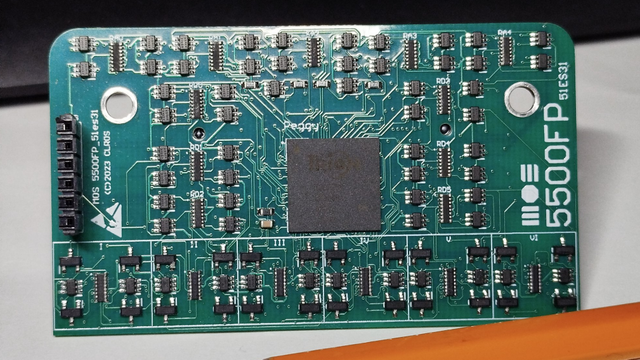
Ternary RISC Processor Achieves Non-Binary Computing Via FPGA

You would be very hard pressed to find any sort of CPU or microcontroller in a commercial product that uses anything but binary to do its work. And yet, other options exist! Ternary computing involโ€ฆ

Hackaday

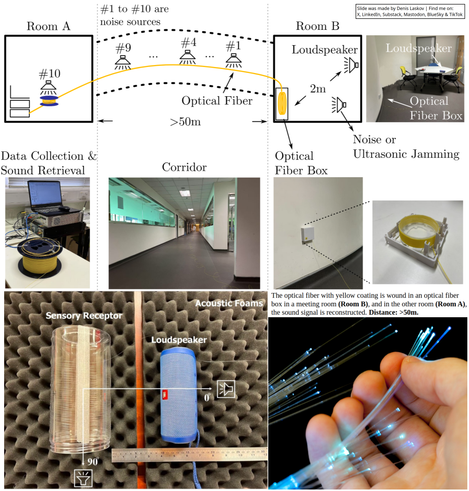
Fiber-optic cables can act as listening devices & AI reconstructs conversations from 50 meters away. ๐Ÿ‘จ๐Ÿปโ€๐Ÿ’ป๐Ÿ‘‚ใ€ฐ๏ธ๐Ÿงฑ๐Ÿ—ฃ๏ธ

More details on:
LinkedIn: https://www.linkedin.com/posts/dlaskov_cybersecurity-infosec-data-activity-7439382408036253696-NTQs
Substack: https://it4sec.substack.com/p/fiber-optic-cables-can-act-as-listening

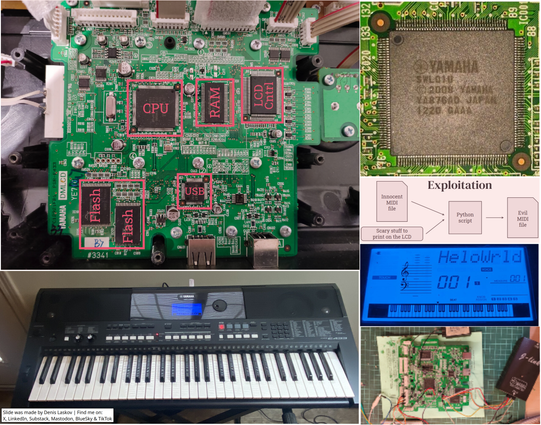
Remote Code Execution (RCE) in Yamaha synthesizers: an exploit in MIDI files & a hidden backdoor ๐ŸŽนโ™ซ๐Ÿ’‰๐Ÿ‘จ๐Ÿปโ€๐Ÿ’ป๐ŸŽ‰

More details on:
LinkedIn: https://www.linkedin.com/posts/dlaskov_cybersecurity-yamaha-music-activity-7439006568748077057-47_A
Substack: https://it4sec.substack.com/p/remote-code-execution-rce-in-yamaha

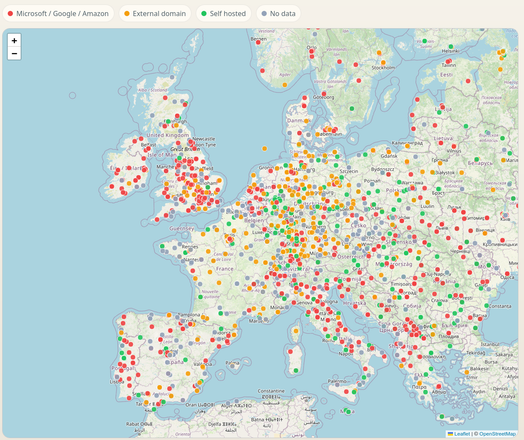
What's the state of digital sovereignty for our academic landscape?

Inspired by a similar post looking at digital sovereignty of municipalities, I explored what messaging infrastructure universities rely on. Sadly, many have switched to hyper scalars but few large universities keep running their own email infrastructure. Germany, Austria, France does not look too bad and lead by example.

[Note that the assessment is based on a simple MX records comparison against a list of known scalars, I don't yet check SPF records or guesstimate the SMTP software/version, this may be done in a future version.]

Check out the interactive map: https://nebelwelt.net/gannimo/unimx/

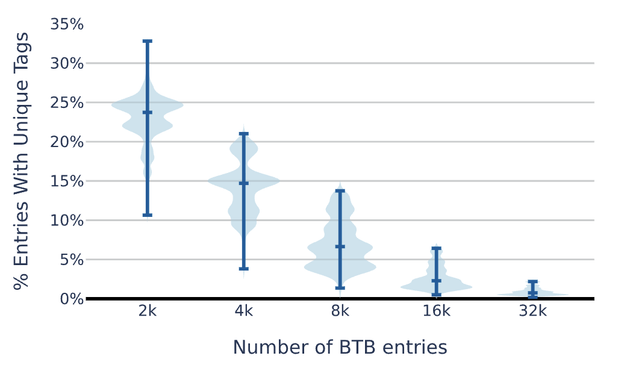
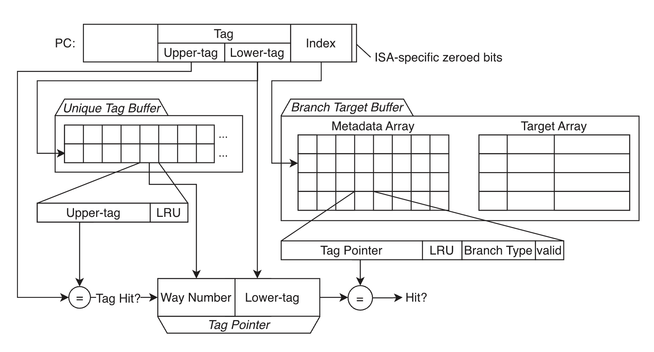
Most entries in a Branch Target Buffer share their tag with other entries. So why are we storing it over and over again?

I am happy to announce that Rakesh Kumarโ€™s and my paper "Driving the Core Frontend With LiteBTB" was accepted to IEEE Computer Architecture Letters. In it, we explore how tag redundancy in BTBs can be systematically exploited to reduce storage overhead without sacrificing performance.

https://ieeexplore.ieee.org/document/11391652

@CAL_NTNU

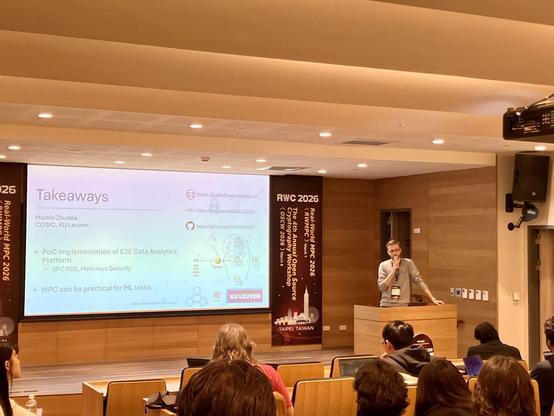
COSIC researcher Martin Zbudila presented "#MOZAIK: A Privacy-Preserving Analytics Platform for IoT Data Using MPC" at #RWMPC in Taiwan.
https://www.mpcalliance.org/rwmpc-2026
Paper in the Journal of Network and Systems Management: https://link.springer.com/article/10.1007/s10922-025-10021-6
Preprint:
https://arxiv.org/abs/2601.02245
#eprint White-Box Attacks on PhotoDNA Perceptual Hash Function by Maxime Deryck, Diane Leblanc-Albarel, Bart Preneel (https://ia.cr/2026/486)
White-Box Attacks on PhotoDNA Perceptual Hash Function

๐‘ƒโ„Ž๐‘œ๐‘ก๐‘œ๐ท๐‘๐ด is a widely deployed perceptual hash function used for the detection of illicit content such as Child Sexual Abuse Material (CSAM). This paper presents the first mathematical description of ๐ด๐‘™๐‘™๐‘’๐‘”๐‘’๐‘‘ ๐‘ƒโ„Ž๐‘œ๐‘ก๐‘œ๐ท๐‘๐ด, a new function which has identical outputs to that of ๐‘ƒโ„Ž๐‘œ๐‘ก๐‘œ๐ท๐‘๐ด for a large database of test images. From this description, several design weaknesses are identified: the algorithm is piece-wise linear and differentiable, the hash value only depends on the sum of the RGB values of each pixel, and it is trivial to find images with hash value equal to all zeroes. The paper further demonstrates that gradient-based optimization techniques and quadratic programming can exploit the mathematical weaknesses of ๐ด๐‘™๐‘™๐‘’๐‘”๐‘’๐‘‘ ๐‘ƒโ„Ž๐‘œ๐‘ก๐‘œ๐ท๐‘๐ด and ๐‘ƒโ„Ž๐‘œ๐‘ก๐‘œ๐ท๐‘๐ด to produce visually appealing exact collisions and second preimages; for near-collisions and near-second-preimages the image quality can be further improved. The same techniques can be used to recover the rough shapes of an image from its hash value, disproving the claim from the designer that ๐‘ƒโ„Ž๐‘œ๐‘ก๐‘œ๐ท๐‘๐ด is irreversible. Finally, it is also shown that it is easy to produce high-quality perceptually identical images with a hash value that is far from the original image allowing to avoid detection. We have implemented our attacks on a large set of varied images and we have tested them on both ๐ด๐‘™๐‘™๐‘’๐‘”๐‘’๐‘‘ ๐‘ƒโ„Ž๐‘œ๐‘ก๐‘œ๐ท๐‘๐ด and ๐‘ƒโ„Ž๐‘œ๐‘ก๐‘œ๐ท๐‘๐ด. Our attacks have success rates close or equal to 100% and run in seconds or minutes on a personal laptop; they present a substantial improvement over earlier work that requires hours on parallel machines and that results only in near-collisions. We believe that with additional optimization of the parameters, the image quality and/or the attack performance can be further improved. Our work demonstrates that ๐‘ƒโ„Ž๐‘œ๐‘ก๐‘œ๐ท๐‘๐ด is unreliable for the detection of illicit content: it is easy to incriminate someone by sending them false content with a hash value close to illicit content (a false positive) and to avoid detection of illicit content with minimal modifications to an image (a false negative). False positives and leakage of information are particularly problematic in a Client Side Scanning (CSS) scenario as envisaged by several countries, where large hash databases would be stored on every user device and billions of images would be hashed with ๐‘ƒโ„Ž๐‘œ๐‘ก๐‘œ๐ท๐‘๐ด every day. Overall, our research cast serious doubts on the suitability of ๐‘ƒโ„Ž๐‘œ๐‘ก๐‘œ๐ท๐‘๐ดfor the large-scale detection of illicit content.

IACR Cryptology ePrint Archive