
Frank O'Dwyer
@fodwyer
- 47 Followers
- 317 Following
- 558 Posts
iOS programmer living in Hastings UK #CarsRuinCities
 Viss
Viss
 Ciarán Ferrie
"Tensions between pedestrians and cyclists are not caused by walking or cycling themselves, but by decades of car-centric street design that have forced active modes to compete for inadequate space"
New report from the International Federation of Pedestrians
https://ifpedestrians.org/cycling-and-the-relationship-with-pedestrians/

cycling and the relationship with pedestrians - IFP - International Federation of Pedestrians
Read IFP’s report on cycling and the relationship with pedestrians, exploring sidewalk design, cycling infrastructure, shared spaces, e-scooters and pedestrian safety.
 counternotions
Remember how software – unlike brick-and-mortar – scales for free with marginal cost near zero, we were told?
Meet Mr. Data Center for AI.
 Brian Bilston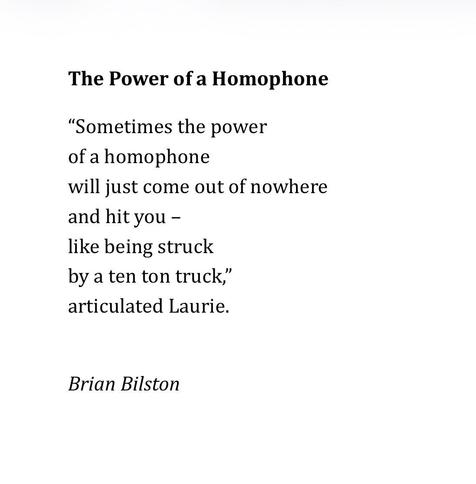
 Ronan
RonanOne person in one group asked if protesters should blockade Donald Trump’s Doonbeg hotel, to which someone replied: “He’s got nothing to do with it so no”.
Aimless protests
'Another few days will have things crippled': Inside the fuel price protest WhatsApp groups
https://www.thejournal.ie/ireland-protests-7008346-Apr2026/

 Jason Gorman
Claude Mythos is that guy down the pub who is so good at karate that if he used it on you, you'd die instantly, and that's why you'll never see him using karate.
 Pete
PeteSo #BikeTooter seems very excited by this noise-cancelling headphone negating bell, but I don't get it. Pedestrians have priority. End of. They don't need to hear you. Many can't hear you even if they wanted to. Thinking that dinging a bell comes with an expectation of a clear run is no different to drivers honking a horn and expecting cyclists to get out the road. ¯\_(ツ)_/¯
#Cycling #BikeTooter
#Cycling #BikeTooter
When I say LLMs are good at writing code that they're bad at modifying, no matter how we prompt, this is what I'm talking about.
Note also how problem completion rates never get even close to 100% under any conditions. I've never seen it, either. I suspect nobody has.
This is that "Fool's Errand" I've been talking about.
CircleCI's analysis of 28 million CI workflows confirms the same picture the DORA data shows. While feature branch activity's up significantly, the median impact on *main* (i.e. release) branch activity's net-negative 7%.
Only the top 5% of teams saw significant gains. The top 10% flatlined at 1%.
For the average team, AI slows them down overall.
Told ya!
What 28 million workflows reveal about AI coding’s biggest risk
In our last issue, we shared a preview of data from our upcoming 2026 State of Software Delivery showing that the promised AI productivity boom isn’t all hype. Throughput across the CircleCI platform increased 59% year-over-year, by far the largest productivity jump we've ever recorded and a clear i
 Matt Blaze
Mail in ballots have security features and a processing workflow that mirror that of in-person voting. Just about every mechanism that prevents you from showing up to vote in person multiple times or without being registered has an analog - sometimes a stronger one - in mail-in ballot processing.
The precise details vary from state to state and for different voters, but roughly: