19 Followers
12 Following
45 Posts
In 2017 I walked from Dublin to Istanbul.
The walk to Istanbul:https://trampeur.blot.im/

Poor old Doyne Farmer doesn't realise the field of economics exists in its current form to serve capital and entrench power elites.

> So how did we end up with today’s ineffective economic models? Farmer points to several reasons. “We got stuck in a very deep academic rut back in the 1960s,” he says, when the big debate about how to do economics was won by the people who said agents were perfect rational actors. “So we’ve been doing it that way ever since. The academic establishment has let itself become too close-minded and has been very resistant to different ways of doing things.”

https://www.theguardian.com/environment/2026/feb/12/economics-climate-crisis-complexity-scientist-plan

Economics has failed on the climate crisis. This complexity scientist has a mind-blowing plan to fix that

Doyne Farmer says a super-simulator of the global economy would accelerate the transition to a green, clean world

The Guardian

I'm finding Luke Kemp's "Goliath's Curse" very uneven. He's really good on an anarchist perspective on the rise of inequality side by side with farming and state formation, using recent archaeological research, but he seems to have lapped up the AI doomer narrative, treating "non-aligned AGI" as a credible risk. In reality, doomerism is a calculated distraction from the real harms being caused today by currently existing AI - and he's weak on this.

He also doesn't do his own credibility any good by namechecking "effective altruism" charlatan Toby Ord and racist AI doomer Nick Bostrom, both of University of Oxford's discredited "Future of Humanity" institute.

Kemp himself is affiliated with the University of Cambridge Centre for the Study of Existential Risk. https://www.cser.ac.uk/people/team/. I see Yuval Noah Harari is involved, and he's another doomer I can no longer take seriously.

#collapse #anarchism

@Vici well said. Can you share more information about PLAN B please?

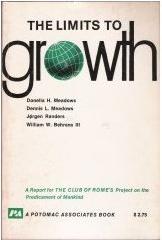
@elasticsoul have you come across "The Limits to Growth"?

> The Limits to Growth (LTG) is a 1972 report that discussed the possibility of exponential economic and population growth with a finite supply of resources, studied by computer simulation. The study used the World3 computer model to simulate the consequence of interactions between the Earth and human systems.

> In 2020, an analysis by Gaya Herrington, then Director of Sustainability Services of KPMG US, was published in Yale University's Journal of Industrial Ecology.The study assessed whether, given key data known in 2020 about factors important for the "Limits to Growth" report, the original report's conclusions are supported. In particular, the 2020 study examined updated quantitative information about ten factors, namely population, fertility rates, mortality rates, industrial output, food production, services, non-renewable resources, persistent pollution, human welfare, and ecological footprint, and concluded that the "Limits to Growth" prediction is essentially correct in that continued economic growth is unsustainable under a "business as usual" model. The study found that current empirical data is broadly consistent with the 1972 projections and that if major changes to the consumption of resources are not undertaken, economic growth will peak and then rapidly decline by around 2040.

https://en.wikipedia.org/wiki/The_Limits_to_Growth

https://tippingpoint-podcast.com/

The Limits to Growth - Wikipedia

It's easy to think this thick fossil-fuel-powered hypercapitalist consumerist culture we live in is the only way to be. For most of humanity over many millennia, things were very different.

These artifacts are our past and our future.

#transience

After forty minutes I'd reached my old workplace (Hi Niamh, Sabena, Tom, Rasha and Niha! Hope you're enjoying the long weekend! Thank you for the good wishes!) then under the M50, Dublin's motorway collar, an hour in, and then through the huge new suburb of Adams town, and on to Celbridge, where I bought a handful of items of food for tomorrow. I got there just before they closed, at six.

A friendly lad working at Lidl asked me what I was up to. I told him I'm walking to Mayo. He loved the idea, and suggested places to camp surreptitiously on the grounds of the nearby Castletown Estate. I'd have taken him up on it, but I wanted to crack on a bit further.

I've found a place to camp for the night and I'm set up for a warm and cosy night. I haven't been snared so far. I'll share snaps in the morning. Goodnight!

I got on the road finally at 12:20 today when the rain finally let up. I felt better under the bag than I'd hoped, and I've cracked out a good 25km today.

These snaps are the first few minutes of the walk; out of my street, over the Luas tram tracks and onto the Grand Canal, heading west.

Thank you for the recent follows! What are you interested in hearing about Ireland?

A bit of the history of the places I'm passing through? (Ireland has a long, rich and violent history. The earliest evidence of human habitation stretches back 31,000 years.)

I'm not hot on flora and fauna, so perhaps you can help me identify trees and plants when I post snaps.

Something about the people? Folks in Ireland are up for a chat, so I expect to hear plenty of stories. Phones don't make for good portrait cameras, but I'll do my best!

Irish society has transformed in recent years, from a deeply religious, socially conservative, ethnically homogeneous society, to a more open, more diverse, broadly tolerant society. (Previously, Catholicism was the water we swam in; now it's Neoliberalism.)

Geology? Some of Ireland's rocks are very very old (despite its situation as an island off an island between a huge ocean and a wide continent, Ireland lies in the middle of a tectonic plate) and it is an extraordinary patchwork of rock types.

I'm a dilettante - interested in everything but having no deep knowledge of anything in particular. I'm here to learn too.

Es ist Freitag. Klimafreitag. Und in unserem Klimaschritt von heute geht es um Reparieren statt wegwerfen! ♻

Loch im Pulli? Riss in der Jeans? Nicht wegwerfen – reparieren!

Mit einfachen Tricks und etwas Kreativität verlängerst du das Leben deiner Kleidung, schonst deinen Geldbeutel und tust ganz nebenbei etwas fürs Klima. 🌍💚

💡Wusstest du, dass jede*r in der EU im Schnitt 11 Kilo Kleidung pro Jahr wegwirft – aber nur 1 % recycelt wird? Das geht auch anders!

‼️ So wirst du zur Kleider-Retter*in 👕

→ Bewusst einkaufen – Qualität vor Quantität

→ Reparaturservices nutzen – viele Marken machen's möglich

→ Reparieren lassen – bei Schuster, Schneiderin oder Stopf-Profis

→ selbst flicken – Hilfe gibt’s online oder im Nähcafé

→ kreatives Upcycling – individuelles Fashion-Design aus deiner Heimwerkstatt

❓️ Was du davon hast? 🌍 Weniger CO2, weniger Kosten, ein längeres Leben für deine Lieblingsstücke und einen eigenen, unverwechselbaren Fashion-Style.

📚 Tipp: Das Buch "Geschickt geflickt" zeigt, wie cool Reparieren sein kann – auch für Anfänger*innen.

👉 Mach mit: Schau gleich heute in deinen Kleiderschrank, was du am Wochenende kreativ flicken kannst!

➡️ Viele Tipps und Links und weitere Infos findest du in unserem Klimaschritt „Kleidung reparieren statt wegwerfen“. Viel Spaß beim Kleidung und Klima retten!

#myfriday #klimafreitag #kleidungflicken #klimakrise #RepairRevolution #Nachhaltigkeit #Textilien #Upcycling #Kleidungreparieren