 keeps vis.social running
RE: https://ecoevo.social/@noamross/116184207397972089
This looks like fantastic and important work! I peeked at the job description, and it looks like it's in R. Didn't see mention of Python.
| https://ethanbass.github.io/ | personal website |
| https://github.com/ethanbass/ | github |
| https://ethanbass.github.io/chromatographR/ | chromatographR |
| https://twitter.com/Bass_E_ |
RE: https://ecoevo.social/@noamross/116184207397972089
This looks like fantastic and important work! I peeked at the job description, and it looks like it's in R. Didn't see mention of Python.
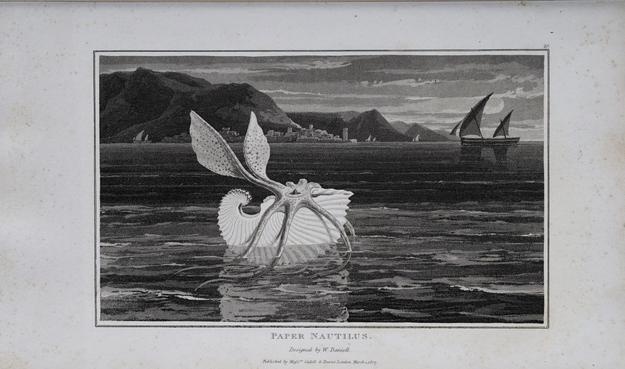
With the Biodiversity Heritage Library now officially operating in its new chapter following its transition away from the Smithsonian Institution, we are delighted to announce that the Field Museum…

Great call to action by Dariusz Jemielniak in Nature: academics should contribute to Wikipedia, and such work should be recognized.
I was so excited to come across this paper today. So much fungal diversity from bulk environmental samples remains barely documented—this feels like a big step toward naming, communicating, and understanding it within a Linnaean framework. Curious to see where this goes.
Tedersoo et al (2025) Thirty novel fungal lineages: formal description based on environmental samples and DNA. MycoKeys 124: 1-121.

Molecular analyses of soil and water commonly reveal large proportions of fungal taxa that cannot be assigned to any taxonomic or functional groups. Some of these so-called dark taxa have been encoded alphanumerically, while others have remained completely overlooked. Using long-read sequencing that covers much of the ribosomal RNA operon, we shed light on the phylogenetic and ecological distribution of fungal dark taxa and formally describe 30 of the most prominent phylum- to order-level lineages based on their characteristic DNA features. This increases the known large-scale fungal phylogenetic diversity by roughly one-third. Formal names will enhance taxonomic reproducibility, facilitate communication among researchers, and enable the estimation of conservation and quarantine needs for uncultivable species and higher-ranking taxa. The new species in the respective highest-level novel taxonomic groups include Pantelleria saittana (Pantelleriomycetes), Paraspizellomyces parrentiae (Paraspizellomycetales), Aquieurochytrium lacustre (Aquieurochytriomycetes), Edaphochytrium valuojaense (Edaphochytriomycetes), Tibetochytrium taylorii (Tibetochytriomycetes), Tropicochytrium toronegroense (Tropicochytriomycetes), Algovorax scenedesmi (comb. nov.) and Solivorax pantropicus (Algovoracomycetes), Aquamastix sanduskyensis (Aquamastigomycetes), Cantoromastix holarctica (Cantoromastigomycetes), Dobrisimastix vlkii (Dobrisimastigomycetes), Palomastix lacustris (Palomastigomycetes), Sedimentomastix tueriensis (Sedimentomastigomycetes), Terrincola waldropii (Terrincolales), Curlevskia holarctica (Curlevskiomycota), Mycosocceria estonica (Mycosocceriales), Maerjamyces jumpponenii (Maerjamycetes), Ruderalia cosmopolita (Ruderaliomycetes), Bryolpidium mundanum (Bryolpidiomycetes), Chthonolpidium enigmatum (Chthonolpidiomycetes), Savannolpidium raadiense (Savannolpidiomycetes), Gelotisporidium boreale (Gelotisporidiomycetes), Sumavosporidium sylvestre (Sumavosporidiomycetes), Parakickxella borikenica (Parakickxellomycetes), Aldinomyces tarquinii (Aldinomycota), Borikenia urbinae (Borikeniomycota), Mirabilomyces abrukanus (Mirabilomycota), Nematovomyces vermicola (comb. nov.) and N. soinasteënsis (Nematovomycota), Viljandia globalis (Viljandiomycota), Waitukubulimyces cliftonii (Waitukubulimycota), and Tartumyces setoi (Tartumyceta).
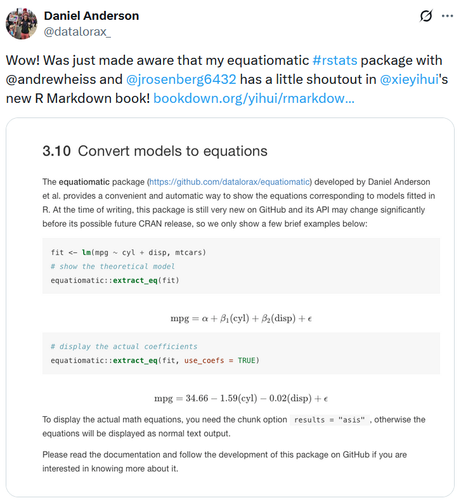
{equatiomatic} - Convert models to equations: https://github.com/datalorax/equatiomatic?tab=readme-ov-file#equatiomatic-
#RStats bookmark from the old twitter
Sponges are nature’s first stonemasons 🪸
New work uncovers “calcarin” proteins that help calcareous sponges build star-shaped spicules, showing how gene duplication sparks evolutionary innovation.
https://elifesciences.org/digests/106239/evolving-calcification?utm_source=mastodon&utm_medium=social&utm_campaign=organic
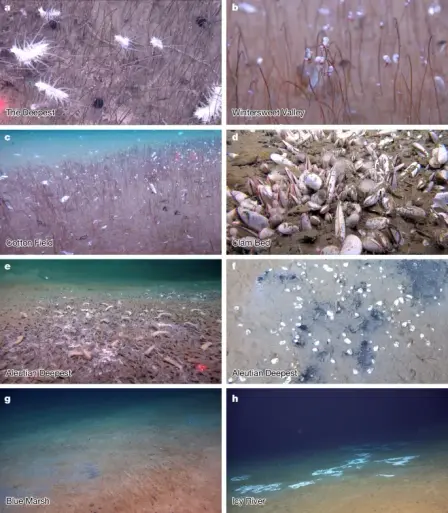
Flourishing chemosynthetic life at the greatest depths of hadal trenches
https://www.nature.com/articles/s41586-025-09317-z
Hadal trenches, some of the Earth’s least explored and understood environments, have long been proposed to harbour chemosynthesis-based communities
I am beyond excited to announce that ggplot2 4.0.0 has just landed on CRAN.
It's not every day we have a new major hashtag #ggplot2 release but it is a fitting 18 year birthday present for the package.
Get an overview of the release in this blog post and be on the lookout for more in-depth posts hashtag #rstats
 Data Science
 bug_gwen 🪲
 GregPalast
 Denny Vrandečić
 Teresita Porter 🙋🏻♀️
 Dr. U
Dr. U eLife
eLife
 MU-Peter Shimon 🀄
 Thomas Lin Pedersen