Daniel Isaac E

1 Followers
20 Following
18 Posts
Offensive-security–focused cybersecurity student.
Interested in adversary behavior, covert techniques, and real-world attack paths.
Writing on Medium.
DEVhttps://dev.to/daniel_isaac_e
Linkedinhttps://www.linkedin.com/in/daniel-isaac-e/

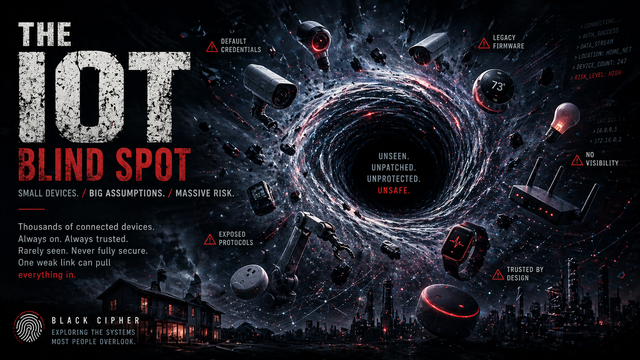
We’re securing systems… but ignoring the fastest growing attack surface.

While studying IoT security, one thing became clear:

It’s not the big systems that worry me anymore.

It’s the small, always-on, barely monitored devices inside the same network.

Smart cameras. Sensors. Wearables. Controllers.

Individually harmless.

Collectively… a blind spot.

The problem isn’t one vulnerability

It’s this:
• Devices that are always trusted
• Minimal visibility into what they do
• Weak or inconsistent updates
• Constant background communication
• Growing faster than we can track

At scale, this creates something dangerous:

A network you don’t fully understand anymore

Why this matters

IoT devices are rarely the final target.

But they can become:
• Silent entry points
• Internal visibility nodes
• Pivot points between systems
• Long-term unnoticed presence

Not because they’re powerful —
but because they’re overlooked and trusted.

What I’m learning

IoT security is less about the device itself…
and more about:
• How it fits into the system
• What it communicates with
• What assumptions exist around it

Because risk doesn’t always come from complexity.

Sometimes it comes from what we stop paying attention to.

I wrote a deeper breakdown on this 👇

https://dev.to/blackcipher/the-iot-blind-spot-the-part-of-the-network-we-keep-ignoring-53eg

Curious to hear your thoughts —

#CyberSecurity #IoT #IoTSecurity #InfoSec #RedTeam #ThreatIntel #EmbeddedSecurity #BlackCipher

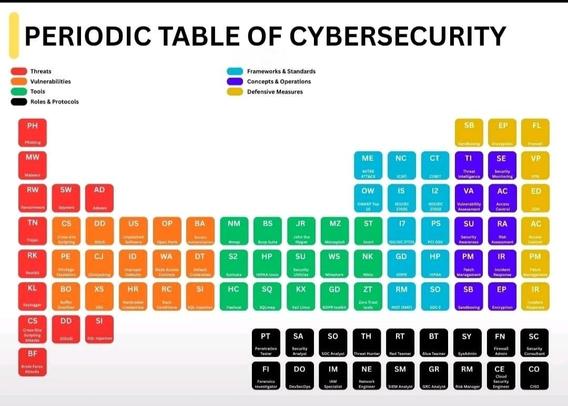
This “Periodic Table of Cybersecurity” is interesting not for what it includes — but for what people study in isolation.

In practice, attackers move horizontally across these categories, while defenders specialize vertically.

Curious how others here map these elements to real incident timelines.