Daniel Isaac E

1 Followers
20 Following
18 Posts
Offensive-security–focused cybersecurity student.
Interested in adversary behavior, covert techniques, and real-world attack paths.
Writing on Medium.
DEVhttps://dev.to/daniel_isaac_e
Linkedinhttps://www.linkedin.com/in/daniel-isaac-e/

We’re securing systems… but ignoring the fastest growing attack surface.

While studying IoT security, one thing became clear:

It’s not the big systems that worry me anymore.

It’s the small, always-on, barely monitored devices inside the same network.

Smart cameras. Sensors. Wearables. Controllers.

Individually harmless.

Collectively… a blind spot.

The problem isn’t one vulnerability

It’s this:
• Devices that are always trusted
• Minimal visibility into what they do
• Weak or inconsistent updates
• Constant background communication
• Growing faster than we can track

At scale, this creates something dangerous:

A network you don’t fully understand anymore

Why this matters

IoT devices are rarely the final target.

But they can become:
• Silent entry points
• Internal visibility nodes
• Pivot points between systems
• Long-term unnoticed presence

Not because they’re powerful —
but because they’re overlooked and trusted.

What I’m learning

IoT security is less about the device itself…
and more about:
• How it fits into the system
• What it communicates with
• What assumptions exist around it

Because risk doesn’t always come from complexity.

Sometimes it comes from what we stop paying attention to.

I wrote a deeper breakdown on this 👇

https://dev.to/blackcipher/the-iot-blind-spot-the-part-of-the-network-we-keep-ignoring-53eg

Curious to hear your thoughts —

#CyberSecurity #IoT #IoTSecurity #InfoSec #RedTeam #ThreatIntel #EmbeddedSecurity #BlackCipher

OAuth consent phishing is scary because it doesn’t “hack” your login — it hacks your trust.

One click on Allow access can grant a malicious app real permission to email/files.

Write-up:
https://danielisaace.medium.com/oauth-consent-phishing-when-allow-access-becomes-a-breach-26f241aa4523

Best detection idea: monitor new OAuth grants + high-risk scopes + unusual app behavior.

OAuth Consent Phishing: When “Allow Access” Becomes a Breach

Most people think account hacking happens like this:

Medium

Hi all — new here.

I’m an offensive-security focused cybersecurity student, interested in how attackers actually move through systems once the noise stops.

Most of my current thinking revolves around:
• adversary behavior vs defender assumptions
• covert techniques and low-signal attack paths
• why monitoring often fails silently
• what “security” looks like after initial access

I write regularly on Medium to structure these ideas and pressure-test my assumptions.

Looking forward to learning from the discussions here and exchanging notes with people who think beyond checklists.

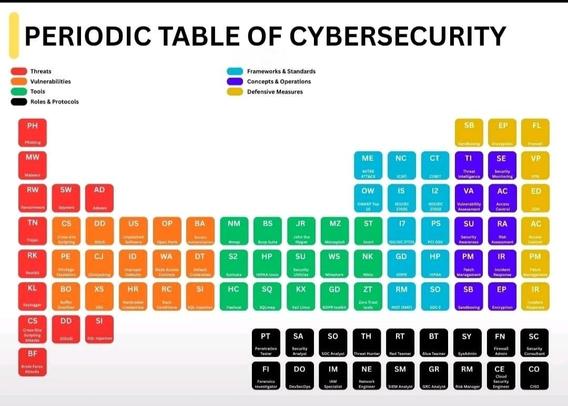
This “Periodic Table of Cybersecurity” is interesting not for what it includes — but for what people study in isolation.

In practice, attackers move horizontally across these categories, while defenders specialize vertically.

Curious how others here map these elements to real incident timelines.

Persistence is the quiet phase that wins breaches.

Most teams focus on “how attackers got in”…
but the real danger is what they change to stay in.

New write-up (beginner → practical):
https://danielisaace.medium.com/persistence-the-quiet-phase-that-wins-breaches-fbbe7357bd81

#infosec #cybersecurity #threathunting #incidentresponse #blueteam

Persistence: The Quiet Phase That Wins Breaches

Most people think hacking ends when the attacker “gets in.”

Medium

🧠 LOTL (Living Off The Land) is one of the most underrated real-world attack styles.

Instead of dropping malware, attackers often abuse trusted tools + normal workflows to blend in.

I wrote a beginner-friendly breakdown (with real defender takeaways):
🔗 https://danielisaace.medium.com/living-off-the-land-lotl-when-the-attacker-uses-your-own-tools-against-you-6a2abde89d28

Curious: do you prioritize initial access prevention or post-compromise movement detection more?

#infosec #cybersecurity #threathunting #soc #blueteam

MFA helps, but if your session token gets stolen… the attacker doesn’t need to “log in” at all.

Wrote a short read on it:
https://danielisaace.medium.com/session-tokens-the-real-password-in-modern-attacks-5d90fe602d4e

What’s your favorite detection signal for token/session abuse?

🚨 Most people think red teaming is about exploits.

It’s not.

The most effective attacks today don’t start with vulnerabilities —
they start with **trust**.

Modern environments are cloud-heavy, identity-driven, and full of SaaS integrations. In these systems, attackers don’t always need to “break in.”

They move quietly through:

• Over-permissioned identities
• Weak approval workflows
• Misconfigured cloud roles
• OAuth tokens and API access
• Human behavior under pressure
• Business processes no one questions

This is what I’ve been studying and calling the **Quiet Kill Chain** —
a sequence of legitimate-looking actions that, when chained together, become an attack path.

No loud exploits.
No obvious malware.
Just normal activity… used the wrong way.

## What changes at an advanced level?

You stop asking:
“What exploit should I use?”

And start asking:

• Where does this system trust too easily?
• Which action would look completely normal?
• What would defenders ignore?
• How can I blend into business operations?

Because the strongest intrusion today is not the one that is invisible.

It’s the one that looks **legitimate**.

## My takeaway

Offensive security is shifting from breaking systems
to understanding them deeply enough to move inside them unnoticed.

I’ve written a full deep-dive on this concept here 👇

🔗 https://dev.to/blackcipher/the-quiet-kill-chain-how-modern-red-teamers-break-organizations-without-exploits-1ell

Curious to hear your thoughts —
Is detection today ready for this level of subtlety?

#CyberSecurity #RedTeam #OffensiveSecurity #ThreatIntel #CloudSecurity #IdentitySecurity #EthicalHacking #BlackCipher

The Quiet Kill Chain: How Modern Red Teamers Break Organizations Without Exploits

Most people imagine offensive security as a chain of loud events: Scan → Exploit → Shell → Pivot →...

DEV Community

We’re securing systems… but ignoring the fastest growing attack surface.

While studying IoT security, one thing became clear:

It’s not the big systems that worry me anymore.

It’s the small, always-on, barely monitored devices inside the same network.

Smart cameras. Sensors. Wearables. Controllers.

Individually harmless.

Collectively… a blind spot.

The problem isn’t one vulnerability

It’s this:
• Devices that are always trusted
• Minimal visibility into what they do
• Weak or inconsistent updates
• Constant background communication
• Growing faster than we can track

At scale, this creates something dangerous:

A network you don’t fully understand anymore

Why this matters

IoT devices are rarely the final target.

But they can become:
• Silent entry points
• Internal visibility nodes
• Pivot points between systems
• Long-term unnoticed presence

Not because they’re powerful —
but because they’re overlooked and trusted.

What I’m learning

IoT security is less about the device itself…
and more about:
• How it fits into the system
• What it communicates with
• What assumptions exist around it

Because risk doesn’t always come from complexity.

Sometimes it comes from what we stop paying attention to.

I wrote a deeper breakdown on this 👇

https://dev.to/blackcipher/the-iot-blind-spot-the-part-of-the-network-we-keep-ignoring-53eg

Curious to hear your thoughts —

#CyberSecurity #IoT #IoTSecurity #InfoSec #RedTeam #ThreatIntel #EmbeddedSecurity #BlackCipher

🚨 Most people think red teaming is about exploits.

It’s not.

The most effective attacks today don’t start with vulnerabilities —
they start with **trust**.

Modern environments are cloud-heavy, identity-driven, and full of SaaS integrations. In these systems, attackers don’t always need to “break in.”

They move quietly through:

• Over-permissioned identities
• Weak approval workflows
• Misconfigured cloud roles
• OAuth tokens and API access
• Human behavior under pressure
• Business processes no one questions

This is what I’ve been studying and calling the **Quiet Kill Chain** —
a sequence of legitimate-looking actions that, when chained together, become an attack path.

No loud exploits.
No obvious malware.
Just normal activity… used the wrong way.

## What changes at an advanced level?

You stop asking:
“What exploit should I use?”

And start asking:

• Where does this system trust too easily?
• Which action would look completely normal?
• What would defenders ignore?
• How can I blend into business operations?

Because the strongest intrusion today is not the one that is invisible.

It’s the one that looks **legitimate**.

## My takeaway

Offensive security is shifting from breaking systems
to understanding them deeply enough to move inside them unnoticed.

I’ve written a full deep-dive on this concept here 👇

🔗 https://dev.to/blackcipher/the-quiet-kill-chain-how-modern-red-teamers-break-organizations-without-exploits-1ell

Curious to hear your thoughts —
Is detection today ready for this level of subtlety?

#CyberSecurity #RedTeam #OffensiveSecurity #ThreatIntel #CloudSecurity #IdentitySecurity #EthicalHacking #BlackCipher

The Quiet Kill Chain: How Modern Red Teamers Break Organizations Without Exploits

Most people imagine offensive security as a chain of loud events: Scan → Exploit → Shell → Pivot →...

DEV Community