
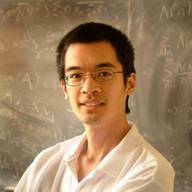
 Terence Tao
It is tempting to view the capability of current AI technology as a singular quantity: either a given task X is within the ability of current tools, or it is not. However, there is in fact a very wide spread in capability (several orders of magnitude) depending on what resources and assistance gives the tool, and how one reports their results.
One can illustrate this with a human metaphor. I will use the recently concluded International Mathematical Olympiad (IMO) as an example. Here, the format is that each country fields a team of six human contestants (high school students), led by a team leader (often a professional mathematician). Over the course of two days, each contestant is given four and a half hours on each day to solve three difficult mathematical problems, given only pen and paper. No communication between contestants (or with the team leader) during this period is permitted, although the contestants can ask the invigilators for clarification on the wording of the problems. The team leader advocates for the students in front of the IMO jury during the grading process, but is not involved in the IMO examination directly.
The IMO is widely regarded as a highly selective measure of mathematical achievement for a high school student to be able to score well enough to receive a medal, particularly a gold medal or a perfect score; this year the threshold for the gold was 35/42, which corresponds to answering five of the six questions perfectly. Even answering one question perfectly merits an "honorable mention". (1/3)
 Talia Ringer
 Emtiyaz Khan