 Stanley Jones
 Peter Gleick
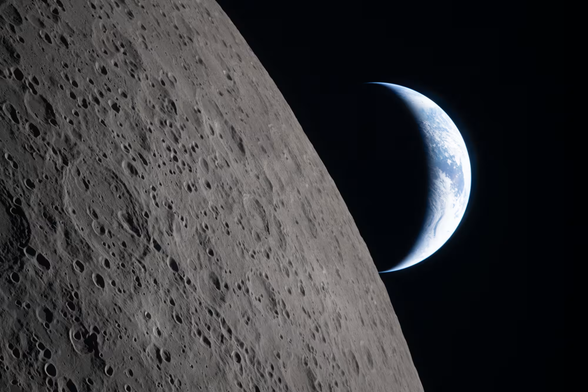
Because we all need something amazing today.
#artemisII
#artemisII

@checkmite @johnzajac IIRC surgeons don't even take the Hippocratic Oath because it says, "Do no harm" and they cut into people. So, in terms of medical ethics, even life-saving surgery is considered borderline!
Compare that to software engineering. "Hmm, this might trigger a genocide but consider the ad revenue."
"people who have an interest in something"
I love collecting language that is used to remove specificity.
comms will switch over from #TDRS to the #DeepSpaceNetwork soon – sending good vibes to [@]nascom1 & my other friends in #DSN spacecraft ops out at the #CDSCC in Tidbinbilla who are about to take the reins 💕 🖖
you can dive into some amazing historical skeets & tweets from [@]nascom1 over at https://bsky.app/profile/nascom1.bsky.social & https://x.com/nascom1
Hey, Mastodon! I’m Alec. I’m here in search of meaningful art and community, far from the place where everyone’s an ‘influencer’ and everything is monetized ‘content’ made to appease an algorithm.
I’m a fan of:
- meaningful non-digital experiences📓✍️
- #ownedmedia 💿
- #ultimatefrisbee 🥏
- the #cubs , #49ers , #warriors & #valkyries
Currently learning #python for #dataanalytics.
With the state of things in the States right now I’m glad to be finally be here. #introduction #firstpost
One of *the most important* experiences we can have as people are those moments when we feel TRULY SEEN by another, don't you think? It's a very big thing. 🥹
That's what I felt when I read this just-published review of our 80s kids show, written by a long-time music industry person whom we respect greatly, and who we are grateful to call a friend. Thank you so much, John O'Neil. 🙏🏻
https://johnpauloneil.substack.com/p/80s-kids-705
1/2
Agents of Chaos: a research report testing how badly OpenClaw type agents will behave https://agentsofchaos.baulab.info/report.html
Gaslighting users, destroying filesystems, listening to input from any damn email that comes in, you name it
But the most interesting part of this is "Multi-Agent Amplification":
> When agents interact with each other, individual failures compound and qualitatively new failure modes emerge. This is a critical dimension of our findings, because multi-agent deployment is increasingly common and most existing safety evaluations focus on single-agent settings.
 Baldur Bjarnason
 jz.tusk
 mx alex tax1a - 2020 (6)
 ellie (slut arc) 🖤
 itgrrl
 alec
alec Shannon Curtis
 Christine Lemmer-Webber