
Bryan Steele

@canadianbryan
543 Followers
276 Following
1.4K Posts
AKA brynet@. I like tinkering with #OpenBSD and occasionally other Unix-like systems. In other words, not a MCP. He/Him. 🍕🐈💻🇨🇦
🍕https://brynet.ca/wallofpizza.html
Main account:https://bsd.network/@brynet

#MutualAid #MutualAidRequests

I could use some help, friends. I'd really appreciate sharing. 

If you can help out with the occasional pizza, that would really mean a lot to me. Monthly gifts would take care of a lot of my financial stress/anxiety as well.

https://brynet.ca/wallofpizza.html

https://www.paypal.com/donate/?hosted_button_id=ZQJC48GUPB3UU&source=url

Progress: $335 / $2500 CAD (monthly goal)

If you aren't able help with PayPal, I have an Amazon .ca wishlist with some odds & ends, computer hardware: https://www.amazon.ca/hz/wishlist/ls/2E7N6O3GTI6JF?sort=custom

(Native SegWit): bc1qzkchnc25yeqt9p24edsu5ln0mvh8hqdzdznlk2

brynet's something somewhat site - pizza wall of fame

brynet's something somewhat site - pizza wall of fame

#mutualaidrequest #mutualaid

I don't suppose that I have any #bsd #unix #foss #infosec friends out there willing to signal boost, by chance? ​ 

https://bsd.network/@brynet/114458997143046937

Mark Kettenis has added #OpenBSD/arm64 support for the new hw.blockcpu sysctl, classifying CPU types based on device-tree and ACPI CPPC information.

kettenis@ modified src/sys/arch/arm64/*: Add hw.blockcpu support for arm64. Here we classify CPU cores based on their "capacity". This a concept borrowed from the device tree standard that indicates the nominal performance of a CPU core. For ACPI machines we use similar information from ACPI's Collaborative Processor Performance Control (CPPC). If performance is less than 30% of the fastest cores in the same we classify them as L. Between 30% and 80% we classify them as E.
And above 80% we classify them as P. The CPU capacity is communicated to userland though kstat(4).

ok deraadt@, jca@

In addition to using kstat(1) on your machines, kettenis@ tested the following machines:

  • Lenovo x13s (Snapdragon 8c): Cortex-A78C -> E + Cortex-X1C -> P
  • Rock 5B (Rockchip RK3588): Cortex-A55 -> E + Cortex-A76 -> P
  • Apple Mac mini (M2 Pro): Blizzard -> E + Avalanche -> P
  • Radxa Orion O6 (Cix CD8180): Cortex-A520 -> L + Cortex-A720 -> P

In addition to funding open source projects you use, if you can, consider extending support to the individual contributors/developers personally who work on those projects, many are volunteers and even a small monthly contribution could mean the difference. 🫶

#OpenSource #FOSS

RE: https://mastodon.social/@nixCraft/116319158100665914

openbsd mitigates this by not having a forum

Not great timing, I know, but I'm thinking a Intel mini PC (e.g: N150, 11th Gen i5/i7) would work for my #OpenBSD testing & hacking, Any help towards this would be greatly appreciated. 

https://www.paypal.com/donate/?hosted_button_id=ZQJC48GUPB3UU&source=url

https://www.amazon.ca/hz/wishlist/ls/2E7N6O3GTI6JF?sort=custom

Donate to Bryan Steele

Help support Bryan Steele by donating or sharing with your friends.

If any of my past work on #OpenBSD, or my highlight posts here (or elsewhere) has been helpful, a small recurring monthly donation would be extremely appreciated. 

https://brynet.ca/wallofpizza.html

https://bsd.network/@brynet/114458997143046937

brynet's something somewhat site - pizza wall of fame

brynet's something somewhat site - pizza wall of fame

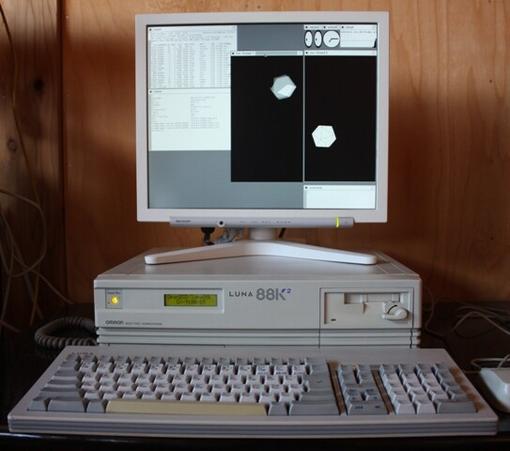
For those who may not know, #OpenBSD still runs on Motorola 88K machines, more specifically the LUNA family of 90's Unix workstations released by Japanese company OMRON. There's even SMP support (w/ weird configurations, like 3 CPUs).

https://www.openbsd.org/luna88k.html

Largely a passion project by Kenji Aoyama as these machines are not easy to come, especially outside of Japan. It's possible to install 7.8 (or a -current snapshot, to try out Miod's 88k gcc4 port! ​) using nono, a full system emulator for LUNA machines.

https://www.pastel-flower.jp/~isaki/nono/ — (nono emulator, in OpenBSD ports/packages)

Hooray! Jonathan Gray (jsg@) has updated the drm(4) graphics drivers (inteldrm/radeondrm/amdgpu) in #OpenBSD -current to Linux 6.18.y/6.18.16 

Thanks to the OpenBSD Foundation for sponsoring this work.

Previously #OpenBSD -current was tracking the 6.12.y/6.12.66 longterm support versions, with additional backports from mainline Linux. OpenBSD 7.8 shipped with drivers based on 6.12.50. 

https://marc.info/?l=openbsd-cvs&m=177310343311915&w=2

'CVS: cvs.openbsd.org: src' - MARC

Heads up: The recent pledge(2) "tmppath" removal has been backported to #OpenBSD 7.7/7.8, and includes updated base system utilities as well as new -stable packages for software using pledge(2), such as web browsers.

https://www.openbsd.org/errata78.html#p015_tmppath

https://www.openbsd.org/errata78.html#p016_pledge_sysctl

https://www.openbsd.org/errata78.html#p017_tmppath

https://www.openbsd.org/errata78.html#p018_pledgepaths

Don't forget to run pkg_add -u before applying the kernel syspatch/errata to avoid errors with old binaries on the new kernel.

OpenBSD 7.8 Errata

the OpenBSD errata page