Martijn Arns

335 Followers
58 Following
171 Posts

Research Director @brainclinics Foundation
Associate Professor @Maastricht University

Stratified Psychiatry | Neuromodulation | Precision Psychiatry | RDoC | rTMS | ADHD | Depression | Neurofeedback | QEEG | Applied Neuroscience

RT @KoenCuypers3
Check out our short DIY movie and publication about how to measure the current directions of your TMS coils: https://www.youtube.com/watch?v=LhpTAvVQL_w
@brainstimj @REVALResearch @Hersenstim
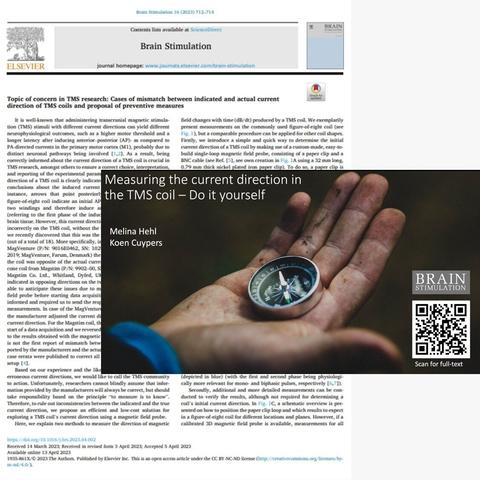
Measuring the current direction in the TMS coil

YouTube
RT @Hersenstim
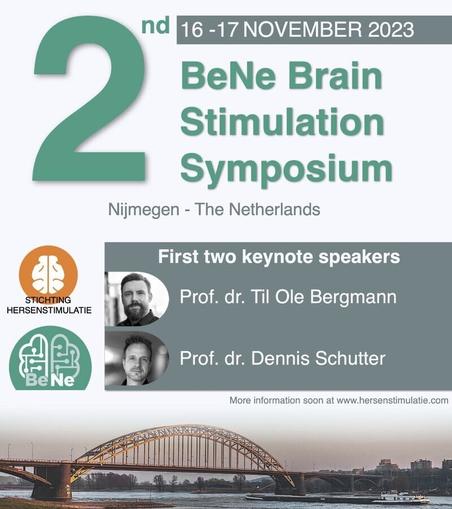
Save-the-date: The 2nd BeNe Brain Stimulation Symposium: November 16-17, 2023; Nijmegen. Keynotes: @tobergmann & Dennis Schutter and more to come! The symposium will bring together experts from Belgium, the Netherlands, and beyond to share the latest research and developments.
RT @VannesteS
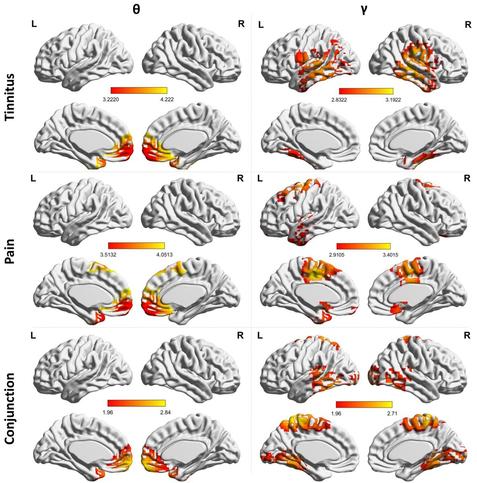
Do chronic pain and tinnitus share common pathophysiological mechanisms?
Together with K. Friston, and W. Sedley, we show a parahippocampal-sensory Bayesian vicious circle generates pain or tinnitus. @PsychologyTCD @TCINeuroscience @TRI_TinnitusRes
https://academic.oup.com/braincomms/advance-article/doi/10.1093/braincomms/fcad132/7131602?utm_source=advanceaccess&utm_campaign=braincomms&utm_medium=email
parahippocampal-sensory Bayesian vicious circle generates pain or tinnitus: a source-localized EEG study

De Ridder et al. report that pain and tinnitus share common abnormal activity and connectivity in key brain areas involved in sensory and memory processing. The

OUP Academic
RT @gordonneuro
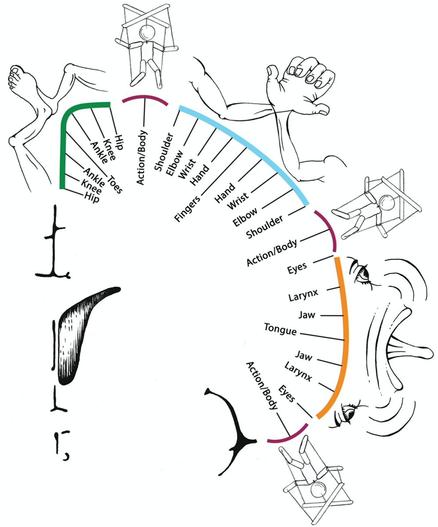
We’ve identified the somato-cognitive action network (SCAN), a newly recognized network within human primary motor cortex that disrupts the famous—but incorrect—motor homunculus, and has strong connections to high-level control networks. Now out in @Nature https://www.nature.com/articles/s41586-023-05964-2
A somato-cognitive action network alternates with effector regions in motor cortex - Nature

Functional MRI studies across ages show that the classic homunculus of the motor cortex in humans is in fact discontinuous, alternating with action control-linked regions termed the somato-cognitive action network.

Nature

RT @ImagingNeurosci
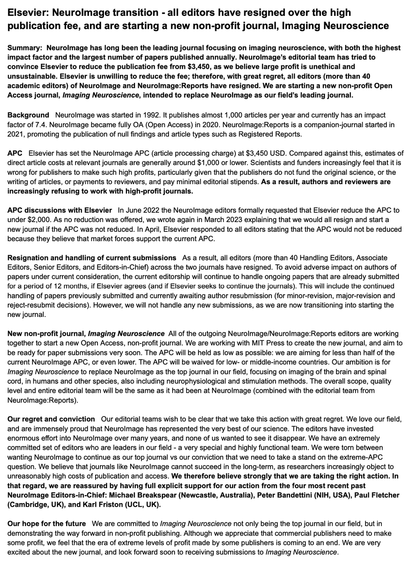
All NeuroImage and NeuroImage:Reports editors have resigned over the high publication fee, and are starting a new non-profit journal

https://imaging-neuroscience.org

This comes with great regret, and a huge amount of thought and discussion- please read announcement to get more details.

Imaging Neuroscience

Thanks all participants and speakers for a great and inspiring TMS Masterclass!

@shansiddiqi @JonathanDownar @Martijn_Figee_ @HVoetterl @L_Zwienenberg @NikitaVinne @hanvdij

Also thanks to @Magventure and @DEYMED_Diagnos for equipment support!

RT @spbecker
Check out another important paper led by @kkdubstep3, this time looking at effects of stimulants on #sleep in teens with #ADHD using daily sleep diaries and actigraphy. With @CalmerLab and @CYSEW_Rutgers, in @ESCAPonline

https://link.springer.com/article/10.1007/s00787-023-02204-w https://twitter.com/kkdubstep3/status/1646567480804900864

Examining daily stimulant medication use and sleep in adolescents with ADHD - European Child & Adolescent Psychiatry

Research has been inconclusive as to whether stimulant treatment causes or exacerbates sleep problems in adolescents with ADHD. This study examined sleep differences in adolescents with ADHD as a function of stimulant use. Participants were adolescents with ADHD (N = 159, ages 12–14). Parents reported on receipt of stimulant treatment (n = 92, 57.86%; n = 47 amphetamines, n = 45 methylphenidate). Adolescents wore actigraphs and completed daily diaries assessing sleep and daily use of stimulants for 2 weeks. Sleep parameters included daily-reported bedtime, sleep onset latency (SOL), sleep duration, daytime sleepiness, and difficulty waking the following morning; and actigraphy-measured sleep onset time, total time in bed, and sleep efficiency. We estimated between- and within-individual associations between stimulant medication use and sleep indices with all stimulants, after removing adolescents using sleep aids and weekend days, and as a function of stimulant type. Adolescent sleep did not differ between those receiving and not receiving stimulant treatment. Within individuals using stimulants, we largely observed no significant differences between medicated and unmedicated days, though findings were most often significant for school days only. Small effects were found indicating longer SOL, later sleep onset time, and more daytime sleepiness related to medication use. In contrast, there were slight improvements to sleep duration and sleep efficiency related to methylphenidate use, though methylphenidate was also associated with later sleep onset time and more daytime sleepiness. Given the inconsistent and small effects, findings suggest that stimulant medication may impact sleep, but does not appear to be a primary contributor to sleep problems in adolescents with ADHD.

SpringerLink
Great first day of the Brainclinics TMS Certification Course with @JonathanDownar and @NikitaVinne
Look forward to the TMS Masterclass tomorrow!
RT @MartinTik1
The deadline for submitting abstracts to the International Workshop on Concurrent TMS/fMRI is fast approaching on April 14th. Don't miss your chance to showcase your research on interleaved TMS-fMRI and learn from your colleagues.
http://www.tmsfmri.com/workshop
Event

DEADLINES FOR REGISTRATION AND ABSTRACT SUBMISSION HAVE BEEN EXTENDED! ABSTRACT SUBMISSION (FINAL DEADLINE APR 24) WORKSHOP REGISTRATION (FINAL DEADLINE APR 24)

Enjoyed lecturing at the TN2 Translational Neuroscience symposium in Amsterdam ⁦@UvA_Amsterdam⁩ @VUamsterdam⁩