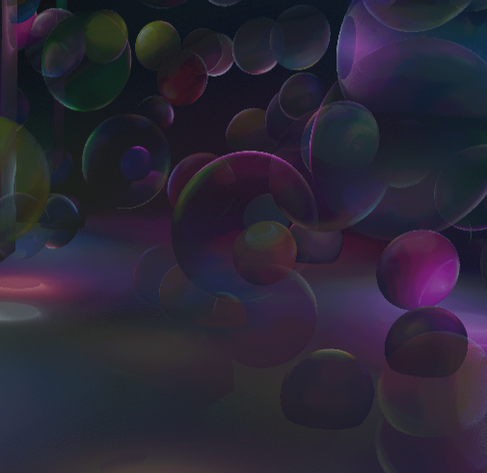
Blender 4.2 has a strange bug where any OBJ import seems to get transmission set to 1.0 on all materials.
4.0 does it right. Hmm.

Graphics programmer.
Trans lesbian. Math geek. Coaster enthusiast.
🏳️⚧️🏳️🌈 she/her
Opinions expressed here are my own and do not represent any current or past employer.
Blender 4.2 has a strange bug where any OBJ import seems to get transmission set to 1.0 on all materials.
4.0 does it right. Hmm.
Implemented 2.5D culling. (Basic idea: after computing min/max depth for the tile, slice it into 32 ranges, build a bitmask of depths that are present. Build the same for lights. Only accept lights that intersect the depth mask.)
From these A/B shots (false positive heatmap), you can see that it does help. A little. But the mask for the light is very crude, just uses the min/max in view space, doesn't account for the bounding sphere.


Okay, remapping with:
`log2(float(count) + 1.0) / 2.0`
This gives blue at 3, green at 15, red at 63, and white at 255:
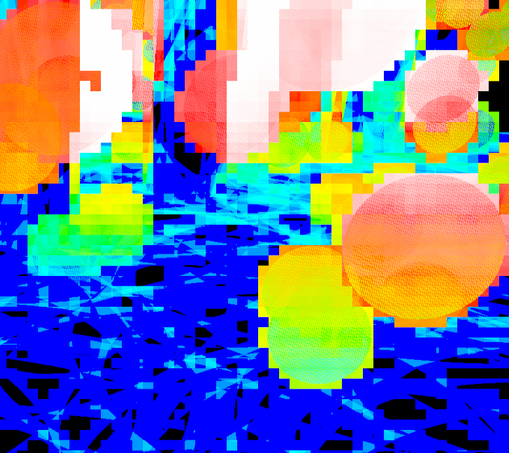
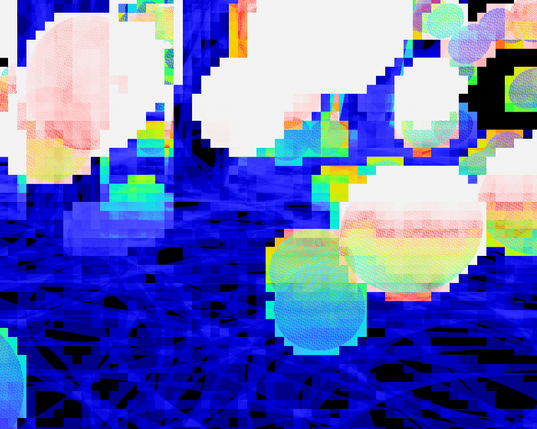
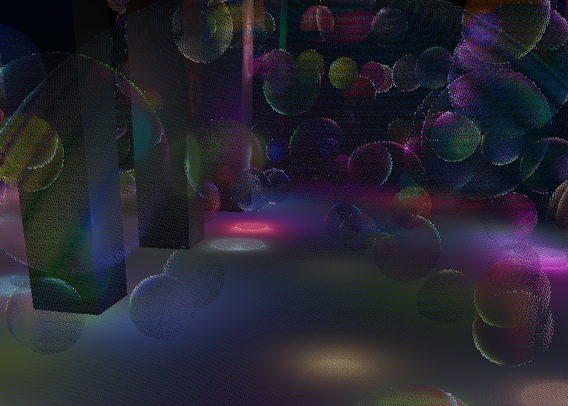
Heatmap view, with the light count in the scene raised to 256.
There's two culling tests, and a light is only marked visible if it passes both:
- inside the planes of the subfrustum
- inside the viewspace AABB of the subfrustum
AABB only is decent, but falls flat on edges. Frustum only is _awful_. The two together do a pretty good job, though.
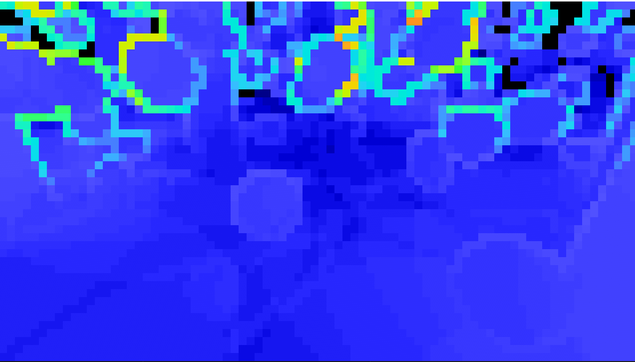
_Finally_ getting around to actually implementing tiled light culling. Which was the original reason I started this renderer... a year+ ago?
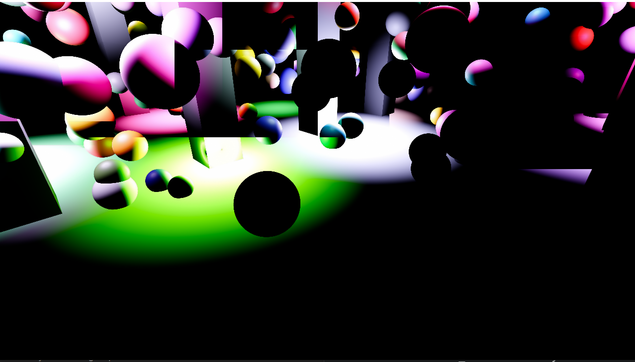
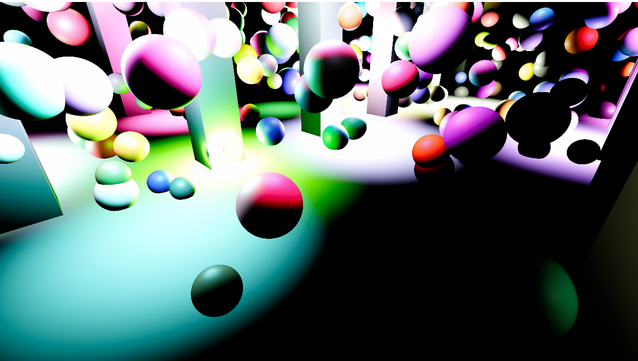
It is, of course, incredibly broken so far: