Yaël M. (moved to sciences.re)

3 Followers
109 Following
123 Posts

⚠️ Moved to sciences.re
New account: @ial_2
📚 Master of Astrophysics and Data Science at the Observatoire astronomique de Strasbourg
➡️ @ObsStrasbourg
===
🔭 Scientific animator and mediator at the Centre Astro de St.-Michel-l'Observatoire, in Haute-Provence (France)
➡️ https://www.centre-astro.com/

Header picture credits: NASA, ESA, CSA, and STScI

Websitehttps://yael.moussouni.fr
HALhttps://cv.hal.science/yael-moussouni
Orcidhttps://orcid.org/0009-0006-6300-0712
Codeberghttps://codeberg.org/Yael-II

After two and a half years of building this community, I've made the decision that it's time to shut down Astrodon.social.

Since 2022, around 4,000 users have registered on astrodon.social. However, fewer than 10% of those users are active each month, and fewer than 1% post regularly. Because of the way Mastodon works, the data for every one of the those users, even the inactive ones, has to be kept forever and keeps on growing. There's no way to remove posts or archive them out of the database, and running a large database gets very expensive.

Running Astrodon costs more than €300/month, which means that the costs of running the server are primarily going toward servicing fewer than 50 active users, the most active of whom are organisations. Even with donations, Astrodon has now cost me more than €5000 to run.

While I’ve considered the option of turning Astrodon into a commercial service or creating a nonprofit, I’m reluctant to go down that route. Managing a business comes with a host of overhead tasks like tax reporting and navigating different tax regimes due to our global user base, which is something I want to avoid. My goal has always been to create a free and open space, but the reality is that the free part isn't sustainable.

I'm not shutting down Astrodon immediately. I want to give everyone ample time—likely over the next two to three months—to find alternative service providers and transition smoothly. This isn't a decision I'm making lightly, and I appreciate your understanding and support as we navigate this transition. If you have any questions, concerns, or suggestions, please feel free to reach out to me directly through DMs.

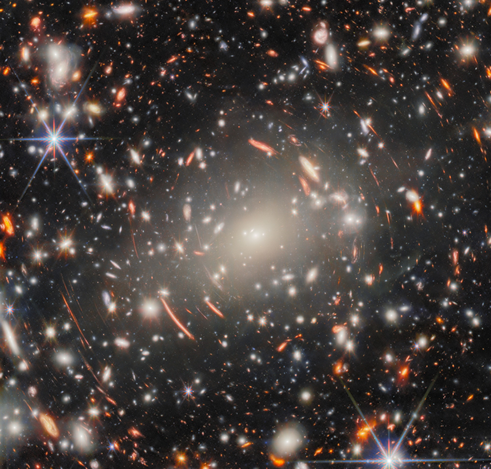
Quelle merveille ! Voici l'image la plus profonde que le télescope spatial James Webb ait jamais faite. Avec un total de 120 heures de pose (!!!) on voit parfaitement l'amas de galaxies Abell S1063 au centre ainsi que la pléthore d'arcs gravitationnelles que la gravité de cet amas provoque. 1/2

Incredible new #JWST deep field (120 hours!) released by folks from ESA/NASA Webb teams.

Not only is nearly everything in this image a galaxy (the two spiky stars are not), but those curved arcs are images of galaxies beyond this cluster, which are projected and warped into our view thanks to the power of gravity!

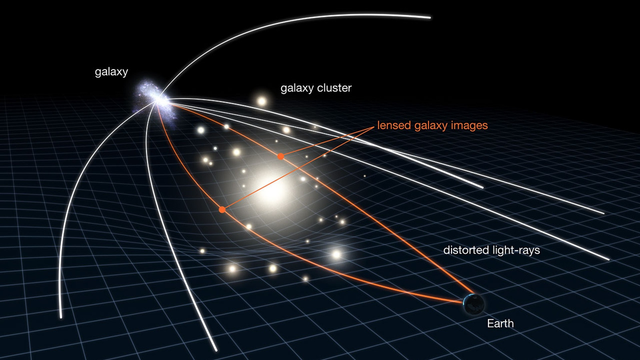
It's called a gravitational lens. To visualise what's happening, take a look at this diagram.

There are distant galaxies that we can't normally see. There's also a galaxies between them and us, with lots of mass.

This mass warps space-time and bends the distant galaxy light towards us so we see them.

I am amazed. You should be amazed. This is a really epic image.

Galaxy image and alt-text credit: ESA/Webb, NASA & CSA, H. Atek, M. Zamani (ESA/Webb)

Diagram credit: NASA, ESA & L. Calçada

#Galaxies #GravitationalLensing #GalaxyCluster #Astrodon

🦊 Two hunters on a break.

Much like how a Culpeo Fox uses its enhanced senses to hunt for rabbits, the ESO 3.6-metre telescope uses HARPS to scour the cosmos for new exoplanets.

These two hunters might well be at the top of their game, but right now it seems that both are taking a well-deserved rest.

Read more: https://www.eso.org/public/images/potw2521a/

📷 F. Murgas/ESO

#astrodon #astronomy #science #astrophotography #Chile #wildlife

L'Antarctique se réchauffe rapidement sous l'action du changement climatique provoqué par l'Homme , mais à l'inverse, les excréments de manchots, et en paryiculier l'ammoniac qu'ils émettent, favorise le production... de nuages, avec un (léger) effet refroidissant. www.nature.com/articles/s43...

I'm glad this is finally out, and the most important part is not that it's a very distant dwarf planet (though that is very cool), but rather that its existence in that orbit completely blows a hole in the Batygin & Brown "Planet 9" hypothesis. So, there almost certainly isn't a hidden distant giant planet in our Solar System.

(Which quite a few of us, including @sundogplanets and myself, have argued was the case for years, but this rather confirms it)
https://phys.org/news/2025-05-extreme-cousin-pluto-dwarf-planet.amp

An extreme cousin for Pluto? Possible dwarf planet discovered at solar system's edge

A small team led by Sihao Cheng, Martin A. and Helen Chooljian Member in the Institute for Advanced Study's School of Natural Sciences, has discovered an extraordinary trans-Neptunian object (TNO), named 2017 OF201, at the edge of our solar system.

Phys.org

Astronomers would be far worse at naming historical periods:

Very Modern
Extremely Modern
Overwhelmingly Modern
Type I Modern
Type II Modern
Type Ia Modern

https://xkcd.com/3089/

Modern

xkcd

[Offre de #thèse à l'IRAP] Ce travail de thèse s'inscrit dans le cadre du futur observatoire #CTAO (Cerenkov Telescope Array Observatory), destiné à étudier les sources astrophysiques (trous noirs, étoiles à neutrons, restes de supernovae, etc.) de photons gamma de très haute énergie ainsi que leur impact sur le milieu interstellaire.

L'observatoire #CTAO sera constitué de télescopes Cerenkov. Dans le plan focal de leurs miroirs seront installées des caméras #NectarCAM dont les détecteurs ont été conçus et développés à l'IRAP. Chaque caméra NectarCAM sera équipée de 1855 détecteurs.

Cette thèse a pour objectif d’étudier et de suivre les performances des détecteurs depuis leurs validations à l’IRAP jusqu’à leurs utilisations à La Palma, en passant par la phase de calibration de la caméra à l’IRFU (CEA). Infos+ : https://emploi.cnrs.fr/Offres/Doctorant/UMR5277-SANCHU-063/Default.aspx

Merci de reposter ce message dans vos réseaux respectifs 😉

Portail Emploi CNRS - Offre d'emploi - Doctorant-doctorante en astrophysique H/F

📢 Une fois de plus, les femmes astronomes sont effacées de l’histoire : le hors-série Ciel & Espace sur les “découvreurs de l’Univers” n’en mentionne qu’une seule.

Ce silence répète l’effet Matilda : nier ou minimiser les apports des femmes en science.

Nous exigeons une réécriture inclusive et factuelle de l’histoire de l’astronomie.

✊ Pour que les filles d’aujourd’hui aient des modèles.
📄 Communiqué complet ici: https://sf2a.eu/website2023/wp-content/uploads/2025/05/Communique_CielEspace.pdf

#FemmesEnScience #Astronomie #MatildaEffect #SF2A

A project I have been working on got its official release today.

Space images are pretty, but would you like to know what the important features are, and the science behind their appearance? ViewSpace Interactive Image Tours take you on a guided exploration of astronomical images.

Designed to be used on touch screens in museums and science centers, they are also fun to explore on your own. They work best on tablets or computers (devices bigger than a phone).

https://www.universe-of-learning.org/contents/news/traverse-across-space-with-the-interactive-image-tours

#Space #Astronomy #Astrodon