 Albert Cardona
"The crimes against dopamine" (2017) by @markdhumphries
An accessible explanation of what we know about dopamine and what it does in our brain. And what it doesn't do.
https://medium.com/the-spike/the-crimes-against-dopamine-b82b082d5f3d

"The crimes against dopamine" (2017) by @markdhumphries
An accessible explanation of what we know about dopamine and what it does in our brain. And what it doesn't do.
https://medium.com/the-spike/the-crimes-against-dopamine-b82b082d5f3d
New preprint that was a long time in the making: HiJee and Travis use in vivo holographic optogenetic stimulation to look at how ensembles in auditory cortex interact:
https://www.biorxiv.org/content/10.1101/2024.06.17.599418v1
#neuroscience
#auditorycortex
#optogenetics
#Hearing
#persistance
A small number of subjects is OK if you get a lot of data.
What’s the n? On sample size vs. subject number for brain-behavior neurophysiology and neuromodulation
https://doi.org/10.1016/j.neuron.2024.04.033
#neuroscience
Sad news about a generous supporter of science
Fun to contribute to a collaborative paper with Xiaoyin Chen (Allen Institute), Jesse Gillis (Toronto), Stephan Fisher (Inst. Pasteur), and Tony Zador (CSHL). Using BARseq over the whole cortex, we show that visual loss shifts the cell-type compositional profiles of visual areas towards neighboring cortical areas within the same module. Thus, peripheral inputs sharpen the transcriptomic identities of areas within cortical modules.
New paper out: Subplate neurons are very important for development, but seem to form a heterogenous cell population. Here Minzi shows that the sub-populations of subplate neurons vary between primary sensory areas pointing to a specialization of subplate and suggesting that different populations of subplate neurons might contribute differently to the development of individual sensory circuits.
#Cortex
#development
#neuroscience
#auditorycortex
#JHU
New results out: Zac & Kelson looked at order and disorder in the functional representations in the auditory cortex. On large scales, there are tonotopic maps, but on small scales, neighboring cells can be tuned very differently. To reconcile this, they imaged 3D volumes and found that there is a fractured columnar small-world functional network organization.
#Hearing
#AuditoryCortex
#neuroscience
#jhu
Read here:
https://academic.oup.com/pnasnexus/article/3/2/pgae074/7606489
New paper out: Jonah trained mice on auditory tasks for >6 months and is able to postpone the detrimental effects of aging on hearing.
https://www.sciencedirect.com/science/article/pii/S0378595524000182
#Hearing #aging #AgingResearch #AuditoryCortex #neuroscience #jhu

 Kanold lab
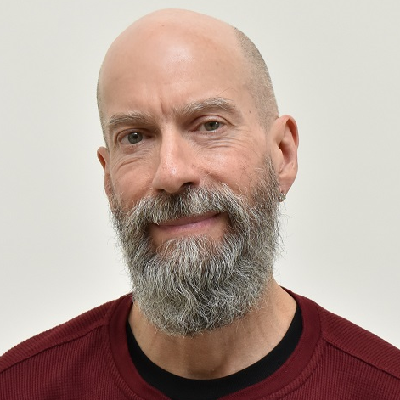 Earl K. Miller
