 the account formerly known as Luna
“disney plus” sounds like a scots person telling you their calculator doesn’t quite work
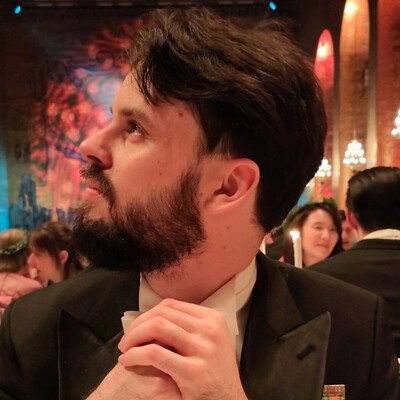
Dr Axel Runnholm
- 90 Followers
- 114 Following
- 10 Posts
Doctor of astronomy (what?!). Nerd of many flavours: Extragalactic astronomer, Dungeons and Dragons enthusiast and Outdoors and wilderness craver.
 Prof. Sam Lawler
Oooof almost 400 more in 3 months. Fuck.
3,633 Starlinks in orbit out of 3,930 launched (failure rate still ~10%, gross)
7,312 total sats in orbit. Well fuck, Starlink is finally about to pass the 50% OF ALL SATELLITES mark.
Think about that: 50% of all satellites are owned by the same ego-maniac billionaire who most of us here on Mastodon are now extremely familiar with. This is so bad.
 Richie Holland
Boost this toot if you're planning on sticking around Mastodon whether or not it becomes more popular than the birdsite.
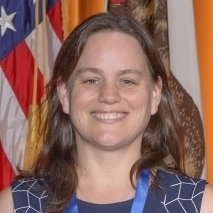 Dr. Susan Mullally
#JWSTFirstScience conference is starting tomorrow. For more information on how to live stream the event see https://www.stsci.edu/contents/news/jwst/2022/live-streaming-the-first-science-results-conference

 Juan Carlos Muñoz
Couldn't help it and did this last night. I'm still in awe at the level of detail in this image! Look at those spiral dust lanes.
For more details about this image and the new ERIS instrument at ESO's Very Large Telescope: https://www.eso.org/public/announcements/ann22015/

 brett
brettThis is an old project, but by some miracle it's still working and I woke up this morning wanting to celebrate the things I love more.
This Inkplate e-ink screen shows Conway's Game of Life, seeded from tarpits I have on the Internet. The tarpits are programs on my computer that superficially look like insecure Telnet and Remote Desktop services, but actually exist to respond super slowly and make bots scanning the Internet 'get stuck'.
When a bot connects to the tarpit, the data it sends gets squished into a 5x5 grid and 'stamped' onto a Game of Life board. Data from a bot at the IP address 1.1.x.x will get stamped on the top left corner, data from a bot at 254.254.x.x will get stamped on the bottom right corner.
Conway's Game of Life, a set of simple rules that govern whether cells should turn on or off, updates the display once per second. The result is that bot attacks end up appearing as distinct 'creatures', that get bigger and more angry looking over time (as their centre is updated with new data). After the attack finishes, the 'creature' eventually burns itself out.
Despite that description, it's a really chill piece of art that doesn't draw too much attention but I can happily watch for a long time.
Credit for the idea goes to @_mattata, I had been wanting to make a real-life version of XKCD #350 for years before seeing his Botnet Fishbowl project.
#projects #inkplate #esp32 #eink #infosec #tarpit
This Inkplate e-ink screen shows Conway's Game of Life, seeded from tarpits I have on the Internet. The tarpits are programs on my computer that superficially look like insecure Telnet and Remote Desktop services, but actually exist to respond super slowly and make bots scanning the Internet 'get stuck'.
When a bot connects to the tarpit, the data it sends gets squished into a 5x5 grid and 'stamped' onto a Game of Life board. Data from a bot at the IP address 1.1.x.x will get stamped on the top left corner, data from a bot at 254.254.x.x will get stamped on the bottom right corner.
Conway's Game of Life, a set of simple rules that govern whether cells should turn on or off, updates the display once per second. The result is that bot attacks end up appearing as distinct 'creatures', that get bigger and more angry looking over time (as their centre is updated with new data). After the attack finishes, the 'creature' eventually burns itself out.
Despite that description, it's a really chill piece of art that doesn't draw too much attention but I can happily watch for a long time.
Credit for the idea goes to @_mattata, I had been wanting to make a real-life version of XKCD #350 for years before seeing his Botnet Fishbowl project.
#projects #inkplate #esp32 #eink #infosec #tarpit

 Steph
Stephtell you something, astronomy is a lot less "staring at the sky in wonder" and a lot more "staring at a terminal window in despair" than most folks expect
 Josh Kovach
The Great Andromeda Galaxy
Nearly 2.4 million light-years away, this massive spiral galaxy is headed on an eventual collision course with the Milky Way.
The first image shows a comparison between my first attempt in 2021 and most recent study in 2022 photographing this target.
369 x150s @ ISO 800 through Redcat51 with Canon T7. Total integration time is 15 h 22 min 30 s.
See more details at https://www.astrobin.com/vrxzv7/0/

 Pᵉtɘr Wᵉil8acher
See Roland Bacon's paper (https://arxiv.org/abs/2211.08493) on some of the deepest spectroscopic data that exists. And with this data release you can now all use it! #musevlt
The MUSE Hubble Ultra Deep Field surveys: Data release II
We present the second data release of the MUSE Hubble UDF surveys, which includes the deepest spectroscopic survey ever performed. The MUSE data, with their 3D content, amazing depth, wide spectral range, and excellent spatial and medium spectral resolution, are rich in information. This update of the first release incorporates a new 141-hour adaptive-optics-assisted MXDF field (1' diameter FoV) in addition to the reprocessed 10-hour mosaic (3'x3') and the single 31-hour deep field (1'x1'). We have securely identified and measured the redshift of 2221 sources, an increase of 41% compared to the first release. With the exception of 8 stars, the collected sample consists of 25 nearby galaxies (z < 0.25), 677 OII emitters (z=0.25-1.5), 201 galaxies in the MUSE redshift desert range (z=1.5-2.8), and 1308 LAEs (z=2.8-6.7). This represents an order of magnitude more redshifts than the collection of all spectroscopic redshifts obtained before MUSE in the Hubble UDF area (2221 vs 292). At z > 3, the difference is even more striking, with a factor of 65 increase (1308 vs 20). We compared the measured redshifts against three published photometric redshift catalogs and find the photo-z accuracy to be lower than the constraints provided by photo-z fitting codes. 80% of the galaxies have an HST counterpart. They are on average faint, with a median magnitude of 25.7 and 28.7 for the OII and Ly-alpha emitters, respectively. SED fits show that these galaxies tend to be low-mass star-forming galaxies, with a median stellar mass of 6.2 10**8 M and a median SFR of 0.4 M/yr. 20% of our catalog, or 424 galaxies, have no HST counterpart. The vast majority of these new sources are high EQW z>2.8 LAEs that are detected by MUSE thanks to their bright and asymmetric broad Ly-alpha line. We release advanced data products, specific software, and a web interface to select and download data sets.
So now that I have migrated to #astrodon maybe I should do a new #introduction. I'm a postdoc at Stockholm university working on #ExtraGalactic stuff and Lyman alpha in particular. My PhD focused on low redshift galaxies and with the help of #JWST I hope to extend this to higher redshifts in the future.
I am also one of the creators of the @lasd together with @antihayestamine and Max Gronke
Outside work from that I am a general nerd with special focus on outdoor life and TTRPGs :)