Andalib Samandari

34 Followers
138 Following
29 Posts
Math and CS @GeorgiaStateU.
Research interests: consciousness, AI, math.
Other interests: meditation, music, startups, fitness.

Some of my former research teammates at GSU just published an exciting paper! "How advocacy groups on Twitter and media coverage can drive US firearm acquisition: a causal study"

Check it out: https://academic.oup.com/pnasnexus/article/4/6/pgaf195/8160866

#firearms #guncontrol

Like a lot of people on here, I'm an unpaid volunteer.

If you appreciate my accounts (@feditips, @FediFollows, @FediVideo & @homegrown) or my websites (https://fedi.tips, https://fedi.directory, https://fedi.video & https://growyourown.services)...

...you can buy me a coffee at:

➡️ https://ko-fi.com/fedithing

(You don't need to register, you can type in any amount you want, all currencies work.)

Alternatively, become a patron at:

➡️ https://liberapay.com/FediThing

Thank you! 

Fedi.Tips – An Unofficial Guide to Mastodon and the Fediverse

An unofficial guide to using Mastodon and the Fediverse

There are probably therapists who do just that, but I would guess their clients don't have many emotional breakthroughs. Practitioners who've helped me the most provide an emotional and interpersonal "holding" that subjectively (?) creates a feeling of trust and empathy which allows me to go into core issues. It's hard to believe today's tech can do that, I've certainly never felt a real connection to #ChatGPT lol 2/2

RT: https://twitter.com/datepsych/status/1611690519729696768?t=EKxAMXMKEX778L6D6hjR1g&s=19

Kinda concerned that therapy is so often mentioned as a good use case for #LLMs. Personally, I think AI could be transformative for mental health, but reducing #therapy to a bunch of nice, templated words strung together feels very hollow 1/2

Alexander on Twitter

“ChatGPT coming for the therapist jobs.”

Twitter

I'd like to share my favorite talks of 2022, spanning disciplines like Cognitive Science, Molecular Biology, AI, Philosophy, and Neuroscience

TALK 1: Lars Chittka showcases the remarkable bee mind through clever experiments. It is striking that a pinhead-sized brain can recognize complex stimuli, use simple tools, learn from 🐝 friends, and possibly even process basic emotions. Coolest of all is an experiment that shows bees represent shape multimodally (word is this study caused a lot of buzz). https://youtu.be/Iut33k3MHyI

TALK 2: Hessam Akhlaghpour lays out an RNA-based theory of universal computation. He first observes that actually, universal computation in Turing's sense is not all that elusive. In systems that use simple rules and in which memory usage can grow, it shows up pretty often. Moreover, universal computation is powerful and can solve a lot of problems, so it would seem odd that life would have evolved without it. His guess is that RNA may implement it, and he goes into great detail on how it could. 🧬https://youtu.be/mOTeek3eC1g

TALK 3: Sanjukta Krishnagopal shows how you can build intelligent neural networks without backpropagation. For context, in AI you can pursue engineering or science, and these are quite different projects. If you want to understand how the brain learns, then it is wise to constrain your modelling work to biologically plausible learning mechanisms. There is no evidence that the brain uses backpropagation -- the standard learning algorithm -- so exploring alternatives is a honey pot scientifically even if performance drops. Krishnagopal shows how a dendrite-inspired gating mechanism can get you learning. https://youtu.be/2Xr0XcyhMCc

TALK 4: Lauren Ross discusses causation in the life and mind sciences. Causation is front and center in science, so it's a good idea to be clear about what the concept means. Ross details a few philosophical views, and also observes that there are many causal structures in nature; we can talk about mechanisms, feedback loops, cascades, just to name a few. There was also a Q&A point that stuck with me: as we can glean from the Lyme's disease example, necessity and sufficiency do not always entail causation. I always thought those were a litmus test 🤔. https://youtu.be/w9cwZjd249c

And here a few more recommendations from the past year... 🍯

- Manjari Narayan https://youtu.be/7-TTS134DnA
- Luiz Pessoa https://youtu.be/m346unJ1yro
- Yejin Choi https://youtu.be/JGiLz_Jx9uI?t=2944
- Jeffrey Bowers https://youtu.be/7C_0vBnWDYo
- Rosa Cao https://youtu.be/gEFtH_z3_xk

The Mind of a Bee | Lars Chittka

YouTube

Aren't we stumbling in the dark trying to create AGI without first formally defining consciousness, or at least intelligence (assuming there is a distinction)? I feel like we'd need that foundation before an algorithm.

Also, formally defining characteristics of consciousness may be important to alignment efforts. Using #ChatGPT as an example, hardcoding or training models for maximum probable aligned behavior seems far from reliable.

#ai #agi #consciousness #math #aialignment #algorithms

One of the most powerful #math / #history videos I've ever seen. Veritasium on Fast Fourier Transforms

https://youtu.be/nmgFG7PUHfo

#fourier #fouriertransform #fastfouriertransform #fft

The Most Important Algorithm Of All Time

YouTube

Hardware has hardness, we can test for this, but for software to be comparably soft it would need to exist as material. This root absurdity trips up tech literacy, seeds bafflement.

I wonder how much different the popular understanding of computation - by now a world shaping force - would be if we spoke not of software but 'ideas', their implementations.

"What ideas does it run?"

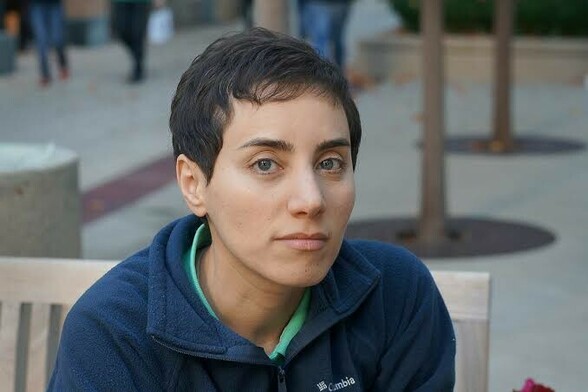
Maryam Mirzakhani was the first woman & Iranian to earn the Fields Medal in math for her brilliant work in hyperbolic geometry.

Her achievements influenced quantum field theory, engineering & material science & may have applications related to how the universe began.

Mirzakhani was an immigrant & became a Stanford professor. She passed away at just 40 in 2017. In her words:

“The beauty of mathematics only shows itself to more patient followers.”

https://theconversation.com/maryam-mirzakhani-was-a-role-model-for-more-than-just-her-mathematics-81143 #history #HistoryRemix

Maryam Mirzakhani was a role model for more than just her mathematics

Mirzakhani blazed to the top of her field due to her talent. But who she was and where she came from also make her a role model for those from underrepresented demographics in the world of math.

The Conversation

this goes out to everyone whose accomplishments this year aren't visible. the ones who prioritised rest over the rat race, who rebuilt themselves, ground up, cell by cell.

those who caressed their scars & found the space to heal. the ones who found reasons to smile in a world that makes you scream. those who danced again, sang again, found a moment of grace. if you felt joy in being able to pause, in being able to breathe—

you lived this year, too. and how beautiful it is that you did. 💚