Moos of AboutZoos

@aboutzoos
4 Followers
7 Following
38 Posts
Trying to make sense of the deplorable state of nature. It is incomprehensible that it came this far. Nature seems at a collision course, caused by Homo sapiens. Ending our ‘life-support system.’ How do we stop the sixth mass extinction event? That is what my posts are about, or should be. About evolution, biodiversity, ecosystems, and how - for instance - zoos can contribute.
Personal websitehttps://aboutzoos.info

For years, pest control professionals throughout the Northeast of the US have reported a troubling pattern. In some neighbourhoods, rodents seemed increasingly more difficult to eliminate, even when standard control methods were used.
Now researchers believe they may know one reason why. A recent study suggests many mouse populations may be evolving ways to survive the poisons commonly used to control them.
#evolution #pestcontrol #rodents #poison

https://www.newswise.com/articles/urban-rodents-may-be-evolving-against-common-poisons/?sc=c6313

Urban Rodents May Be Evolving Against Common Poisons | Newswise

For years, pest control professionals throughout the Northeast have reported a troubling pattern. In some neighborhoods, rodents seemed increasingly more difficult to eliminate, even when standard control methods were used.

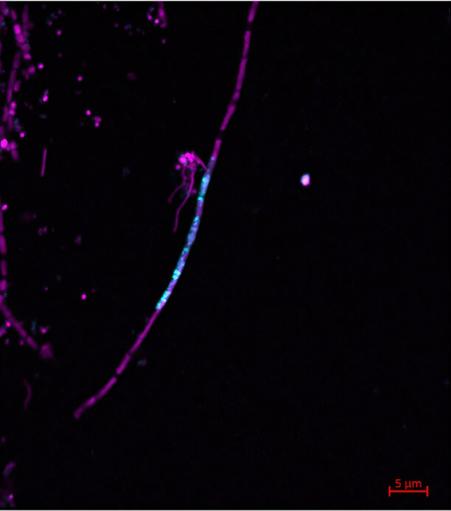
Genes are not passed on exclusively from parents to their offspring. Some are mobile and can also jump to other species, as researchers have now shown. The direct observation of a jumping gene provides the first evidence that such genes can transfer from one species to another—from predator to prey.
#genes #species #biodiversity #evolution #genetransfer

https://phys.org/news/2026-06-gene-caught-species.html

Jumping gene caught moving between species in first direct observation

Genes are not passed on exclusively from parents to their offspring. Some are mobile and can also jump to other species, as researchers at the Max Planck Institute for Marine Microbiology in Bremen have now shown. The direct observation of a jumping gene provides the first evidence that such genes can transfer from one species to another—from predator to prey. The study is published in the journal Scientific Reports.

Phys.org

Viruses play a major role in the functioning of ecosystems. They profoundly influence the dynamics of microbial communities, the flow of matter and global biogeochemical cycles. Yet despite their abundance and ecological importance, many of them have long remained invisible to science.
#biodiversity #ecosystems #viruses #polar

https://phys.org/news/2026-06-giant-viruses-orchestrate-life-polar.html

The giant viruses that orchestrate life in the polar regions

Viruses play a major role in the functioning of ecosystems. They profoundly influence the dynamics of microbial communities, the flow of matter and global biogeochemical cycles. Yet despite their abundance and ecological importance, many of them have long remained invisible to science.

Phys.org

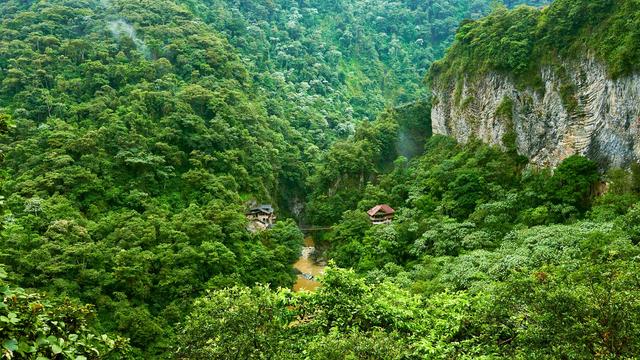
The health of the Amazon rainforest is key to the global climate, but many dangers threaten to make it unrecognisable in the future.
#biodiversity #ecosystem #future #amazon #climatechange

https://www.livescience.com/planet-earth/what-will-the-amazon-rainforest-look-like-in-100-years

What will the Amazon rainforest look like in 100 years?

The health of the Amazon rainforest is key to the global climate, but many dangers threaten to make it unrecognizable in the future.

Live Science

E.O. Wilson: A Pioneer in Sociobiology

Today, June 10, marks the 97th anniversary of the birth of E.O. Wilson, a renowned American biologist, naturalist, and writer. Born in 1929, Wilson is widely regarded as one of the most important biologists of his time, and his work has had a profound impact on our understanding of the natural world. As the 'father of bi…

#Akerix #AI #EOWilson #Sociobiology #Biodiversity
https://akerix.com/on-this-day/06-10-edward-osborne-wilson-1929
📷 Wikimedia Commons

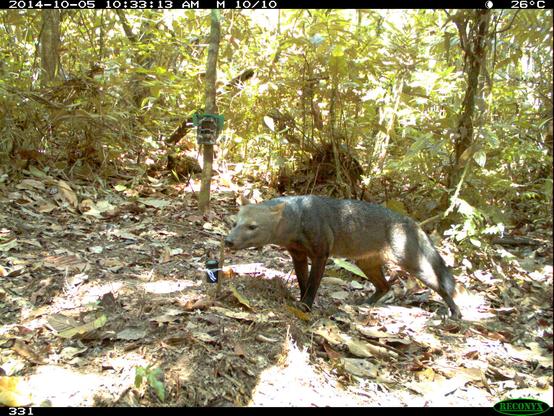
For decades, the short-eared dog has been considered one of the least-known carnivores in Latin America, and potentially one of the least-known canids in the world. Because of its highly secretive nature, acute hearing, and strong sense of smell, it stayed elusive until recently when a new study published in Neotropical Biology and Conservation now offers insights into the life of this mysterious Amazonian predator.
#biodiversity #shorteareddog #carnivore #amazon

https://phys.org/news/2026-06-ghost-dog-amazon-insights-mythical.html

Chasing the ghost dog of the Amazon: New insights into a mythical canid

For decades, the short-eared dog (Atelocynus microtis) has been considered one of the least-known carnivores in Latin America, and potentially one of the least-known canids in the world. Because of its highly secretive nature, acute hearing, and strong sense of smell, this cryptic creature has successfully avoided people, leaving biologists with very few direct sightings in the wild.

Phys.org

A recent United Nations report estimates that by 2030, AI’s energy use could double to consume 3% of the world’s electricity, produce emissions to equal the UK and deplete more water for cooling than the annual drinking water need of the global population.
#climatechange #AI #water #carbondioxide #electricity

https://theconversation.com/un-report-warns-ai-could-soon-use-3-of-worlds-electricity-and-more-water-than-we-need-to-drink-284442

UN report warns AI could soon use 3% of world’s electricity and more water than we need to drink

As AI models become cheaper and more attractive, they will likely encourage new uses and higher volumes of use – erasing any efficiency gains.

The Conversation
In the Early 1900s, a Young Ecologist Shot a Wolf and Watched the Life Leave Its Eyes. That Changed His Position on Conservation

Aldo Leopold’s writing reconsidered the place of humans in the natural world and challenged people to be less a conqueror of the land and more a citizen of it

Smithsonian Magazine
Great apes: What we know about their cognition, cooperation and curiosity after two decades of research

Leipzig Zoo in central Germany is a world-leading center of great ape research. Recent studies have seen chimpanzees there using touchscreen controls to navigate virtual forests and locate food rewards—applying similar techniques to what they would use in the wild.

Phys.org

Large carnivores are vanishing from much of the world as their habitats shrink and human pressure grows. The Javan leopard is an exception. Fewer than 350 mature individuals are thought to survive, all of them on Java, and a researcher set out to learn how they hang on.
#biodversity #leopard #java #indonesia #endangeredspecies #ecosystem #conservation

https://phys.org/news/2026-06-reconnecting-wild-landscapes-javan-leopard.html

Reconnecting the last wild landscapes of the Javan leopard

Research from the University of Twente shows how the Javan leopard, one of the world's rarest big cats, survives on one of the most crowded islands on Earth. Using camera traps and spatial models, Andhika Chandra Ariyanto, a doctoral researcher at ITC, found that the cat depends on a wide range of prey and on recovering forests as much as on the protected reserves that conservation usually prioritizes.

Phys.org