**Digital sovereignty starts on your own desktop**
The discussion around digital independence in Europe is often framed in abstract terms — as a political goal, an economic strategy, or a regulatory vision. But in reality, it begins much closer: on your own machine.
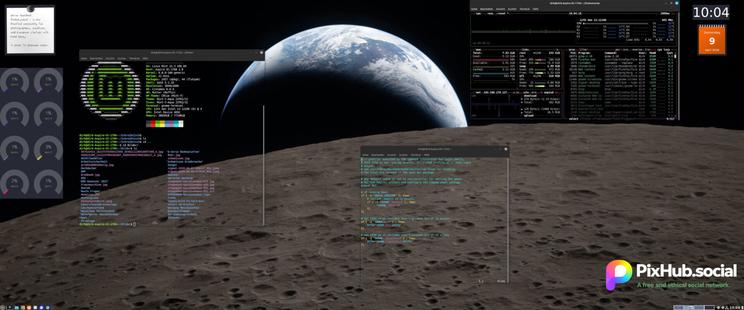
A free operating system like Linux Mint with the Cinnamon desktop environment represents exactly that approach. It’s not just an alternative to mainstream platforms, but a statement of control. Control over what your system does, what data it processes, and how transparent those processes are.
Privacy is not an afterthought here — it’s a core principle. No hidden telemetry, no opaque background services, no forced cloud dependency. This creates an environment where the user is once again at the center — not the product.
Security benefits as well. Open systems mean open code. Vulnerabilities are not hidden behind closed doors but are visible, reviewed, and improved by a global community. Trust is not assumed — it is verifiable.
Another often overlooked aspect is sustainability. Free software extends the lifespan of hardware. Systems remain lightweight and efficient, continuing to run smoothly long after others have been abandoned. In a time of increasing resource awareness, this is not a side note — it is essential.
At the same time, the relationship between user and system changes. Users become active participants again. Decisions are not imposed but made. The system adapts to the user — not the other way around.
Platforms like Pixelfed (e.g. PixHub.social) extend this idea into the networked world. Decentralized, federated structures create a bridge toward European digital independence — built on openness, transparency, and self-determination.
Digital sovereignty is not a distant vision. It’s a choice — and it starts here.
#DigitalSovereignty #OpenSource #Linux #Privacy #DataProtection #FreeSoftware #Decentralization #Fediverse #Pixelfed #OpenWeb #TechEthics #SustainableTech #UserControl #EUTech #DigitalFreedom #CinnamonDesktop #LinuxMint
The discussion around digital independence in Europe is often framed in abstract terms — as a political goal, an economic strategy, or a regulatory vision. But in reality, it begins much closer: on your own machine.
A free operating system like Linux Mint with the Cinnamon desktop environment represents exactly that approach. It’s not just an alternative to mainstream platforms, but a statement of control. Control over what your system does, what data it processes, and how transparent those processes are.
Privacy is not an afterthought here — it’s a core principle. No hidden telemetry, no opaque background services, no forced cloud dependency. This creates an environment where the user is once again at the center — not the product.
Security benefits as well. Open systems mean open code. Vulnerabilities are not hidden behind closed doors but are visible, reviewed, and improved by a global community. Trust is not assumed — it is verifiable.
Another often overlooked aspect is sustainability. Free software extends the lifespan of hardware. Systems remain lightweight and efficient, continuing to run smoothly long after others have been abandoned. In a time of increasing resource awareness, this is not a side note — it is essential.
At the same time, the relationship between user and system changes. Users become active participants again. Decisions are not imposed but made. The system adapts to the user — not the other way around.
Platforms like Pixelfed (e.g. PixHub.social) extend this idea into the networked world. Decentralized, federated structures create a bridge toward European digital independence — built on openness, transparency, and self-determination.
Digital sovereignty is not a distant vision. It’s a choice — and it starts here.
#DigitalSovereignty #OpenSource #Linux #Privacy #DataProtection #FreeSoftware #Decentralization #Fediverse #Pixelfed #OpenWeb #TechEthics #SustainableTech #UserControl #EUTech #DigitalFreedom #CinnamonDesktop #LinuxMint