Alison Hoens

14 Followers
21 Following
153 Posts
Knowledge mobilization- creation/synthesis/tools/dissemination/implementation. Partnership with patients, caregivers, clinicians, decision-makers & researchers.

"The Internet's Most-Read Tech Publications Have Lost 58% of Their Google Traffic Since 2024."
https://growtika.com/blog/tech-media-collapse

Related: Human visitors to Wikipedia declined by about 8% in 2025.
https://www.cbc.ca/lite/story/9.7117795

PS: I'm not surprised that #AI tools are having these effects. They answer questions directly and cut the need to click through to sources, even when they link to sources.

But I haven't yet seen data on the effects at academic journals. Have you?

#Search

Tech Publications Lost 58% of Google Traffic Since 2024 | Growtika

We tracked the organic search traffic of CNET, Wired, The Verge, TechRadar, and six others from early 2024 to today. Combined, they lost 65 million monthly visits.

Growtika

Update. "Beginning February 11, 2026, #arXiv will require that all submissions have a full English-language version, either as the original language or as an included translation."
https://blog.arxiv.org/2025/11/21/upcoming-policy-change-to-non-english-language-paper-submissions/

Coverage of the new policy in Nature.
https://www.nature.com/articles/d41586-026-00229-0

#Multilingualism #MultilingualResearch #ScholComm

Attention authors: Upcoming policy change to non-English language paper submissions – arXiv blog

Mixed identity is an identity: embracing the people involved in research partnerships | BMJ Open

https://bmjopen.bmj.com/content/15/12/e101205

Mixed identity is an identity: embracing the people involved in research partnerships

Introduction Patient and public involvement (PPI) in health research has gained prominence, with patients and public actively shaping research priorities, study design and knowledge translation. While the benefits and challenges of PPI are well documented, less attention has been given to the complexity of navigating multiple identities as research team members. Often, patients and public, academics and clinicians share many of the same goals and occupy overlapping roles, yet research structures rarely acknowledge or accommodate this fluidity. This commentary explores how shared identities of patients and public, academics and clinicians shape research partnerships, challenging conventional boundaries by questioning whether patients and public can also serve as academics or clinicians and vice versa. Methods This commentary is written from an interdisciplinary perspective, where insights are synthesised from existing literature, empirical knowledge and lived experience. The authors critically examine the intersection of patient and public, academic and clinician identities and discuss the implications for research partnerships. Recurring points of tension, including questions about the suitability of partnerships and the complexities of identity, are explored. The discussion considers how members of research teams navigate privilege and shared responsibility within collaborative settings. Discussion Although PPI aims to foster inclusivity, research partnerships often confine patients and public, academics and clinicians to rigid titles, overlooking the multidimensional identities of those involved. To advance research, practice and advocacy, it is foundational to embrace one’s authentic self while recognising the full complexity of team members. Every individual brings a unique perspective and lived experience, and together, a research team shares the collective responsibility to produce rigorous, quality research that strengthens the body of evidence.

BMJ Open
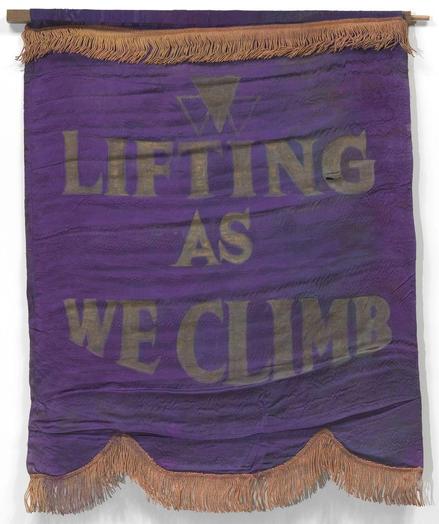
For #PublicDomainFriday, we're sharing this banner used by the Oklahoma Federation of Colored Women's Clubs, founded 1910. This image is part of the Collection of the Smithsonian National Museum of African American History and Culture: https://nmaahc.si.edu/explore/initiatives/nmaahc-open-access

New study: The accuracy of #AI depends in part on how much knowledge is #OpenAccess.

"Artificial Intelligence and the Interpretation of the Past."
http://dx.doi.org/10.1017/aap.2025.10110

"Open access structures the types of information that are accessible for scholars to conduct computational analyses and is equally likely to affect which information is used to train artificial intelligence programs. Institutions with robust funding to allow articles to be widely read will continue to have a greater hand in determining how things are represented. If articles from certain eras or from specific subfields are more likely behind paywalls, they will be less likely to feed into materials generated using AI. Academic publishing practices may ultimately work to undermine public knowledge."

Artificial Intelligence and the Interpretation of the Past | Advances in Archaeological Practice | Cambridge Core

Artificial Intelligence and the Interpretation of the Past

Cambridge Core
Google removes some AI health summaries after investigation finds “dangerous” flaws
AI Overviews provided false liver test information experts called alarming.
https://arstechnica.com/ai/2026/01/google-removes-some-ai-health-summaries-after-investigation-finds-dangerous-flaws/?utm_brand=arstechnica&utm_social-type=owned&utm_source=mastodon&utm_medium=social

Happy new year! Why not start 2026 with some reading?

All of our books are open access and available to read freely. Our rigorously peer-reviewed, prizewinning titles cover a wide range of topics so you'll be sure to find something of interest in our catalogue:

https://www.openbookpublishers.com/books

Happy browsing! #OpenAccess #OAbooks

I suggest you support Standard Ebooks 📚

“Standard Ebooks is a volunteer-driven project that produces new editions of public domain ebooks that are lovingly formatted, open source, free of … copyright restrictions, and free of cost.” ⚖️

See what’s free to read on January 1 👇
https://standardebooks.org/blog/public-domain-day-2026

Please boost 🙏

#StandardEbooks #PublicDomain #PublicDomainDay #Copyright #Ebooks #OpenSource #FreeSoftware #Python

CC @standardebooks

"What’s curious about color is that brightness is generally a stronger differentiator than hue or saturation. This has physiological roots in our visual system: we are wired to notice light–dark edges first. Equal-brightness hues tend to fuse at small sizes or in the periphery. Even a modest step in brightness separates marks cleanly." https://www.chartography.net/p/color-engineering
Color Engineering

The tool that snaps mercurial design into mechanical focus.

Chartography