Lois

@OV_099
142 Followers
37 Following
2K Posts
An #astronomy #archeology #paleontology #StarTrek #StarWars news/weather nerd; #Rutgers Class of 2017 #Geology undergrad, research assistant, & #foram picker extraordinaire. Proud Gen-Xer :) She/Her
Favorite Planet:Mars
Tumblr:https://ov099.tumblr.com/
Goodreads:https://www.goodreads.com/user/show/2682443-lois
Swagbucks Referral Link:https://www.swagbucks.com/profile/OV099

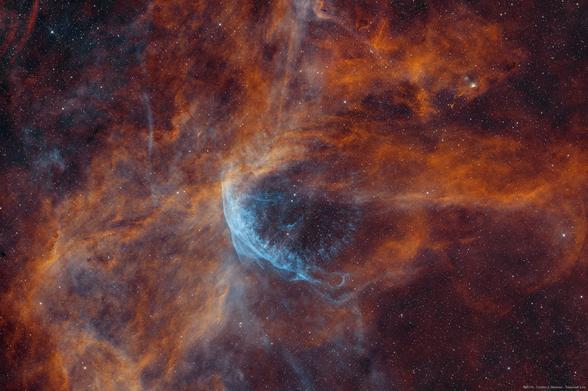
The Nebulous Realm of WR 134
Image Credit & Copyright: Luigi Morrone and Telescope Live

Explanation: This cosmic snapshot covers a field of view over twice as wide as the full Moon within the boundaries of the high-flying constellation Cygnus. Made using astronomical narrowband filters, the image highlights the bright edge of a ring-like nebula traced by the glow of ionized hydrogen and oxygen gas. Embedded in the region's expanse of interstellar clouds, the complex, glowing arcs are sections of shells of material swept up by the wind from Wolf-Rayet star WR 134, the brightest star near image center. Distance estimates put WR 134 about 6,000 light-years away, making this telescopic frame over 100 light-years across. Shedding their outer envelopes in powerful stellar winds, massive Wolf-Rayet stars have burned through their nuclear fuel at a prodigious rate and end their final phase of massive star evolution in a spectacular supernova. Their stellar winds and final supernova explosion enrich the interstellar material with heavy elements to be incorporated in future generations of stars.
https://apod.nasa.gov/apod/ap260522.html #apod

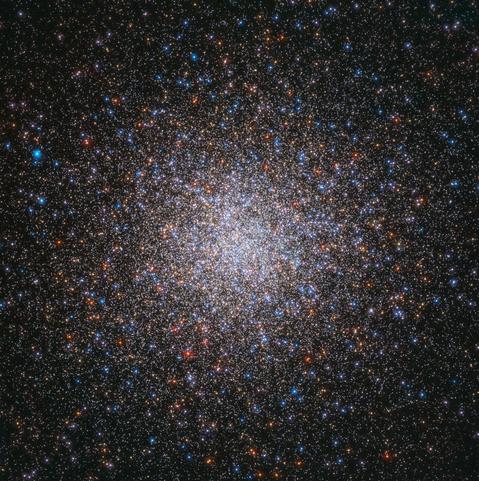
Messier 2
Image Credit: ESA/Hubble & NASA, G. Piotto et al.

Explanation: After the Crab Nebula, this giant star cluster is the second entry in 18th century astronomer Charles Messier's famous list of things that are not comets. M2 is one of the largest globular star clusters now known to roam the halo of our Milky Way galaxy. Though Messier originally described it as a nebula without stars, this stunning Hubble image resolves stars across the cluster's central 40 light-years. Its population of stars numbers close to 150,000, concentrated within a total diameter of around 175 light-years. About 55,000 light-years distant toward the constellation Aquarius, this ancient denizen of the Milky Way, also known as NGC 7089, is 13 billion years old. An extended stellar debris stream, a signature of past gravitational tidal disruption, was recently found to be associated with Messier 2.

https://apod.nasa.gov/apod/ap260523.html #apod

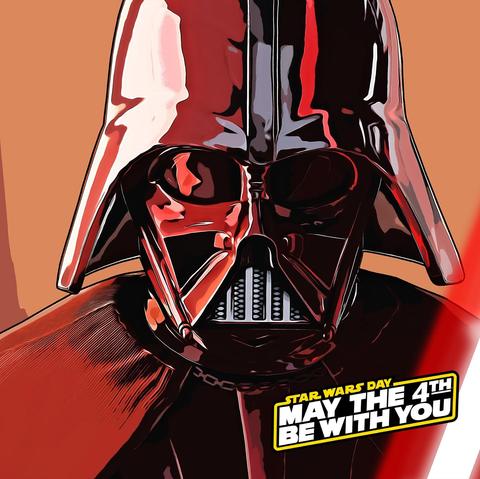
Even better than the fourth... Revenge of the Fifth is here! #StarWars #RevengeOfTheFifth

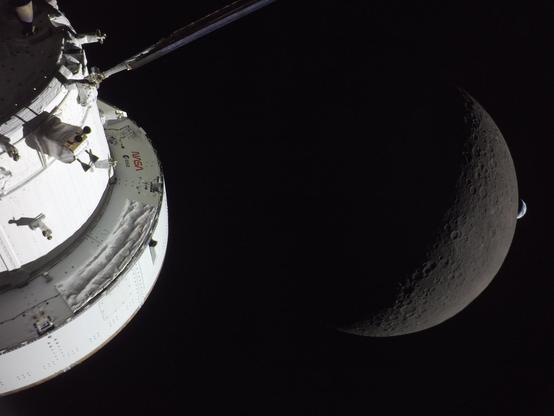
Artemis II: Flight Day 6
Image Credit: NASA, Artemis II

Explanation: On flight day 6 (April 6) the Artemis II mission achieved a historic lunar flyby. Rounding the lunar far side, the deep space maneuver marked humanity's first venture to the Moon since Apollo 17 in 1972. The Orion spacecraft Integrity reached a maximum distance of nearly 407,000 kilometers, and the Artemis II crew, Reid Wiseman, Victor Glover, and Christina Koch, and Jeremy Hansen, set the record for the farthest distance from Earth traveled by any human since the Apollo 13 crew in 1970. From behind the Moon on flight day 6, a solar array wing camera recorded this space age selfie, framing the spacecraft and lunar far side. Planet Earth, home to the Artemis II crew, is the small, bright crescent beyond the lunar limb. The crew safely returned home on Artemis II mission flight day 10.

https://apod.nasa.gov/apod/ap260411.html #apod

Happy #Easter!
Happy St Patrick's Day! #StPatricks
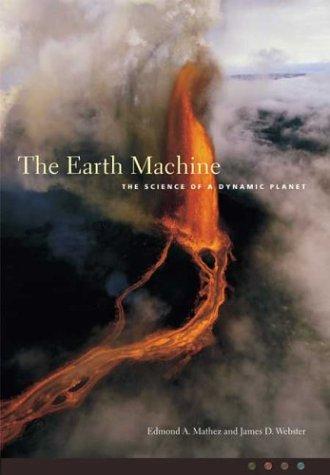
rated The Earth Machine: 4 stars

To Fly Free in Space
Image Credit: NASA, STS-41B

Explanation: What would it be like to fly free in space? About 100 meters from the cargo bay of a space shuttle, Bruce McCandless II was living the dream -- floating farther out than anyone had ever been before. Guided by a Manned Maneuvering Unit (MMU), astronaut McCandless, pictured, was floating free in space. During Space Shuttle mission 41-B in 1984, McCandless and fellow NASA astronaut Robert Stewart were the first to experience such an "untethered space walk". The MMU worked by shooting jets of nitrogen and was used to help deploy and retrieve satellites. With a mass over 140 kilograms, an MMU is heavy on Earth, but, like everything, is weightless when drifting in orbit. The MMU was later replaced with the SAFER backpack propulsion unit.

https://apod.nasa.gov/apod/ap260215.html #apod