
NickARJones

82 Followers
120 Following
317 Posts

Behavioural ecologist, most interested in cognition and fish that shoot.
https://www.researchgate.net/profile/Nick-Jones-43

@HumboldtStiftung Research Fellow

#animal behaviour
#fish biology
ResearchGatehttps://www.researchgate.net/profile/Nick-Jones-43
OrcIDhttps://orcid.org/my-orcid?orcid=0000-0002-6031-7507
Ethological Society (@ethoges.bsky.social)

ETHOLOGY: We know that moths use evasive maneuvers to escape bats - but what about mosquitos? 🦟🦇 Breviglieri & da Silva reveal species-specific escape strategies: Culex fly loopings to dodge bats 10× more effectively than Aedes! Cool!➿ Read more: https://doi.org/10.1111/eth.13576 #AnimalBehavior #CoEvolution

Bluesky Social

A great new paper came out: Amelia Munson & Cairsty DePasquale have published a review that explores the design factors worth considering when using mazes to study cognition in fish.

https://onlinelibrary.wiley.com/doi/10.1111/jfb.15918

#JFB; #animalbehaviour #animalcognition ##fishsci

🚨 CALL🚨 #JFB, Journal of Fish Biology, special issue on methodological challenges encountered by researchers of fish cognition. We are looking for articles that discuss challenges, solutions & empirical studies: https://shorturl.at/yBPR9
Deadline: 30.04.24
📷 : Guest editor,
Cait Newport.

#science #sci #fishsci #AnimalCognition #animalbehaviour

The most useful result is probably methodological. We showed that the as temperatures increase there is a rise and then a sharp drop in total levels of aggression. The figure illustrates this nicely, and mirrors what we expect to happen given underlying thermal performance curves.
This is worth considering when selecting temperatures for studies that want to compare aggression at two or three set temperatures.

New paper: The non-linear effects of increasing temperature on aggression in fish.

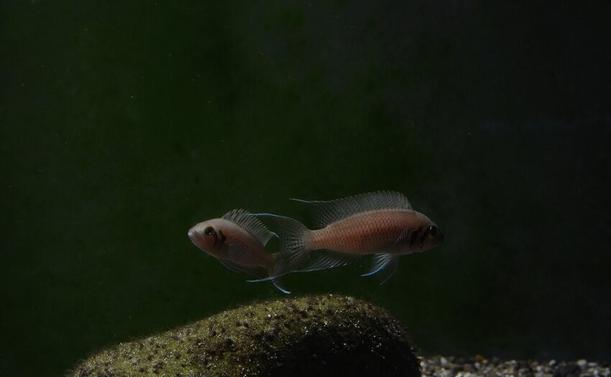
We explored the change in aggression with exposure to different temperatures in - the princess of Zambia (Neolamprologus pulcher).

These fish use aggression to maintain their complex social systems - they are co-operative breeders. We explored the effect of temperature on aggression across a large range of temperatures.

#fishsci
#asab
#animalbehaviour
#BehaviouralScience

https://www.sciencedirect.com/science/article/pii/S0003347223002634

Interested in fish cognition? Want to contribute to improving the methods we use? The special issue we are running on 'methods in fish cognition', has a deadline for submission coming up soon.

Details here: https://onlinelibrary.wiley.com/page/journal/10958649/homepage/call-for-papers/si-2023-000081

#fishsci #AnimalCognition #animalbehaviour

Fish maze design paper is out. It was great to work with so many amazing scientists across different labs. We show basic, but important aspects of the physical design that can impact fish performance in mazes and arenas.

https://tinyurl.com/7zc2dvsu #fishcl

We are looking forward to discussing a range of issues: from exciting new tracking techniques https://www.biorxiv.org/content/10.1101/2023.04.20.537633v1
And fundamental aspects of physical design in assays, such as the impact of the number of options in arena choice assays
https://onlinelibrary.wiley.com/doi/abs/10.1111/jfb.15493

@EthoGes

To all #Behaviour2023 attendees studying fish cognition. The agenda for the methodology workshop is online - https://tinyurl.com/4ccfvz8j
To help us with participant numbers, please sign up here - https://tinyurl.com/55zyejsf. Or, email to register your interest.
#fishsci #AnimalCognition #animalbehaviour
Workshop: methodological challenges and solutions in fish cognition

Measuring cognition in fishes: methodological challenges and solutions Workshop aims: This workshop will bring researchers studying fish cognition together to discuss the practical issues associated with cognition experiments, and the implications of methodological variations on research repeat...

Google Docs

For fish cognition researchers #animalbehaviour #fishsci #cognition #ethology #CognitiveScience #AnimalCognition #AnimalBehaviour. Here is the link to the official call for papers for the Special Issue on testing and refining the methods we use in fish cognition studies:

https://onlinelibrary.wiley.com/page/journal/10958649/homepage/call-for-papers/si-2023-000081