 Alex McLean
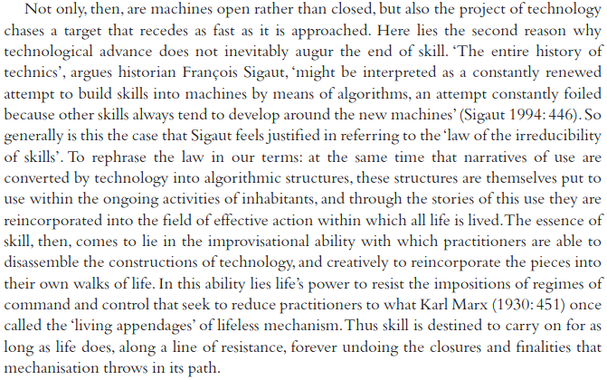
This from Ingold (being alive 2011, pg. 62) reads as more optimistic than it used to. LLMs are closed rather than open, and can we really say its users aren't losing skill as "the ‘living appendages’ of lifeless mechanism"?

Thoughts and feelings move within and between us.
Artist - neilwinterburn.net & re-dock.org
Educator in the learning team at FACT Liverpool
IN SEARCH OF THE CANNIBAL INTERNET — San Diego-based curator and researcher Doreen Ríos wrote about what we can learn from the "monster" and 'cannibal' figures in relation to today's internet. The essay was published via the Institute of Network Cultures: https://networkcultures.org/blog/2026/04/29/in-search-of-the-cannibal-internet/
P.S. our open call 'Error 406 [Netstalgia] Not Acceptable' is open until Monday, 4 May.
1. AI Is a Research Field
2. AI Is an Approach to Cognitive Science
3. AI Is a Parlor Trick
4. AI Is an Ideology
5. AI Is a Way to Hide and Devalue Human Labor
6. AI Is a Way to Shift Accountability
7. AI Is a Way to Centralize Power
>>
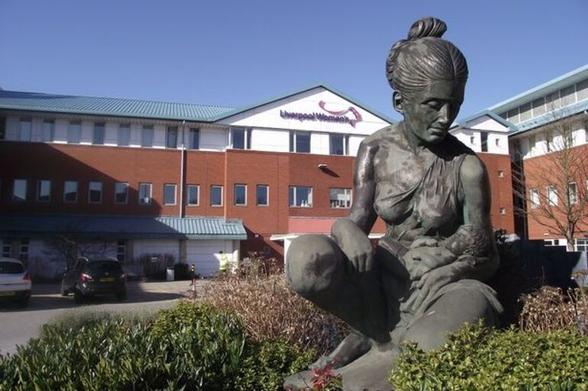
All the maternity and women's health provision of Liverpool was pulled into this one site. It's a much loved hospital. It provides crucial specialised care and the daily joy of new babies. #one born. The driving force for closure is a clumsy funding structure not the needs of women and babies. The alternative of wards in the new Royal is not an equivalent. This is a modern hospital on a good site.Our taxes built it for our babies and for our women.
The very many obviously densely populated villages and towns are visible in Apple Maps' own satellite view, but Apple Maps just apparently claims those very many people living there now have no written name for their home locations... if they are in Lebanon. If they are across the border in Israel or Syria, then they do.
It is as if Apple is trying to claim that the people in the area where the type of writing that everyone use while writing in e.g. English, Spanish, German, French, Italian, etc was actually invented, are now unable to write names for their towns and villages.
The Phoenician alphabet is the root of the Latin alphabet which all those languages and many more are written in by the Phoenician alphabet creating e.g. the concept of a phonetic alphabet where each symbol represent a defined sound instead of an entire word as previous writing systems, that Phoenician alphabet is literally specifically from Phoenicia https://en.wikipedia.org/wiki/Phoenicia#/media/File:Phoenicia_map-en.svg which is that area which we currently call Lebanon, where Apple has wiped out the the names from all but the largest towns and villages, while Israel is wiping out the people in and from there.
we can consider "AI" at different time depths — deep learning (2010s), cybernetics (1950s), automation (1800s), but in this paper I argue that to understand its *interactive* appeal we must further broaden our outlook
It's not a big jump from divination to deep learning — they are united by the generative use of chance. People have always been eager to ascribe meaning to random processes, and that's where we must start to understand the appeal of present-day LLMs https://doi.org/10.5281/zenodo.19452872
The ubiquity and ease of use of large language models makes it easy to overlook the interactional and interpretive processes at play. To understand the attraction of this technology we need to trace its sociotechnical roots. From divination and horoscopes and from ELIZA to present-day large language models, I document how people have been thinking with things, outsourcing judgement, and making sense of interactively presented non-sense. Following the lead of Lucy Suchman to “slow down discourses of the ‘smart’ machines”, I consider the interactional foundations of our engagement with technologies of language. I make the case that the fluid output, fine-tuned overconfidence, and interactive design of these computational artefacts conspire to exploit our interpretive processes and interactional infrastructure, rendering them irresistible to lay people and researchers alike. This means that a deep understanding of processes of human interaction and sense-making will be a foundational resource for the growing arsenal of methods in critical AI literacy. Preprint of a chapter for an edited volume: A Research Agenda for Critical AI Studies. Currently under review, likely to be revised. Your comments are welcome!
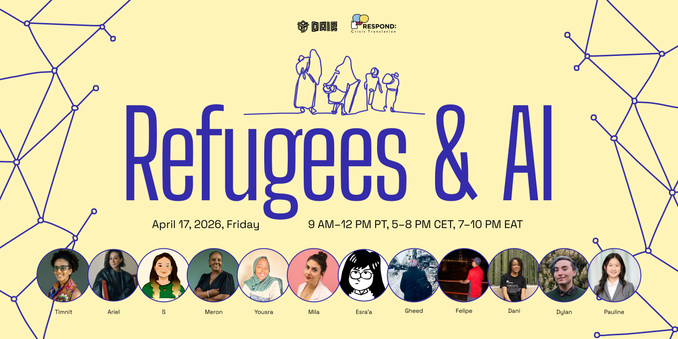
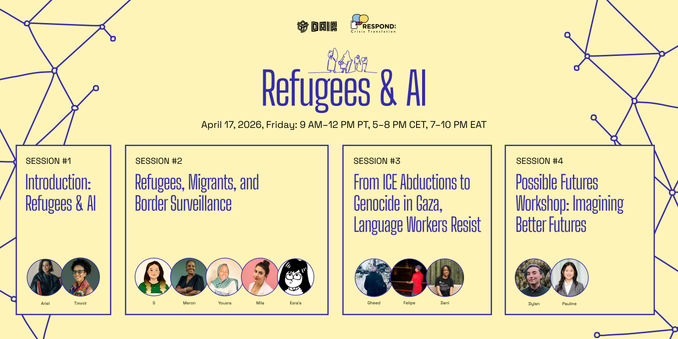
🔇🔇🔇 On Friday April 17th (9am PDT/5pm CET/7pm EAT), we'll have a virtual event introducing our Refugees, Migrants & AI research which centers their lived experiences.
We introduce a limited podcast series highlighting Sudanese refugees, discuss tools like Surveillance Watch, and show how immigrant communities are supporting each other through Respond Crisis Translation.
We end with a creative workshop to remind us that the future is ours to shape.
☘️ Register at https://www.eventbrite.com/e/refugees-and-ai-tickets-1986369914887
 Error 417 Expectation Failed
 Gogs
Gogs Alien Bob but also
 Prof. Emily M. Bender(she/her)
 Another Angry Woman
 b9AcE
b9AcE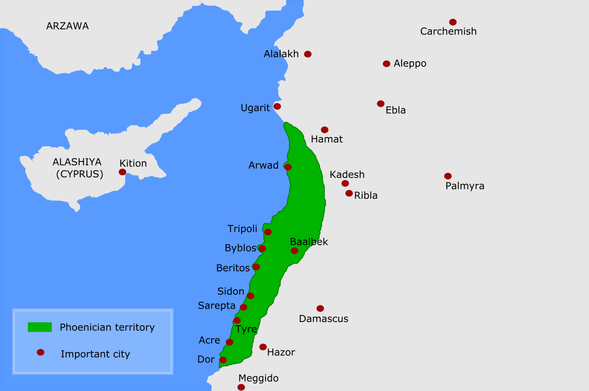
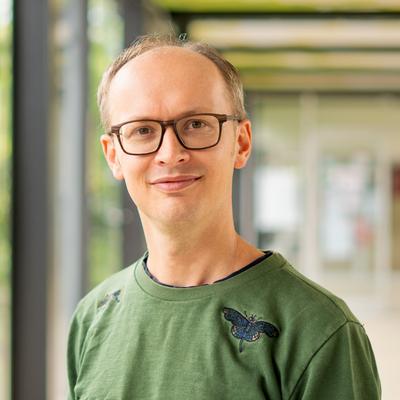 Mark Dingemanse
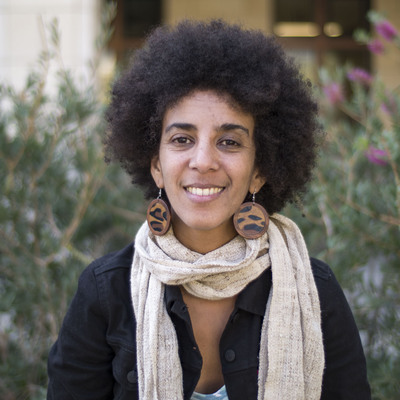 Timnit Gebru (she/her).