
Nair @Nair lab

@Nair_lab
33 Followers
24 Following
13 Posts
Nair Synthetic Biology and Systems Bioengineering Lab
#SynBio #ProteinEngineering #MetabolicEngineering lab at Tufts ChBE #ChemicalEngineering #Bioengineering
https://sites.tufts.edu/nairlab/
Tufts UniversityChemical & Biological Engineering
Synthetic BiologySystems Biology
Microbial CommunitiesProbiotic Engineering
Protein EngineeringMetabolic Engineering
I am overjoyed to announce that I have secured tenure and promotion! There are many people that made this possible. My research group learned to thrive during the pandemic, my family was relentlessly supportive, and many others propelled me onward…there is a lot to be thankful for!
🚨Our new paper🚨 is out now in #ScienceAdvances! As #synbio systems get more complex, we want to understand how to minimize resource competition between heterologous genes and host functions. We propose that translational resources can be appropriated by adjusting codon (optimization) usage bias in heterologous genes. The paper explores the intersection of codon optimization and resource competition. So if either interests you, pls 👀 !!
https://doi.org/10.1126/sciadv.adk3485
After ~15 months of (reviews, transfers, and rebuttals)^n, this paper was finally accepted today! Kinda exhausted 😫 - but proud of PhD student Aaron Love for powering 💪 through! More details with the final print but here's the revised pre-print in the meantime: https://www.biorxiv.org/content/10.1101/2022.09.21.508913v3
Finally, we characterized the anti-bacterial properties and anti-cancer properties of several landomycins and found that the glycosylation pattern has a significant impact on activity and several compounds are good leads for future drug development.
We first purified each landomycin and assessed its spectrophotometric properties. Next, we figured out how to estimate total landomycin titer in culture supernatants using spectrophotometry. Then, we optimized media formulation and culture conditions to further improve productivity and titer.
🚨🆕New collaborative #manuscript🚨with Bennet, Mace, & Lee labs. We optimize the production of landomycins in #Streptomyces cyanogenus and characterize their #antimicrobial and #anticancer properties.
https://www.biorxiv.org/content/10.1101/2023.11.07.566088v1

It’s all about what yeast senses: usable substrate or stressor. Deletions aimed to increase growth often dysregulate stress responses that result in negative pleiotropic defects - making strains less robust for bioprocessing.

The key to achieving WT-growth w/min. effort is to ensure that cells “see” the fed molecules as substrates & not non-metabolites. We hope that this insight + minimalistic/holistic approach will enable rapid engineering of this yeast of many renewable + waste substrates.

🆕🆕New paper ut now🚨! Here we tackle a decades-old Q (that maybe no one asked😋)- what limits the adaptability of S. cerevisiae for growth on new substrates? The results are surprising!

In short, we found that it’s very adaptable to new substrates like pentoses. The primary limitation is the heterologous pathway that is introduced to consume the substrate. We find that yeast can demonstrate WT-like growth with (almost) no deletions, ALE, etc.

https://doi.org/10.1016/j.chembiol.2023.06.009

Sad and mad that big-name labs ignore work done by smaller groups and only cite other big labs. "For challenging lyase-catalyzed reactions [...] are still limited by the throughput [...] for the directed evolution of enzymes" totally ignores work by Tim Whitehead and our group.

Not cited in this new paper and totally ignored since it undermines their motivation.
Work by Whitehead: https://doi.org/10.1038/ncomms15695
Work by our group: https://doi.org/10.1039/D0CC00783H
https://doi.org/10.1021/acscatal.1c05508

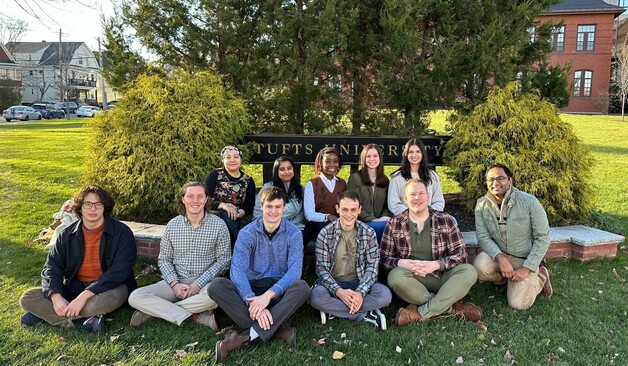
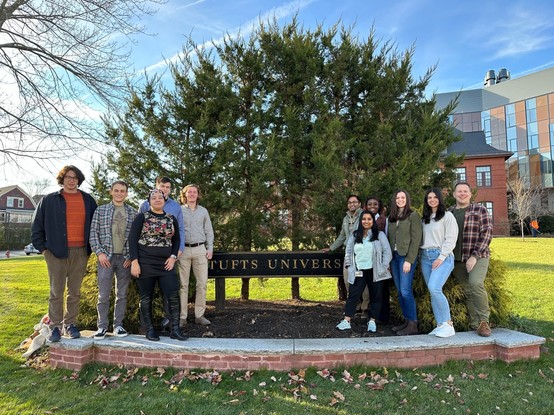
New group photos in colors to match the beautiful New England fall season!