How citations ruined science
The making and breaking of scientific life
Our Department of Computer Science here at the University of Manitoba is recruiting a Canada Impact+ Research Chair in Artificial Intelligence: https://viprecprod.ad.umanitoba.ca/DEFAULT.ASPX?REQ_ID=43775
The position comes with up to $8M in funding over eight years and up to $6M for infrastructure. A great opportunity for an experienced AI researcher to pursue high-risk, high-reward research without short-term grant pressure!
Deadline: 2026-02-19
If you're not interested but know someone who might be, please share this post!
Been there, done that, got the chicken…
Are you working on
#ScientificDiscovery with
#LLMs? There's still one more day to submit to our IJCNLP–AACL workshop on human–LLM collaboration:
https://sciprodllm.github.io/2025/cfp.html #NLProc #ArtificialIntelligenceCall for Papers | SciProdLLM - 2025
The quality you see is largely a function of the original resolution of the text, though. A PDF containing only text in outline fonts, rendered at >=300 dpi and then converted to 1-bit colour, will look pretty close to the original in a modern viewer (at normal zoom levels, anyway). Yes, you won't get FreeType-quality font rasterization, but most PDF viewers do a pretty good job of downsampling bitmaps, with grey pixels to soften jagged edges.
@jik And if the PDF is just black-and-white text, converting it to a bitmap and back to a PDF again won't balloon its size much, provided you reduce the bit depth to 1 and use CCITT G4 compression. You can run the result through OCR to partially fix the accessibility issues.
@jik The nice thing about redacting a PDF by converting it to images is that you can be reasonably sure you've eliminated any hidden text and metadata. A lot of sensitive information might be accidentally or deliberately lurking unseen in a PDF (white-on-white text, microscopically sized text, text off the canvas or clipping path, text in unused streams, etc.).
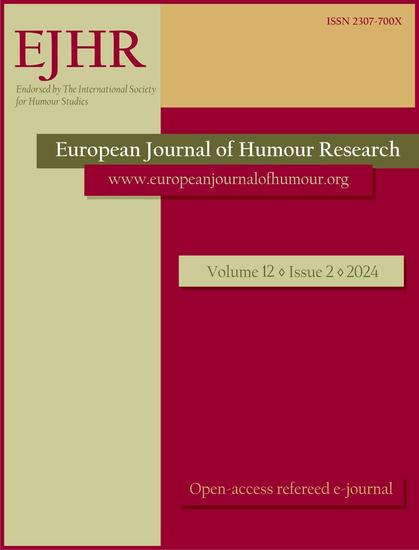
I'm co-editing a special issue for the European Journal of Humour Research on humanistic or social-scientific perspectives on
#humour and
#AI. Abstract submissions are open until 1 October:
https://clam.cs.umanitoba.ca/ejhr #humorstudies #artificialintelligenceI'm featured in a video from the University of Manitoba promoting studies at the Department of Computer Science. (I'm still accepting graduate student applications!) #NLProc #ComputationalLinguistics
https://youtu.be/5vgh0IutGHk?si=zTM0b3NJ8QTlelGJ

Department of Computer Science | UM Faculty of Science

 Ivan Habernal