 Michele Banks
Brain Scan ink painting in multiple layers of purple and blue #art #painting #sciart #neuroscience https://etsy.me/3GTssiI #yupo


Great to have some time to explore my local area over the Christmas-New Year-between times. Highlights include a stunning sunset in #ulm and visiting the ‚Stone Virgins’ of Eselsburger Tal who, legend has it, were cursed by the vengeful lady of the castle for fraternising with the local fishermen. After the curse was enacted, lightning struck the castle and burned it to the ground.
And they all lived happily ever after 😬
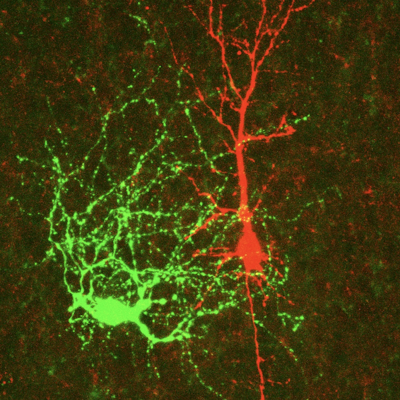
"This review aims to bring to light an aspect about #neuroplasticity that is often not given enough attention as it should, the fact that the brain’s ability to change would include its ability to disconnect synapses. So, neuronal shrinkage, decrease in spine density or dendritic complexity should be included within the concept of neuroplasticity as part of its mechanisms, not as an impairment of it."
Diniz & Crestani in
Molecular #Psychiatry (2022)

Since the brain was found to be somehow flexible, plastic, researchers worldwide have been trying to comprehend its fundamentals to better understand the brain itself, make predictions, disentangle the neurobiology of brain diseases, and finally propose up-to-date treatments. Neuroplasticity is simple as a concept, but extremely complex when it comes to its mechanisms. This review aims to bring to light an aspect about neuroplasticity that is often not given enough attention as it should, the fact that the brain’s ability to change would include its ability to disconnect synapses. So, neuronal shrinkage, decrease in spine density or dendritic complexity should be included within the concept of neuroplasticity as part of its mechanisms, not as an impairment of it. To that end, we extensively describe a variety of studies involving topics such as neurodevelopment, aging, stress, memory and homeostatic plasticity to highlight how the weakening and disconnection of synapses organically permeate the brain in so many ways as a good practice of its intrinsic physiology. Therefore, we propose to break down neuroplasticity into two sub-concepts, “upward neuroplasticity” for changes related to synaptic construction and “downward neuroplasticity” for changes related to synaptic deconstruction. With these sub-concepts, neuroplasticity could be better understood from a bigger landscape as a vector in which both directions could be taken for the brain to flexibly adapt to certain demands. Such a paradigm shift would allow a better understanding of the concept of neuroplasticity to avoid any data interpretation bias, once it makes clear that there is no morality with regard to the organic and physiological changes that involve dynamic biological systems as seen in the brain.
TOP 7 trends from the last 1 hour
-----
#christmas (life) - 163 toots!
#joinin (life) - 80 toots!
#merrychristmas (life) - 64 toots!
#deathstranding (gaming) - 11 toots!
#catsofmastodon (life) - 32 toots!
#dogsofmastodon (life) - 26 toots!
#happyholidays (life) - 21 toots!
-----
Seen 7955 toots!
View TOP 20 1H, 12H, and 24H trends at https://freebird.network
Whilst awake at stupid-o-clock I wrote a festive #haiku
Hans Gruber falls from
The Nakatomi Plaza
Bringing festive cheer
You’re welcome ;) Merry Christmas
#Christmas #diehard

 Interneuron Development Lab
 Awais Aftab
 freebird