Klaus Flesch

44 Followers
267 Following
834 Posts
Computerjunkie, Slow Food, Open Source, Winzersohn, Landei, Garten

Fossil gas is a feedstock for the Haber-Bosch process used to make fertiliser (but invented for making early 20th Century munitions).

Gas has been plentiful and cheap in the Persian Gulf and so it has made sense to build out decades of infrastructure to make fertiliser at point of source.

Consequently, about one third of the world’s fertiliser demand has been met by moving it through the Gulf and out into the wider world.

And now that’s not happening…

Was #Habeck während der Energiekrise machte:
- Er rief Bürger:innen, Unternehmen und den öD zum Energieeinsparung auf.​
- Er senkte die Umsatzsteuer auf Solarprodukte auf 0%.
- Er kündigte einen „breiten Rettungsschirm“ für Firmen an.
- Er trieb den Ausbau erneuerbarer Energien, Wasserstoff-Forschung und den Bau von #LNG-Terminals voran, um einseitige Abhängigkeit von Gas zu beenden.

Was #Reiche während der Energiekrise macht:
- Ermutigt Bürger und Unternehmen auf #Gas und #Öl zu setzen.

Free buses? Really? Of all the promises that Zohran Mamdani made during his New York City mayoral campaign, that one struck some skeptics as the most frivolous leftist fantasy. Unlike housing, groceries and child care, which weigh heavily on New Yorkers’ finances, a bus ride is just a few bucks. Is it really worth the huge effort to spare people that tiny outlay?

It is. Far beyond just saving riders money, free buses deliver a cascade of benefits, from easing traffic to promoting public safety. Just look at Boston; Chapel Hill, N.C.; Richmond, Va.; Kansas City, Mo.; and even New York itself, all of which have tried it to excellent effect. And it doesn’t have to be costly — in fact, it can come out just about even.

As a lawyer, I feel most strongly about the least-discussed benefit: Eliminating bus fares can clear junk cases out of our court system, lowering the crushing caseloads that prevent our judges, prosecutors and public defenders from focusing their attention where it’s most needed.

I was a public defender, and in one of my first cases I was asked to represent a woman who was not a robber or a drug dealer — she was someone who had failed to pay the fare on public transit. Precious resources had been spent arresting, processing, prosecuting and trying her, all for the loss of a few dollars. This is a daily feature of how we criminalize poverty in America.

Unless a person has spent real time in the bowels of a courthouse, it’s hard to imagine how many of the matters clogging criminal courts across the country originate from a lack of transit. Some of those cases result in fines; many result in defendants being ordered to attend community service or further court dates. But if people can’t afford the fare to get to those appointments and can’t get a ride, their only options — jump a turnstile or flout a judge’s order — expose them to re-arrest. Then they may face jail time, which adds significant pressure to our already overcrowded facilities. Is this really what we want the courts spending time on?

Free buses can unclog our streets, too. In Boston, eliminating the need for riders to pay fares or punch tickets cut boarding time by as much as 23 percent, which made everyone’s trip faster. Better, cheaper, faster bus rides give automobile owners an incentive to leave their cars at home, which makes the journey faster still — for those onboard as well as those who still prefer to drive.

How much should a government be willing to pay to achieve those outcomes? How about nothing? When Washington State’s public transit systems stopped charging riders, in many municipalities the state came out more or less even — because the money lost on fares was balanced out by the enormous savings that ensued.

Fare evasion was one of the factors that prompted Mayor Eric Adams to flood New York City public transit with police officers. New Yorkers went from shelling out $4 million for overtime in 2022 to $155 million in 2024. What did it get them? In September 2024, officers drew their guns to shoot a fare beater who was wielding a knife and two innocent bystanders ended up with bullet wounds, the kind of accident that’s all but inevitable in such a crowded setting.

New York City tried a free bus pilot program in 2023 and 2024 and, as predicted, ridership increased — by 30 percent on weekdays and 38 percent on weekends, striking figures that could make a meaningful dent in New York’s chronic traffic problem (and, by extension, air and noise pollution). Something else happened that was surprising: Assaults on bus operators dropped 39 percent. Call it the opposite of the Adams strategy: Lowering barriers to access made for fewer tense law enforcement encounters, fewer acts of desperation and a safer city overall.

If free buses strike you as wasteful, you’re not alone. Plenty of the beneficiaries would be people who can afford to pay. Does it make sense to give them a freebie? Yes, if it improves the life of the city, just as free parks, libraries and public schools do. Don’t think of it as a giveaway to the undeserving. Think of it as a gift to all New Yorkers in every community. We deserve it.
„Ich muss betonen, dass Europas zusätzliche Marktkosten infolge höherer Preise für fossile Brennstoffe durch den Krieg in der Ukraine schon circa 40 Prozent der geschätzten Investitionskosten abgedeckt hätten, die erforderlich wären, um ganz Europa auf ein sauberes Stromsystem umzustellen. Sprich: Diese Krisen kosten uns zu viel. In GB beispielsweise hat man gerade errechnet, dass Netto-Null bis 2050 zu erreichen günstiger ist als eine einzige Krise bei fossilen Brennstoffen.“

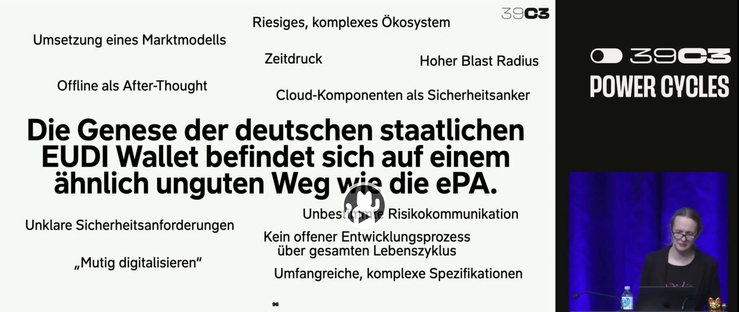
Lese etwas zu neuen regulatorischen Entwicklungen bei der #EUDI Wallet.

Es ist jetzt nicht so, dass ich mich schon mal bemüht hätte, mich auf ne Bühne zu stellen und auf den Foo hinzuweisen.

Wird halt mindestens genauso 💩 wie die #ePA. Und das ist der schlimmste Vergleich, den ich ziehen kann.

Sorry ich muss euch einfach meine Schadenfreude teilen: wie ihr wisst warne ich seit Jahren vor Überidentifizierung, staatlicher/privatwirtschaftliches Tracking, … im Kontext der EUDI-Wallet.

Ich wurde für meine Kritik ausgelacht, sie wurde teilweise durch staatliche Institutionen wie der SPRIND so verdreht und „gemythbusted“.

Und Organisationen wie EDRI und besonders Thomas Lohninger haben sich sogar mit SPRIND-Mirko auf die Bühne gestellt dazu.

https://youtu.be/VsSBcuvXkU8?si=6w-AEkH92f6YhYFe

Deep Dive: CTRL+ALT+DEFEND: Protecting the Users' Sovereignty with Thomas Lohninger and Mirko Mollik

YouTube

Das mit den Geschäftsmodellen "Identitätsdaten verkaufen" steht übrigens auch öffentlich… hier.

Darüber wird in so Wallet Workshops moderiert durch die SPRIND diskutiert.

Revenue Stream "Sale of ID Data". Dass das User authorisieren sollen ist keine Besserung. Personenbezogene Daten werden auf Social Media Plattformen eh schon implzit "verkauft" bisher. Das ist dann halt später mit echten Daten so. Revenue.

https://gitlab.opencode.de/bmi/eudi-wallet/eidas2/-/blob/main/02_Workshops/231023_Business_and_Issuance_Models_Workshop/01_Outcomes_Workshop/20231023_EUdi-Wallet_Workshop_Business_and_Issuance_Models_Outcomes_v1.0.pdf

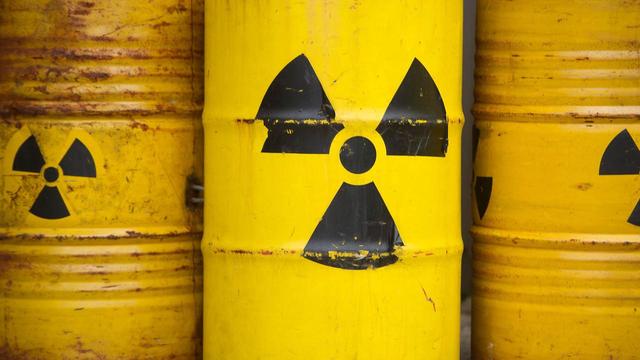
Alles gesagt. Mini-Atomkraftreaktoren würden zu spät zur Lösung der Probleme kommen, bleiben gefährlich, hinterlassen tödlichen Müll, haben weiter Kühlungsprobleme wegen fehlenden Wassers, sind zu teuer und anfällig für Sabotage/Anschläge. Wenn es rechts/konservativ ist, für Atomkraft zu sein, dann bin ich stolz, links und progressiv zu sein

https://www.tagesschau.de/ausland/europa/kommentar-atomenergie-foederung-eu-100.html

Kommentar zur geplanten EU-Förderung: Mini-Atomreaktoren sind keine Lösung

EU-Kommissionschefin von der Leyen will die Entwicklung von Mini-Atomreaktoren fördern. Ein Fehler - denn die teure Technologie existiert nur auf dem Reißbrett und verschreckt Investoren.

tagesschau.de

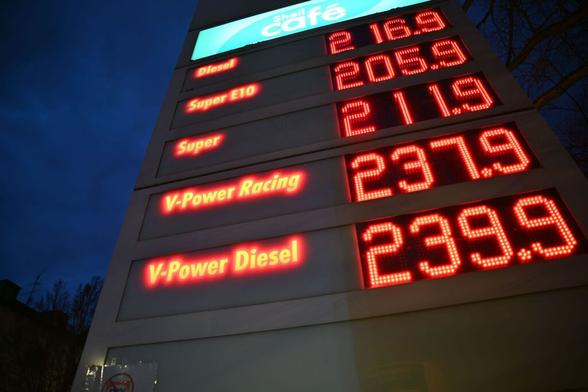
Angesichts der aktuellen Diskussion um die Spritpreise:

https://www.badische-zeitung.de/was-der-oesterreich-spritplan-fuer-deutschland-bedeuten-koennte-x1x--print

Tja, wenn es doch nur eine Technologie und die Möglichkeit gäbe unsere Autos und Heizungen mit was anderem als Öl/Gas zu betreiben. Also eine Energie welche wir idealerweise im eigenen Land selber produzieren könnten. Und wenn diese Energie dann auch noch von vielen kleinen unabhängigen Erzeugern produziert würde, welche miteinander in Konkurrenz stehen. Diese Konkurrenz würde einen hohen Preisdruck erzeugen wodurch die Energie für alle billig bliebe.
Oder wenn es sogar die Möglichkeit gäbe sich diese Energie auf dem eigenen Balkon,Haus oder Grund selber zu erzeugen.
Große Wirtschaftsunternehmen hätten dann keine Chance mehr ein Monopol aufzubauen und sich an uns durch erstaunliche Kostensprünge zu beREICHErn.

Aber kannste halt nix machen...

Jetzt nur einmal am Tag erlauben die Preise zu erhöhen, das wird das Problem lösen. Mit Sicherheit. Ganz bestimmt! Ich bin überzeugt!!

Was der Österreich-Spritplan für Deutschland bedeuten könnte

Als Maßnahme gegen die steigenden Spritpreise will Wirtschaftsministerin Reiche nur noch eine Erhöhung pro Tag erlauben. In Österreich ist das schon seit Jahren so geregelt. Dort ist man zufrieden.

BZ.medien GmbH & Co. KG

"Deutschland will Teile seiner Ölreserve freigeben, um den schnellen Preisanstieg auf den Märkten zu dämpfen. Denn laut Wirtschaftsministerin Reiche gibt es keine Knappheit - aber Risikoaufschläge und Spekulationsgewinne."

Also die hohen Preise kommen nicht von einer Knappheit, gehen aber runter, wenn man die Knappheit auflöst?

Kann ich den Kinderbuchautor bitte nochmal sehen?

https://www.tagesschau.de/wirtschaft/freigabe-oelreserven-deutschland-100.html

Deutschland gibt Teil der nationalen Ölreserve frei

Deutschland will Teile seiner Ölreserve freigeben, um den schnellen Preisanstieg auf den Märkten zu dämpfen. Denn laut Wirtschaftsministerin Reiche gibt es keine Knappheit - aber Risikoaufschläge und Spekulationsgewinne.

tagesschau.de